Setting Up Doors for Spraying: Hanging or Horizontal?
Choose door orientation around secure support, access to every required surface and the coating's application limits. Horizontal work can make face access easier but needs space and a careful turning schedule. Vertical or hanging setups can expose both faces while increasing the importance of controlled film build. Neither arrangement eliminates runs, dust or handling damage. Plan the drying route before spraying the first door.
Choose the setup before removing hardware
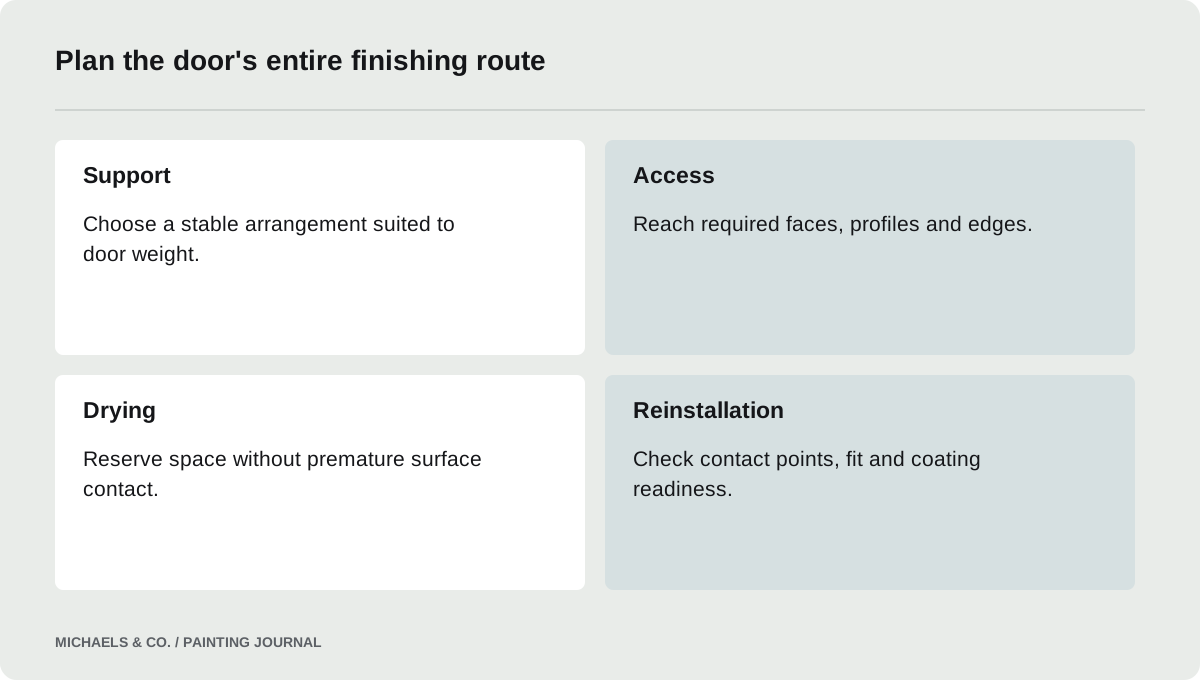
Door spraying involves more than deciding which side faces up. You need a place to prepare the door, apply coating, leave it undisturbed and move it without touching fresh surfaces. If these areas compete for the same few feet of floor space, the project can stall after one face is painted. Sketch the route before dismantling anything.
A Reddit discussion about drips while airless-spraying doors shows why orientation often becomes the focus after a difficult coat. Orientation changes how excess paint behaves, but it does not replace suitable film build and movement. Treat the discussion as a reason to plan the setup, not proof that all doors should lie flat. Count the doors, their dimensions, the available supports and the drying space. Include a safe location for hardware and a labeling system so doors return to their original openings without trial-and-error handling of new finishes.
Compare horizontal, vertical and hanging arrangements
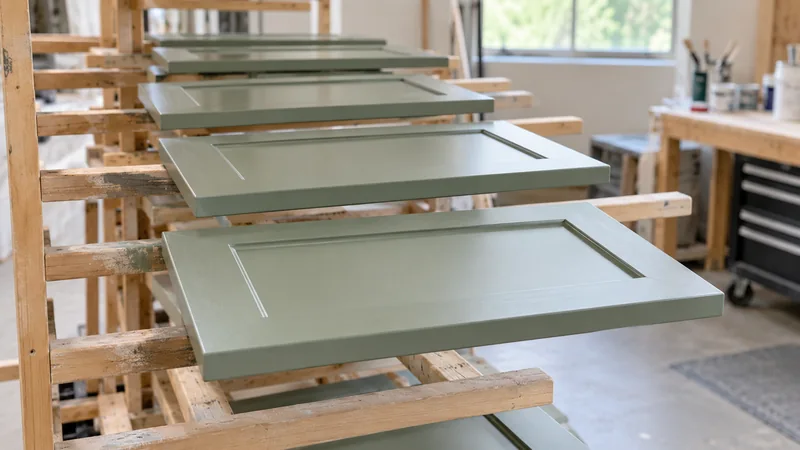
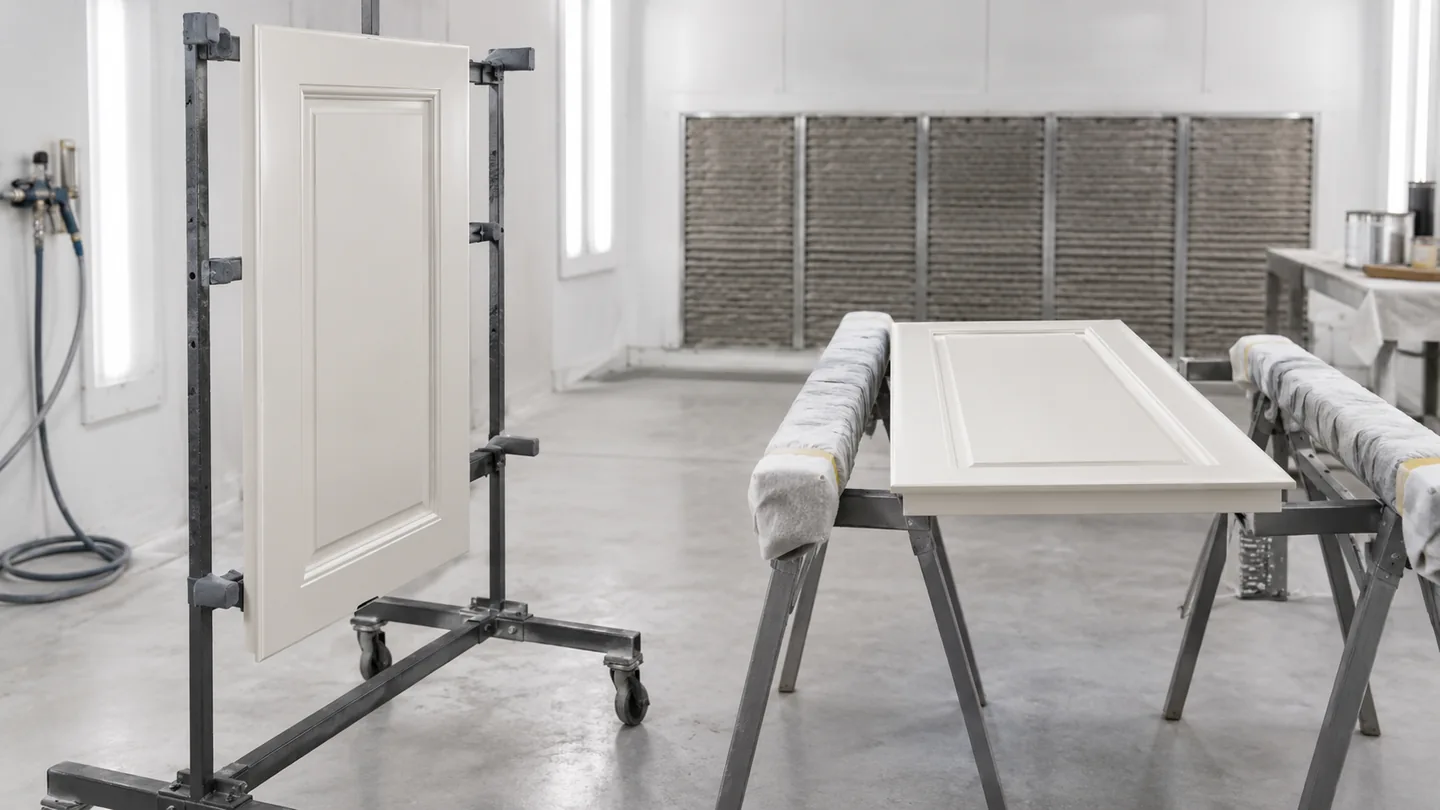
Horizontal supports give direct access to one face and may make it easier to inspect wet coverage. The tradeoffs are floor area, dust settling onto the face and the need to wait before turning. Support points can mark fresh paint if the door is flipped too soon or rests on a recently coated edge.
A vertical or approved hanging arrangement can allow access to both faces with less floor footprint. It requires secure restraint against movement and enough clearance to walk and spray consistently. Do not improvise suspension from hardware or weak material that was never intended to carry the door.
| Arrangement | Main planning issue |
|---|---|
| Horizontal | Turning interval and contact points |
| Vertical rack | Stability and access around edges |
| Hanging | Rated support and control of swinging |
Select a purpose-suitable setup and verify stability before paint, hoses and wet surfaces make adjustments harder.
Define which surfaces need coating
A door includes faces, edges, recesses and hardware areas. The door manufacturer's finishing instructions determine which surfaces must be sealed or painted and which components must remain free of coating. Do not assume the most visible face is the entire job. At the same time, do not coat weatherstripping, latches or labels indiscriminately.
Make a simple door map before starting: identify each face, the top and bottom where applicable, hinge edges and any glazing details. Note which areas are accessible in the selected orientation and which require repositioning. For an exterior or specialty door, model-specific finishing requirements are especially important. A fiberglass door can have preparation restrictions that differ from wood, and a factory finish may need a different system from bare material. Resolve those questions before choosing the spray sequence; orientation should support the required coating plan rather than quietly leaving inaccessible surfaces unfinished.
Match fan width to panels and rails
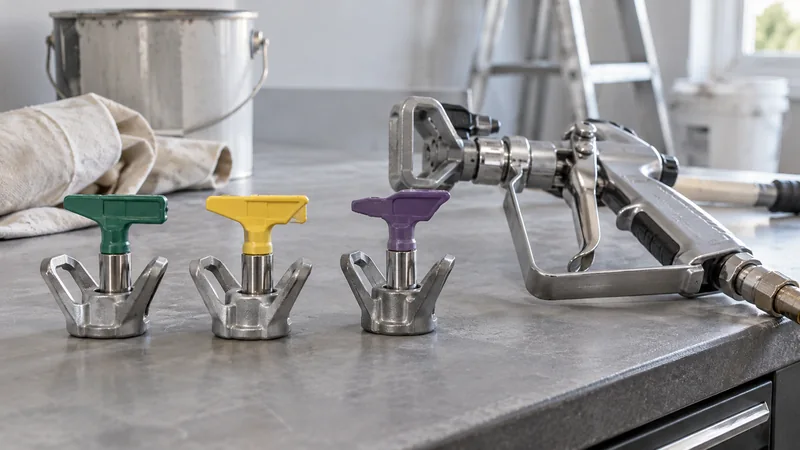
A broad fan suited to a wall can send much of its material beyond a narrow rail or door edge. A narrower compatible fan can improve targeting, but it also concentrates output into a smaller area. Graco's spray-tip guide explains why fan width and orifice must be considered separately. A smaller first digit does not necessarily mean less paint flow.
Plan the sequence through recesses, panels, rails and stiles so overlap does not pile extra coating into corners. Practice on a representative panel or scrap arrangement before moving to the door. Keep gun movement parallel to the face and maintain the distance appropriate to the system. If the profile demands repeated short bursts at one spot, reassess the fan and approach. The goal is complete coverage at the specified build, not making every recess look flooded and glossy while wet. Check hidden lower edges where excess material may collect.
Set a film-build target instead of chasing wet gloss
Wet appearance is an unreliable measure of whether enough paint has been applied. A heavily loaded face may look beautifully reflective and then sag, remain soft or show uneven texture as it dries. Use the selected enamel's coverage and film-thickness guidance to establish the intended application. If using a wet-film gauge, learn the product-appropriate measurement method on a sample first.
Graco's spray-technique guidance emphasizes controlled movement and overlap. Those fundamentals matter in either door orientation. Laying a door flat does not make unlimited coating thickness acceptable; it merely changes where excess material can accumulate. Likewise, standing it vertically does not require starving the film. If the specified coating cannot be applied consistently with the current tip and movement, adjust the approved setup on the sample. Avoid solving a wet heavy area by repeatedly spraying neighboring areas until the whole door is overbuilt.
Separate recoat timing from turning and stacking
A product's recoat interval is permission for a particular next coating step under stated conditions. It does not automatically mean a painted face can rest on supports, be stacked against another door or tolerate hardware pressure. Plan those contact events separately. Doors may remain vulnerable after they stop feeling wet.
For example, the ADVANCE Satin 792 technical sheet distinguishes drying, recoating and development of service properties. Use that distinction when scheduling a door rack, even if another enamel is selected. Create enough protected space that you are not forced to lean fresh doors together. Label the application time on a nearby tag, not on the wet surface. Cooler or more humid conditions can extend the process, so leave schedule flexibility. A finishing plan that depends on flipping every door at the earliest possible moment is more fragile than one with adequate drying capacity.
Reinstall without making contact damage inevitable
Before rehanging, check the finish in areas that will meet hinges, stops, bumpers and weatherstripping. Confirm that the coating is ready for the anticipated contact and that accumulated film has not changed clearances. Reinstall hardware carefully without dragging tools across the face or overtightening against a vulnerable finish.
Keep doors identified so their original fit is preserved. If the door binds because of an existing alignment problem, correct that issue rather than forcing the new coating against the stop. Do not treat a sticky contact surface as a reason to add an unapproved lubricant or powder to fresh paint. Ask the coating manufacturer about readiness or an observed problem when needed. Finally, inspect both faces and required edges under useful lighting before returning the room to normal use. The setup succeeds when the complete door can be handled, installed and used as planned, not only when one sprayed face looks attractive.
Questions & answers
Will laying a door flat prevent all runs?
It can reduce downward movement on the main face, but excess coating can still collect in profiles and along edges. Horizontal orientation also introduces support and turning risks. Apply the specified film build and test the setup rather than relying on gravity alone.
Can I spray both sides while a door hangs?
A suitable secure hanging system may provide that access, but it must support the door and control movement safely. Confirm access to required edges and keep hardware areas protected as specified. Do not improvise a suspension method from weak or unsuitable attachment points.
When can I flip a freshly painted door?
Use the coating's handling guidance for contact with supports, not merely its recoat time. Conditions, film build and support design matter. If the technical sheet does not address the proposed contact, get product guidance and test a sample before risking the visible face.
Sources & further reading
- Graco: Spray TechniquesTest the pattern, use suitable pressure and tip, keep consistent distance and overlap passes.
- Benjamin Moore ADVANCE Satin 792 Technical Data SheetThe sheet separates touch-dry, recoat, early service and eventual hardness; cool or humid conditions extend these stages.
- Graco: Choosing and Understanding Airless Spray TipsTip numbering distinguishes fan width and orifice; coating recommendations and sprayer capacity constrain selection.
Reader discussions
These conversations describe problems people encountered. They do not establish the cause of a defect or replace product instructions and applicable requirements.