Commercial Painting Quotes: Why Floor Area Is Not the Same as Paintable Area
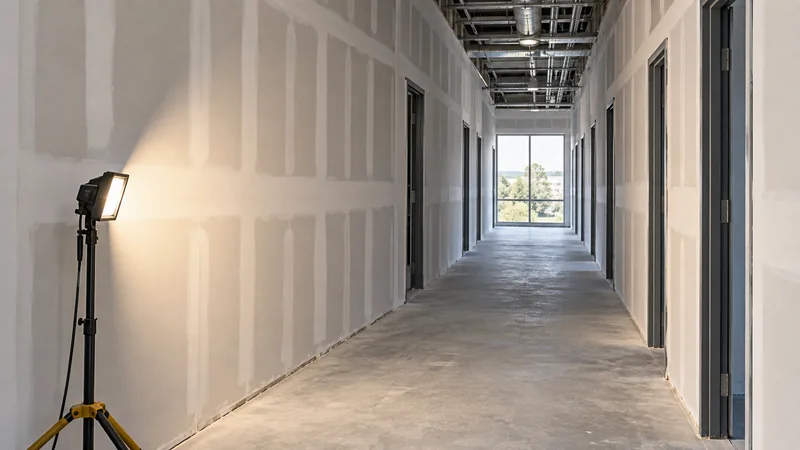
Compare commercial painting bids using the surfaces and conditions being priced, not the building's floor area alone. Wall height, partitions, ceilings, doors, exposed structure, preparation and access can change the work substantially without changing the lease square footage. Ask each bidder to identify measured quantities, coating assumptions and exclusions. A unit rate is useful only when the underlying unit and scope are comparable; online rates cannot establish the right price for your site.

Understand the measurement behind the price
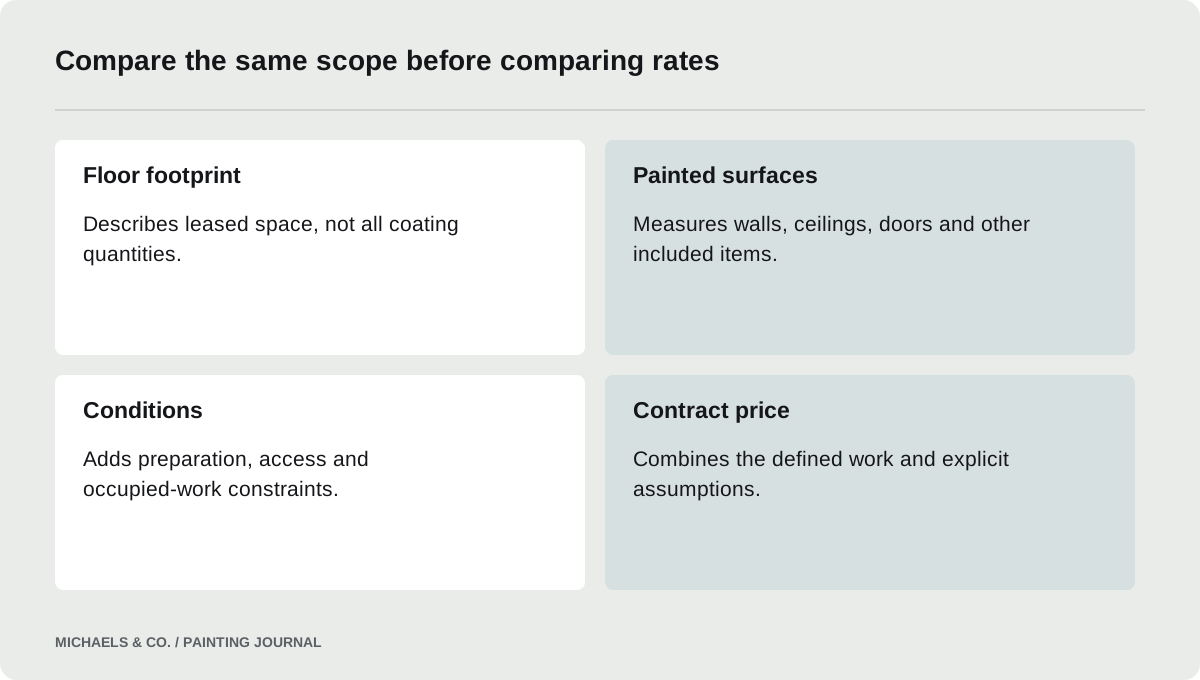
A ten-thousand-square-foot floor can contain a largely open room or many small offices with tall partitions. Those layouts produce different wall areas. Adding ceilings, columns, doors and frames changes the scope again. Before comparing a price per square foot, ask exactly what square foot the contractor means.
A new commercial bidder's question asked whether to price the floor footprint or the wall area of a large building. The replies are not a local pricing survey, but the confusion is relevant to buyers too. Require the estimate to name its measurement basis. A lump-sum proposal can still be sound, provided the included surfaces and assumptions are clear enough to compare with another bidder's scope.
Build a surface schedule from a walkthrough
Use a room list or marked floor plan to identify the surfaces receiving work. Measure or count walls, ceilings, doors, frames, columns and other specified items separately. Note excluded rooms and surfaces so that nobody interprets “paint the office” differently after mobilization.
For repeated rooms, a typical-room schedule may simplify the takeoff, but verify the exceptions. A corner office with extensive glazing, an open ceiling and a high stairwell should not silently inherit the assumptions for a standard room. Record the dimensions and access conditions that the price relies on. The objective is not to force every bidder into the same estimating software. It is to create an agreed physical description of the work that survives changes in personnel and purchasing documents.
Measure preparation as a condition, not an average
Two walls of the same size may require very different preparation. One may be sound and clean; another may have adhesive residue, damaged drywall, loose coating or water-related deterioration. A single surface quantity does not tell you whether the bid includes correcting those conditions.
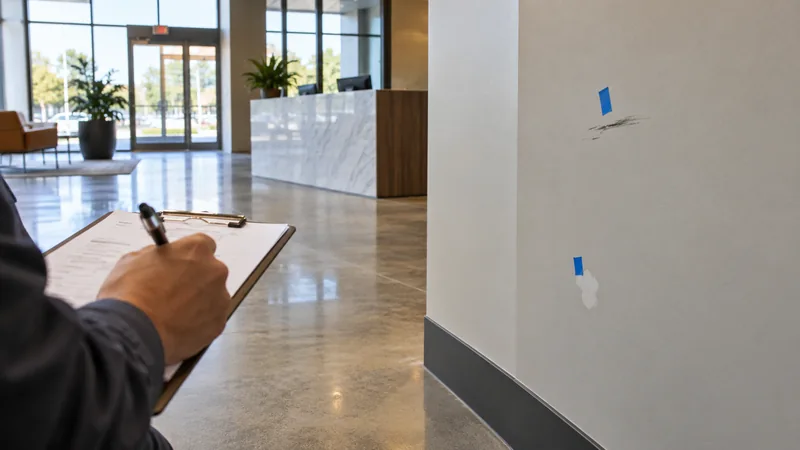
During the walkthrough, mark representative defects and ask how the bidder has allowed for them. Define what happens if additional concealed or inaccessible conditions become visible later. An allowance can be useful when its quantity, unit and adjustment process are stated. “Prep as needed” leaves too much room for disagreement when one bidder expects minor patching and another expects substantial repair. For older or unknown coatings, preparation also requires an appropriate hazard assessment before abrasion or disturbance is specified.
Identify access and occupancy costs
High walls, restricted hours, furnished rooms and interrupted access affect labor even when the coating area is unchanged. A painter working around an operating reception desk may need more protection, smaller zones and repeated mobilizations than a crew working in an empty space. Ask bidders to state those assumptions explicitly.
A prospective office tenant's pricing discussion demonstrates how misleading a small floor area can be when the work has not been fully defined. The quoted amount in a post is not evidence of a reasonable market rate. Obtain a site-specific explanation covering schedule, access equipment, furniture movement, building rules and cleanup. Those items often explain more than the difference between two gallon prices.
Normalize bids in a comparison table
Create one comparison sheet before deciding that a bidder is expensive or incomplete. Ask for clarification where a field is missing rather than filling it with your preferred assumption.
| Comparison field | What to establish |
|---|---|
| Surfaces | Rooms, heights, ceilings, doors and exclusions |
| Preparation | Listed repairs, cleaning and uncertain conditions |
| Coating system | Products, primer, sheen and finish commitment |
| Operations | Hours, protection, access and mobilizations |
| Closeout | Inspection, corrections, cleanup and records |
The FTC's consumer guidance supports written estimates and clear project terms. For commercial purchasing, treat this table as a comparison method, not a statutory form or a substitute for the actual contract documents.
Keep quantities and coating assumptions connected
A paint quantity should relate to the measured area, specified product and application requirements. Porosity, texture, losses and the number of applications can affect material consumption. Avoid treating a generic coverage figure or another contractor's purchasing history as a specification for your building.
Ask the bidder to identify the actual product and relevant technical documentation. The contract should distinguish a stated number of coats from an agreed finish outcome and explain how approved changes will be handled. Do not assume that a low gallon count proves misconduct, or that a large count proves proper application. Delivery records, surface conditions, the application process and the agreed specification provide a more useful basis for review than a single arithmetic check.
Use unit prices only where the scope is repeatable
Unit prices can help with uncertain quantities, such as additional door frames or a defined patching category, but the unit needs boundaries. Specify the included preparation, product, access and minimum mobilization assumptions. An added door in a room already being painted may not cost the same as a separate return visit to another floor.
For larger changes, request a revised scope instead of forcing every condition into the original rate. Identify who can authorize extra work and how quantities will be confirmed. Commercial owners should also review their purchase-order and change-order procedures so a field request does not bypass required approval. A useful unit rate reduces uncertainty; an undefined rate merely moves the argument to the final invoice.
Choose the proposal you can actually administer
The lowest total is not necessarily weak, and the highest total is not necessarily more complete. Evaluate whether the bidder understood the building, documented assumptions and responded clearly to scope questions. References and commercial requirements still matter, but they cannot repair an ambiguous work description.
Before acceptance, incorporate the resolved clarifications into the controlling documents. Keep the room schedule, marked plans, product selections and exclusions together. During the project, compare changes against that baseline rather than against a remembered conversation. This gives the owner and contractor a common record when a room is added, access is delayed or a repair expands. A measurable scope helps the project remain manageable long after the purchasing decision has been made.
Questions & answers
Can a contractor still give a lump-sum commercial painting quote?
Yes. A lump sum can be appropriate when the included surfaces, preparation, products, access and completion requirements are clearly defined. You do not need the contractor's entire internal cost model. You do need enough scope detail to identify what is included and how later changes will be priced.
Should I compare bids by gallons of paint?
Use quantities as one consistency check, not as a verdict. Consumption depends on the product, substrate, texture, application and losses. Ask how the quantity relates to the actual specification and surfaces. A difference between bids deserves explanation, but it does not by itself establish which contractor will perform correctly.
Why can painting two small offices cost more per floor square foot?
Small projects may still require travel, protection, preparation, setup, multiple visits and restricted working hours. Floor area also does not measure all the walls, trim or ceilings. Compare the actual included work and operating constraints before applying a rate from a larger or differently configured project.
Sources & further reading
- Massachusetts home improvement contract sample languageCovered HIC contracts require detailed scope, materials, dates and payment terms; applicability must be checked.
- FTC: How to avoid a home improvement scamFTC consumer guidance favors written scope and documented payments and identifies pressure and advance-payment warning signs.
Reader discussions
These conversations describe problems people encountered. They do not establish the cause of a defect or replace product instructions and applicable requirements.