Deck Stain Is Still Sticky: Why a Second Coat Can Make It Worse
Do not automatically add a second coat to a deck that remains sticky beyond the product's expected conditions. Identify the stain, review application amount and weather, and determine whether material is sitting on the surface instead of performing as intended. Keep traffic off an unready finish and ask the manufacturer about recovery for that exact product. A controlled test is safer than improvising with oil, solvent or more stain.
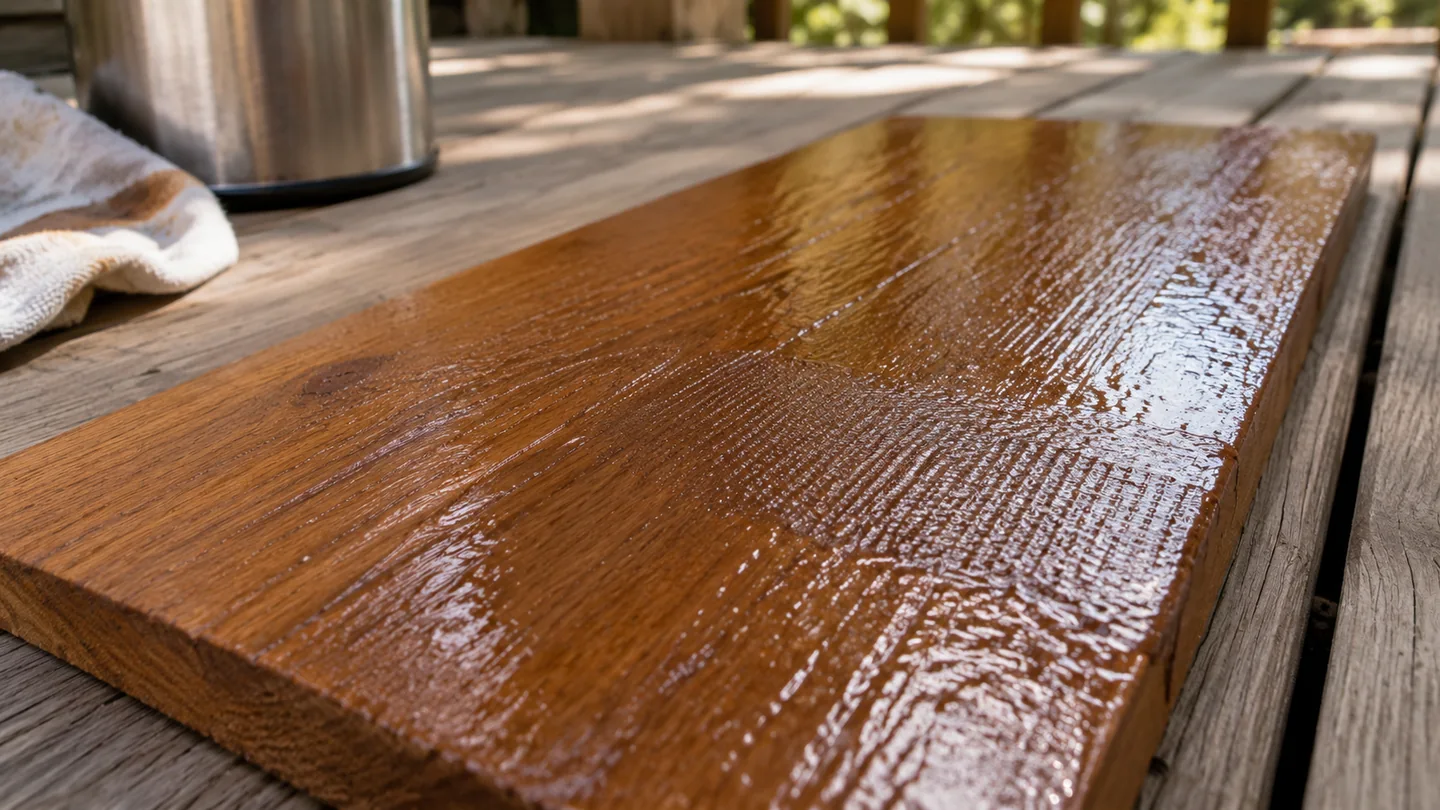
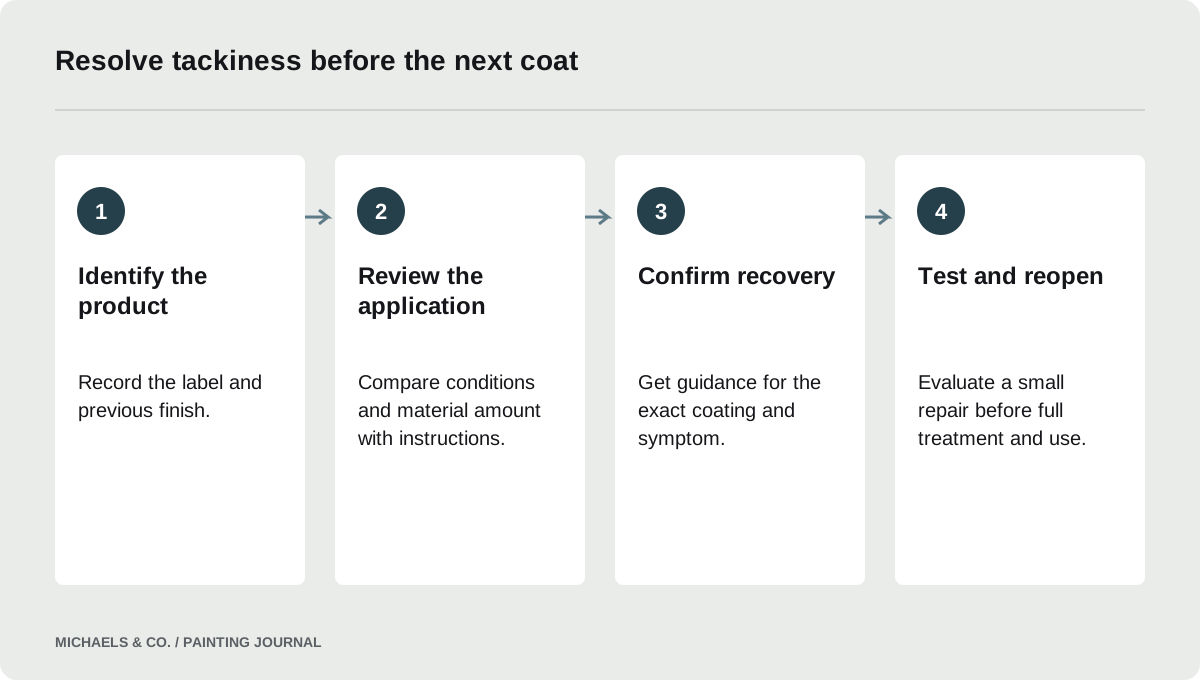
Pause the next coat and record the condition
Note when the finish was applied, when tackiness was first observed and whether all areas feel the same. Photograph shiny patches, puddled areas and differences between exposed and sheltered boards. Keep pets, furniture and ordinary traffic away until the surface is ready under the product instructions.
In this Reddit discussion, a homeowner restained a deck with the previous timber oil, found it shiny and tacky, then lightly sanded and considered another coat. The thread illustrates the danger of treating the next coat as a cure for an unresolved first application. Before adding anything, determine what product is present and what its instructions say about the condition you are observing.
Identify the exact stain and system
Read the complete label and product data rather than relying on terms such as oil, sealer or semi-transparent. Products with similar descriptions may have different preparation and recoat requirements. Record the color, batch where available, any additives and the products used for cleaning or removal beforehand.
Also establish what remained from the earlier finish. Applying the same named product does not prove the surface was ready for it, especially if protected areas retained more material than exposed ones. A supplier can give more useful guidance when the old coating, preparation and new application are described precisely. A photograph of the can and a written sequence are often more helpful than a general complaint that stain will not dry.
- Record the exact stain product, application dates, weather, and whether excess material was removed where required; similar-looking deck finishes can have very different instructions.
- Compare sticky areas with overlaps, shaded boards, dense wood, and visibly heavy deposits rather than assuming the entire deck simply needs another identical waiting period.
- Keep normal traffic and furnishings off areas that transfer material, and ask the manufacturer for a recovery method tied to the identified product and condition.
- Test any approved removal or correction process on a small representative section, checking the resulting wood condition and appearance before attempting the whole deck surface.
Compare elapsed time with actual conditions
Check the product's drying and return-to-service guidance and the conditions on the deck. Temperature, humidity, shade and application amount can affect the result. An advertised time assumes specified conditions; it is not an unconditional promise for every site.
Do not convert uncertainty into an arbitrary instruction to wait several weeks. Waiting may be appropriate in one situation and ineffective in another. The useful question is whether the current condition is consistent with the product's expected behavior or indicates an application problem. Record whether the surface is improving, remaining uniformly tacky or developing separate soft and dry areas, and share that pattern with the manufacturer.
Look for excess material on the surface
Cabot: How to Stain explains that too much oil-based product can leave an excessively sticky or slick surface and that overapplication can build a film instead of achieving the intended penetration. Review how much material was applied and whether the product required any specific distribution or removal of excess.
This is not a universal instruction to wipe every deck stain. Some systems are designed differently, so the exact directions matter. Do not apply a method intended for one penetrating oil to an unrelated film-forming product. Compare protected areas, overlaps and board ends with the rest of the deck; uneven tackiness may help identify where application or absorption differed.
Consider the preparation and retained finish
Review cleaning, rinsing, sanding and the condition of the wood before coating. Residue, an incompatible old finish or different absorption across boards can affect the new application. A freshly cleaned appearance is not proof that every area was ready for the chosen stain.
If sanding has already been attempted, record the grit and extent without assuming that a light pass corrected the problem. It may have changed only the surface of a soft layer. Avoid continuing abrasive work until the recovery method is defined. A sticky coating can contaminate tools, and aggressive preparation can damage the wood while leaving uncertainty about the retained material beneath it.
Ask for a product-specific recovery procedure
Provide the manufacturer with the label, application sequence, approximate amount used, weather and photographs of affected and unaffected areas. Ask whether the finish should be allowed more time, whether localized correction is possible and what removal method is compatible if it is not.
Do not add mineral oil, solvent, cleaner or another coat simply because a commenter reported success with a different stain. Those additions can change the system and make recovery harder to assess. If the recommended procedure uses chemicals, follow the product safety, protection and disposal instructions. The article's purpose is to organize the decision, not replace the recovery directions for an unidentified coating.
Test recovery before treating the whole deck
Select a small representative area and perform the agreed method. Include a transition between tacky and apparently dry material if that difference is part of the problem. Record what was removed or retained and evaluate the result after the required conditions have been met.
A successful-looking wet sample is not enough. Check appearance, surface condition and readiness for the next stage according to the proposed system. If the sample remains problematic, stop and review it with the supplier before extending the work. The cost of a second small trial is usually easier to control than having to reverse an improvised treatment spread across every board.
Recoat and reopen according to the corrected system
Once the surface has been recovered and is ready, apply only the sequence required by the chosen product. Do not add a second coat by habit if the instructions or condition do not support it. Make the appearance decision using the actual wood, including repaired or differently weathered areas.
Keep furniture and normal use off the deck until the system is ready for the relevant service, and retain the maintenance instructions. Record the preparation and application so future recoating does not repeat the same buildup. If the original problem involved protected areas that retained finish, include those areas in the next maintenance assessment rather than automatically coating them at the same rate as worn traffic paths.
Questions & answers
Will another coat dissolve and level the sticky areas?
Do not assume so. The effect depends on the exact product and condition, and additional material may worsen overapplication. Ask the manufacturer for a recovery procedure and test it locally. A general internet remedy is not a substitute for identifying the coating already on the deck.
Can I sprinkle something on the deck to remove tackiness?
Masking the feel of the surface does not establish that the finish is ready or correctly applied. Added material can contaminate the coating and complicate cleanup. Keep the area out of service and follow a product-specific assessment and recovery plan instead.
Does sticky stain always need complete stripping?
Not always, but the decision cannot be made from tackiness alone. Product behavior, conditions, application amount and the retained finish all matter. A manufacturer-supported trial can help determine whether limited recovery is possible or whether broader removal is required.
Sources & further reading
- Cabot: How to StainExisting coating, wood readiness and sample appearance matter; excessive stain application can leave a sticky film or cause peeling.
Reader discussions
These conversations describe problems people encountered. They do not establish the cause of a defect or replace product instructions and applicable requirements.