Fresh Paint Before a Home Sale: Signs That Deserve a Moisture Investigation
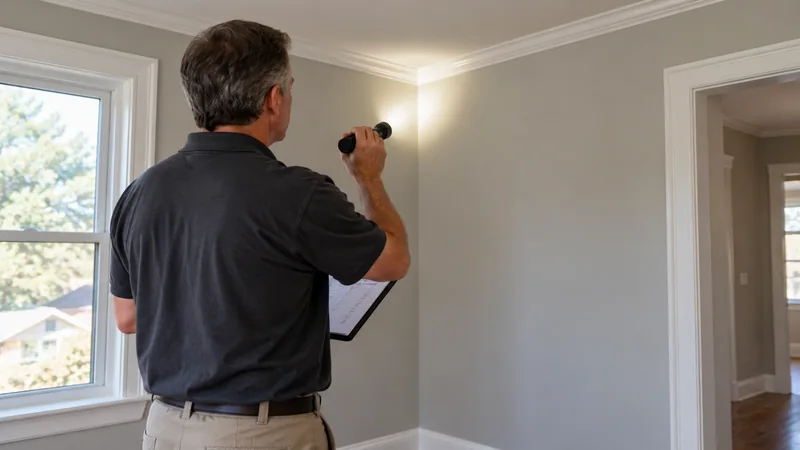
Fresh paint before a sale is common and is not proof that a seller concealed damage. Investigate when localized repainting appears alongside staining, distorted materials, persistent dampness, odors or a history of leaks. Ask factual questions and review repair records, then obtain appropriate specialist assessment where the evidence warrants it. Separate an observed condition from a suspected cause and from any allegation that someone knowingly hid it.
Treat fresh paint as context, not a verdict
Owners repaint for ordinary reasons: maintenance, changing taste or preparing a property for sale. A newly finished room can be entirely legitimate. Even a localized patch may reflect a repaired nail hole or an old stain whose source was resolved. The paint alone does not establish a defect or deceptive intent.
A seller's account of an inspection report describes concern over language suggesting paint might hide water damage, although the seller said the paint was years old. That counterexample matters. Buyers need to investigate credible signs without turning every cosmetic improvement into an accusation. Ask what the inspector observed, what uncertainty remains and what additional information would change the assessment.
Look for combinations of visible clues
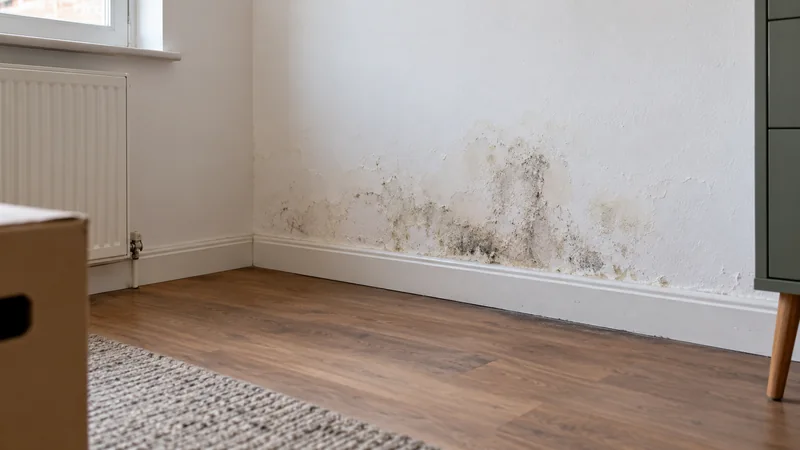
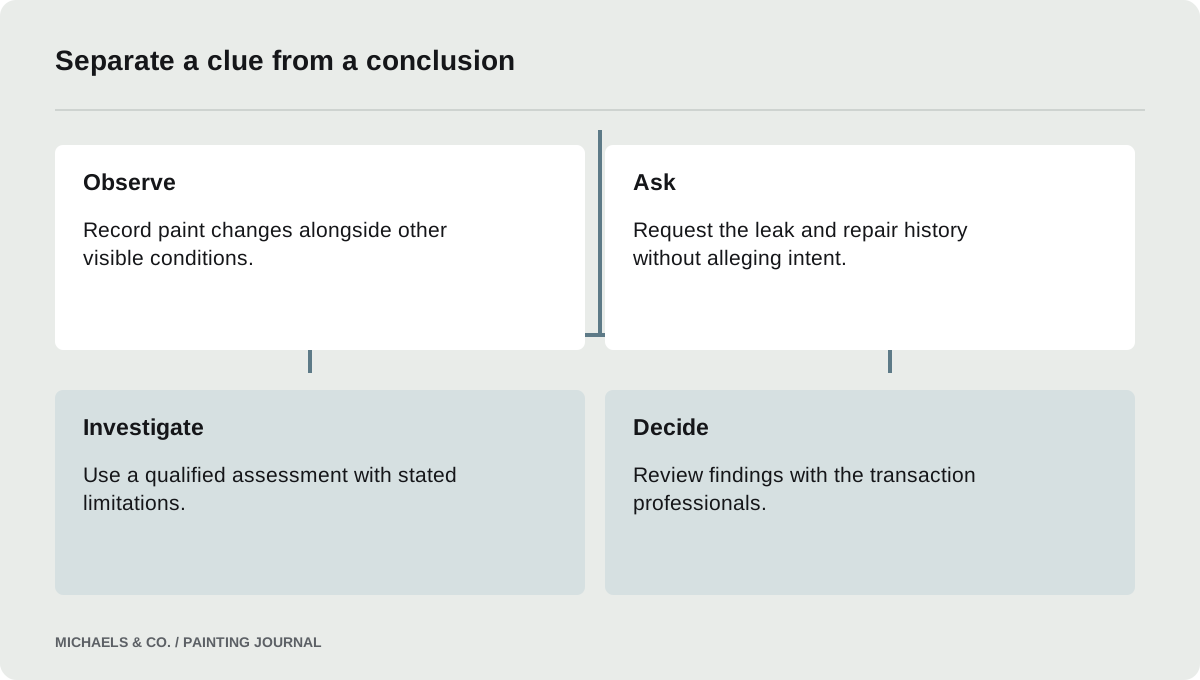
A paint patch becomes more meaningful when it aligns with other evidence. Look for staining returning through the finish, material distortion, damaged trim, a change in texture near a known water path or a repair history that does not explain the condition. Record the location and relationship between clues rather than collecting isolated close-up photographs.
Do not identify mold species from appearance or assume a dark mark proves an active leak. Some damage may be old and dry; some moisture problems may be intermittent and absent during a visit. The appropriate question is whether the combined observations justify further investigation. A qualified inspector can help distinguish a cosmetic concern from a condition that requires assessment by a building-envelope, plumbing or other relevant specialist.
Inspect accessible neighboring surfaces
Water-related damage may leave evidence beyond the freshly painted face. Where safely accessible and within the agreed inspection scope, adjacent trim, ceilings, flooring or the opposite side of a wall may provide useful context. Do not remove components or disturb coatings without permission and appropriate assessment.
In a buyer's reported shower-damage discovery, nearby paint patches were interpreted as evidence of concealment after more extensive deterioration was found. The post does not prove the seller's knowledge or intent. Its practical lesson is to evaluate the surrounding assembly and repair history rather than stopping at the newly finished surface. If the required investigation goes beyond a standard inspection, define and authorize that additional scope.
Ask questions that can be answered with records
Request information about past leaks, water intrusion, affected materials and the work performed. Ask who repaired the source, when the area was dried or rebuilt and whether photographs or invoices are available. A factual request is more likely to produce useful evidence than asking the seller to admit that paint was used to hide something.
- What condition led to the repainting?
- Was a water source identified and repaired?
- Which materials were removed or retained?
- Who performed the repair and finishing work?
- Are before-and-after photographs or reports available?
- Has the condition recurred since the repair?
Missing records do not automatically prove misconduct, but they may leave uncertainty that affects the buyer's decisions. Keep the answers with the inspection record.
Understand what a standard inspection can establish
A home inspection is not an invasive examination of every concealed cavity. The Massachusetts consumer fact sheet describes a visual inspection with inherent scope limitations. The state's inspection standards also define requirements and exclusions. Read the actual report and agreement instead of treating a passed inspection as proof that no hidden damage exists.
Ask the inspector to explain any recommended follow-up. If a concern involves coating workmanship rather than building moisture, a different specialist may be appropriate. Define the question before hiring: current moisture, source of a stain, condition of an assembly or quality of a repair. A focused assessment produces more useful information than a request to prove that a seller lied.
Use instruments as part of an assessment
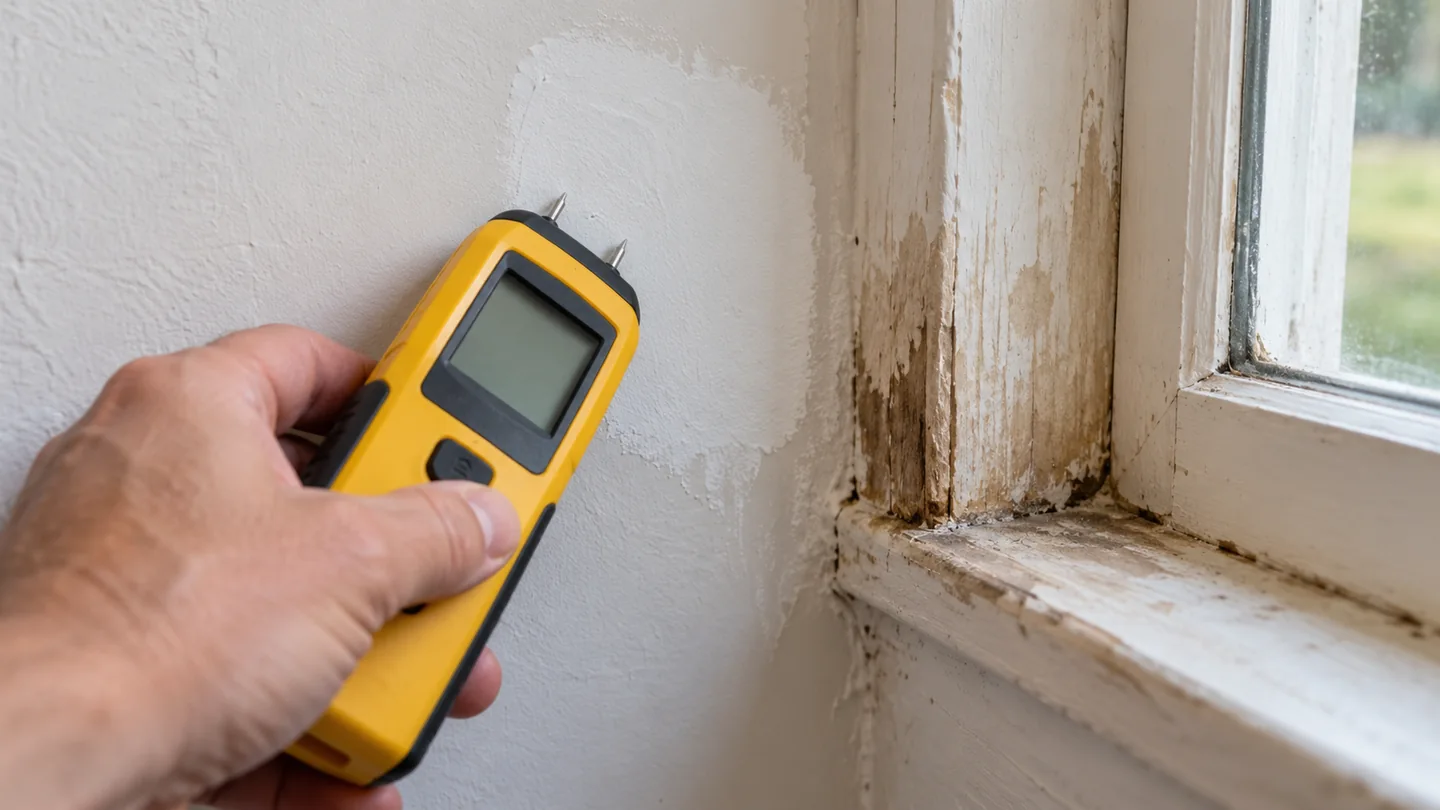
Moisture meters and thermal imaging can provide information, but their readings need context and appropriate interpretation. A meter response or temperature pattern is not, by itself, proof of a leak source, mold or deliberate concealment. The professional should explain the instrument's limitations and what corroborating evidence supports the conclusion.
Avoid quoting an unexplained percentage from a report as though it directly describes the amount of water inside every material. Ask what scale and material were involved and what follow-up is recommended. Where opening an assembly is proposed, obtain permission and consider relevant hazards before disturbance. The goal is to answer the building question with a proportionate investigation, not to create a dramatic image that appears more conclusive than the evidence allows.
Separate moisture repair from cosmetic finishing
If an unresolved water or mold condition is found, repainting is the finishing stage rather than the source repair. The EPA's mold guidance emphasizes moisture control and advises against painting moldy surfaces. A product marketed for stain blocking or mildew resistance does not erase the need to address the underlying condition.
Request a repair plan that identifies the source, affected materials and readiness for finishing. The appropriate professionals may differ for the leak, damaged assembly and final paint. Do not let a seller's offer of a fresh coat substitute for an assessment that was recommended in the inspection report. Equally, do not require unnecessary demolition solely because an old repaired stain remains visible.
Keep transaction decisions with the right advisers
An inspector can describe conditions and recommend further investigation. A painting contractor can assess the finish within their expertise. Questions about disclosure obligations, contract contingencies, credits or claims require the buyer's or seller's transaction professionals and, where appropriate, legal counsel.
Preserve the chronology, photographs, reports and factual responses. Distinguish what was observed before the offer, during inspection and later. If concealment is suspected, evidence of the condition is only part of the issue; knowledge and intent should not be inferred casually. A disciplined record supports better decisions whether the result is reassurance, further testing, a documented repair or a change in the transaction. It also avoids unfairly accusing a seller whose repaint was ordinary maintenance.
Questions & answers
Is one freshly painted wall a red flag when buying a house?
It is a reason to ask a question, not proof of hidden damage. Consider surrounding stains, distorted materials, moisture observations and repair history. If several clues align, ask the inspector what additional assessment is appropriate. A single paint difference can also have an ordinary maintenance explanation.
Can a thermal camera prove that damage was concealed?
No. Thermal imaging can support an investigation, but patterns require interpretation and corroboration. It does not establish the source of moisture or anyone's knowledge or intent. Ask the professional to explain what the image supports, its limitations and what further inspection or testing is needed.
Should I scrape a suspicious paint patch to see underneath?
Do not begin destructive investigation without authorization and appropriate hazard assessment. Older or unknown coatings may present lead or other concerns, and altering the surface can destroy evidence. Document the condition and ask a qualified inspector what proportionate next step will answer the actual question.
Sources & further reading
- Massachusetts home inspectors consumer fact sheetA standard home inspection is visual and limited; findings may call for specialized investigation.
- Massachusetts 266 CMR 6 standards of practiceInspection scope has limitations and exclusions; it is not a coating workmanship certification.
- EPA basic mold cleanup stepsEPA says repair moisture sources, clean affected surfaces and dry them before painting; coating mold is not remediation.
Reader discussions
These conversations describe problems people encountered. They do not establish the cause of a defect or replace product instructions and applicable requirements.