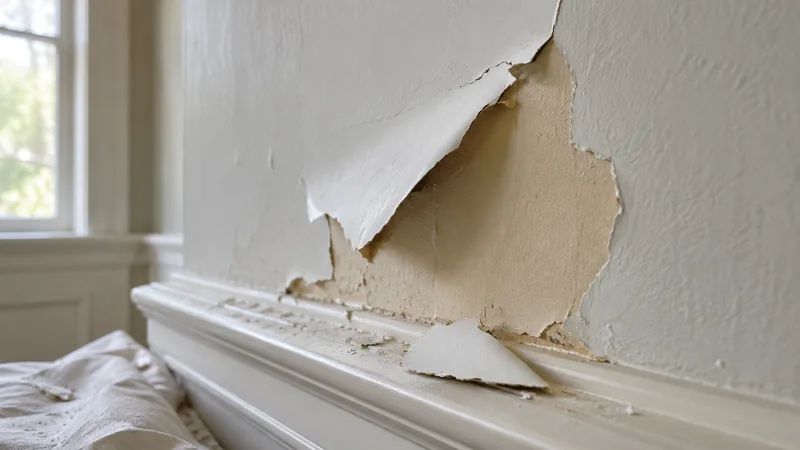
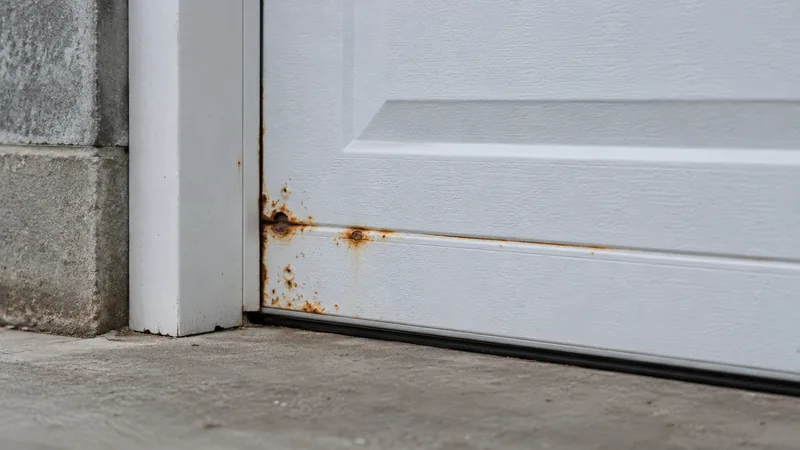
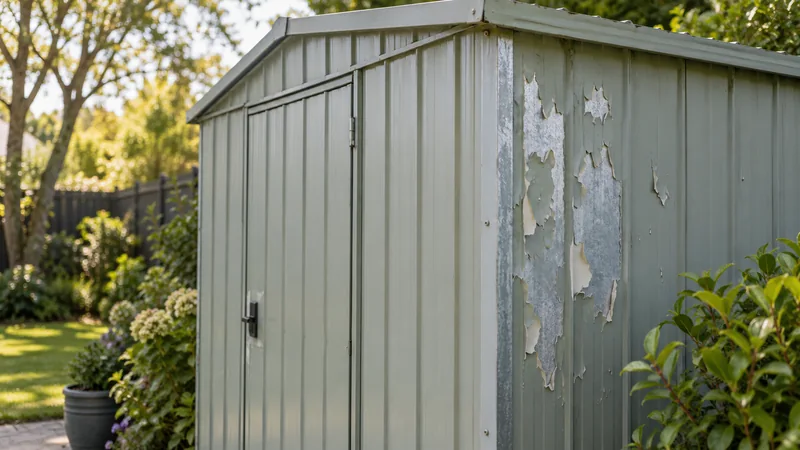
A Metal Front Door Keeps Peeling: Build a Repair Around the Weakest Layer
When a metal front door repeatedly peels, find the weakest retained layer before selecting another finish. Identify the door and factory coating, inspect where failure starts, and review heat, weather and contact with seals or hardware. Prepare a representative repair and use a system approved for the actual substrate. A new topcoat cannot secure older paint that is already losing its bond.
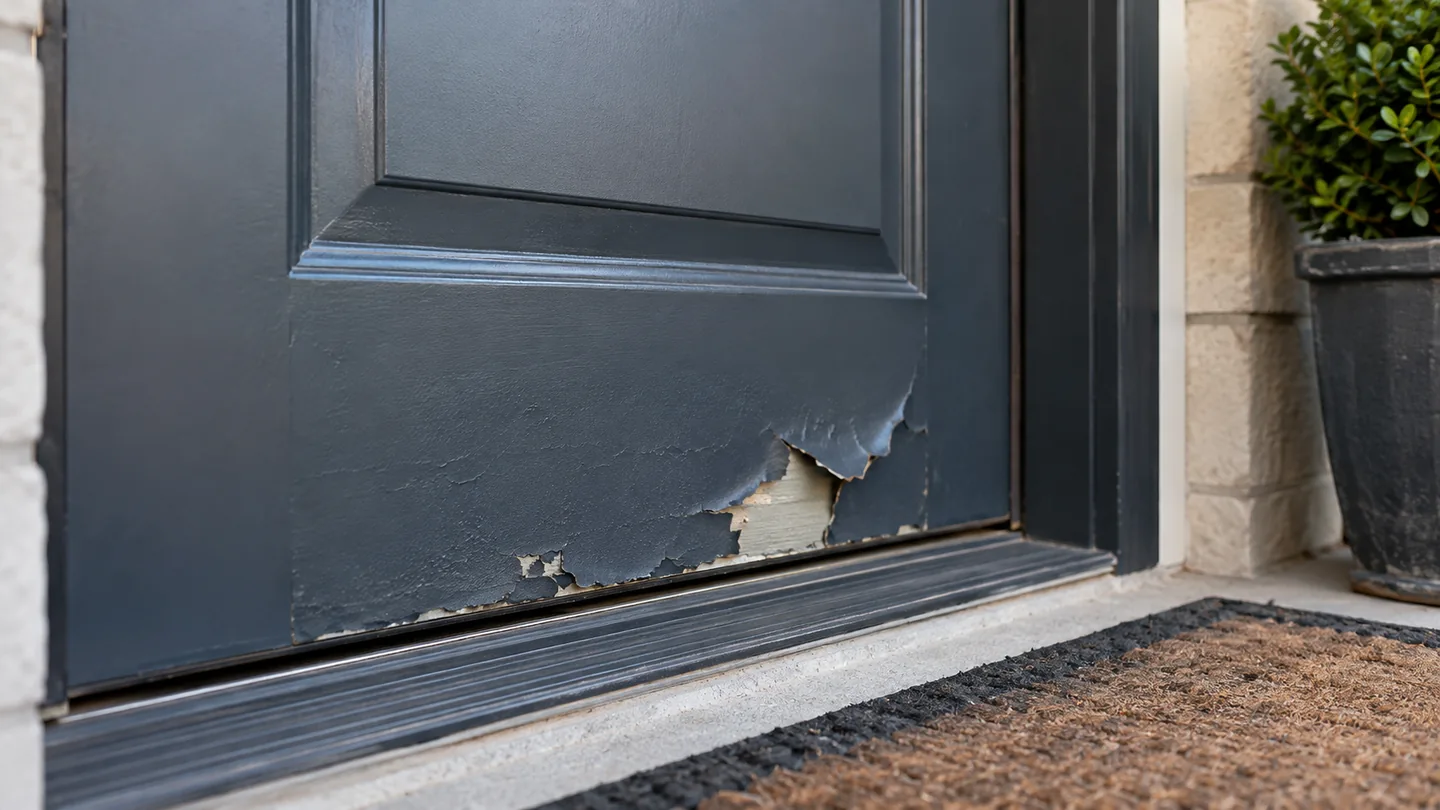
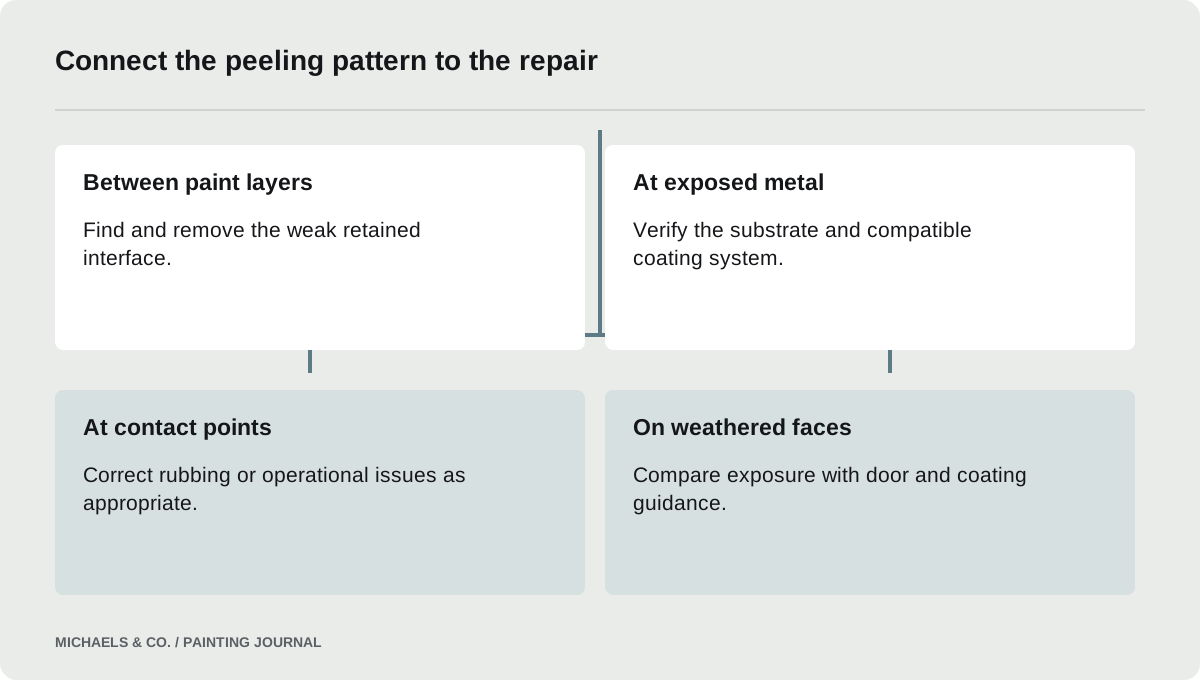
Map the recurring failure instead of starting another repaint
Photograph the door in context, including any storm door, overhang and nearby surfaces. Mark where peeling starts: edges, lower corners, hardware, recessed panels or broad exposed areas. Compare the inside and outside faces if both are painted.
The owner in this Reddit discussion described a metal front door that kept peeling. Commenters offered several substrate and primer explanations. The post establishes a recurring problem, not a confirmed cause. Its value is the reason to stop choosing finish paint in isolation. The next repair should explain why the same area failed and what part of the retained coating or exposure will change.
Find the door manufacturer's information
Look for the manufacturer, model and finishing instructions. Determine what metal and factory treatment are present and whether the door has restrictions affecting field-applied coatings or color choices. Keep those instructions distinct from general advice for painting an unrelated piece of bare steel.
Rust-Oleum Door & Trim Advanced Dry Paint: Product Directions provides an example of product directions that distinguish new preprimed surfaces from repaint work and call for a test area. That example shows why surface history matters; it is not a recommendation that this one product suits every entry door. The actual door requirements and selected coating system should be reviewed together before preparation begins.
- Map peeling against sun exposure, panel recesses, weatherstripping, hardware, and frequently touched areas to distinguish localized wear from a wider failure beneath the coating.
- Record which layers remain on the door after naturally loose material detaches, and compare failures on the inside and outside where conditions differ substantially.
- Check the door manufacturer's coating restrictions and the proposed paint directions together, including compatibility with factory finish and conditions for returning the door to service.
- Inspect the corrected area after its specified drying interval and normal operation, watching for sticking at seals or renewed lifting before treating the repair as complete.
Inspect the released layers
Where paint has already detached, examine both sides of the fragment and the remaining surface. Does the new finish release from an older color, or does the factory layer also come away? Is the exposed surface metal, primer or damaged material? Record the location of each observation.
Sherwin-Williams: Peeling Over Hard, Slick Surfaces discusses adhesion loss on slick surfaces and the need to reach a sound base. If an older layer is failing, a new primer above it does not restore its attachment. Define how far removal must extend by inspecting representative areas, especially around the recurring defect. Do not assume the whole door is identical because one small patch appears firmly attached.
Check metal-specific compatibility
A door panel may involve galvanized steel or a factory coating with particular preparation needs. Sherwin-Williams: Peeling From Galvanized Metal identifies galvanized-metal conditions that can interfere with coating adhesion. The appropriate system depends on what remains after preparation, not simply on the description metal door.
Ask the supplier to confirm compatibility with the actual substrate and retained finish. Avoid a chain of unrelated products chosen because each is described as strong or professional. Primer, finish and any repair material should form a coherent system. If the factory coating's identity cannot be recovered, a representative trial and technical review become more important, not less.
Review heat, weather and contact patterns
Consider whether direct sun, rain exposure, a storm-door cavity or repeated contact affects the failed area. These observations should be compared with the door and coating guidance; they do not establish a universal temperature limit or explain every defect by themselves.
Also inspect where seals, stops, hardware or normal use rub against the finish. A contact-related chip may require operational adjustment as well as paint repair. Keep those adjustments within the door manufacturer's guidance and use an appropriate professional when needed. Repainting a rubbing edge without correcting the contact can produce another visible failure even if the coating on the main face is otherwise sound.
Prepare the door without damaging its function
Define protection for glass, seals, locks, hinges and adjacent finishes. Remove failed coating and contamination using a method suitable for the door assembly. Establish relevant lead precautions before disturbing older or unknown paint. Avoid aggressive preparation that damages a sound protective metal layer or changes a fitted edge.
If corrosion or material loss is present, assess it separately before the finish work. The repair base must be sound. Follow the selected system's requirements for the exposed material and for retained coatings. A plan that simply says sand and repaint should be clarified so the worker and owner understand what condition the surface must reach before primer is applied.
Prove the system and plan the return to service
Prepare a representative area that includes the relevant substrate and retained coating transition. Apply the complete proposed sequence and evaluate it at the appropriate stage. Record products, conditions and any technical advice so the full repair can reproduce the successful trial.
The door's use must also be planned. Dry-to-touch does not automatically mean ready for seal contact, cleaning or repeated handling. Follow the coating's service instructions and coordinate security and access while the work is underway. Do not promise that every door can be closed and used normally the same evening regardless of product or conditions.
Finish to coherent boundaries and keep a repair history
Decide whether the appearance requires a full face, a panel or another natural break to be coated. A small adhesion repair can still leave visible texture or sheen differences. Inspect both the bond-related condition and the agreed appearance once the finish is ready.
Retain photographs of the failed layers, the door information, preparation and product sequence. Note any corrected contact or exposure issue. If peeling returns, the record should reveal whether the same interface failed again or whether a new mechanical chip occurred. That distinction prevents another complete repaint from being ordered for a problem that actually needs a different repair to the door assembly.
Questions & answers
Is a dark color always the reason a metal door peels?
No. Exposure and color-related restrictions may matter for a particular door, but adhesion, preparation and contact damage can also be involved. Check the actual door and coating instructions and compare the failure pattern before treating color as the confirmed cause.
Can a bonding primer hold the old paint in place?
It cannot restore a layer that has already lost its bond to the door. Prepare to sound material and confirm compatibility with what remains. A bonding primer may be useful for an appropriate retained surface, but it does not replace assessment of the weaker layers below it.
Do I need to remove the door for painting?
That depends on access, the repair method, product instructions and how the door can be secured during the work. Plan protection and service restrictions before starting. The decision should support proper preparation and finishing without compromising hardware, seals or building access.
Sources & further reading
- Sherwin-Williams: Peeling From Galvanized MetalGalvanized surfaces may retain oil or passivation; direct alkyd contact with zinc can cause adhesion failure.
- Sherwin-Williams: Peeling Over Hard, Slick SurfacesContamination, gloss and weak underlying layers can impair adhesion; preparation must reach a sound surface.
- Rust-Oleum Door & Trim Advanced Dry Paint: Product DirectionsThis specific door coating distinguishes new preprimed surfaces from repaint preparation and calls for a small test area.
Reader discussions
These conversations describe problems people encountered. They do not establish the cause of a defect or replace product instructions and applicable requirements.