Streaks on a Newly Painted Exterior: Dew, Runoff or Surfactant Leaching?
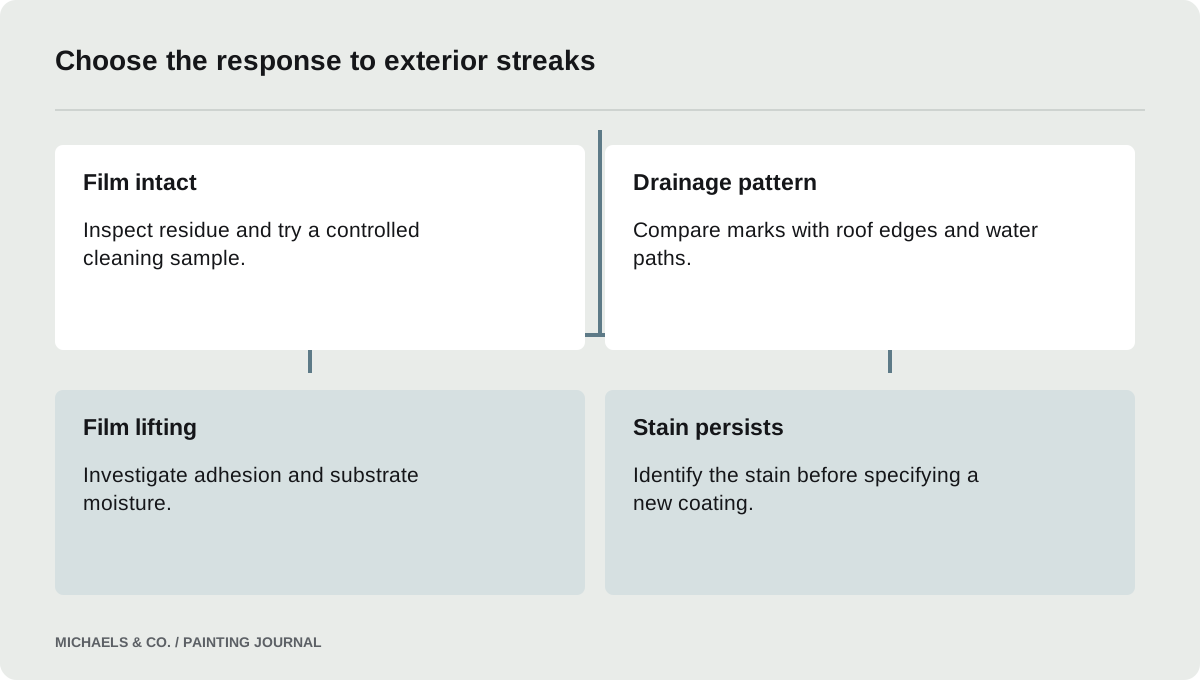
Streaks on a newly painted exterior should be assessed before washing the entire building or repainting it. Compare the pattern with roof runoff, recent rain or dew, and application overlaps. If the film is sound, a small manufacturer-approved cleaning test may identify removable residue. Lifting, recurring wetting or embedded stains need a different response. Weather history and the actual coating instructions help distinguish these possibilities.
Save the evidence before cleaning
Take a wide photograph showing the roof, openings and wall, then a closer view of the streaks. Record when the paint was applied and when the marks first appeared. Include the affected elevation and whether other sides of the building look similar. Cleaning the whole surface immediately can erase the pattern that helps explain what happened.
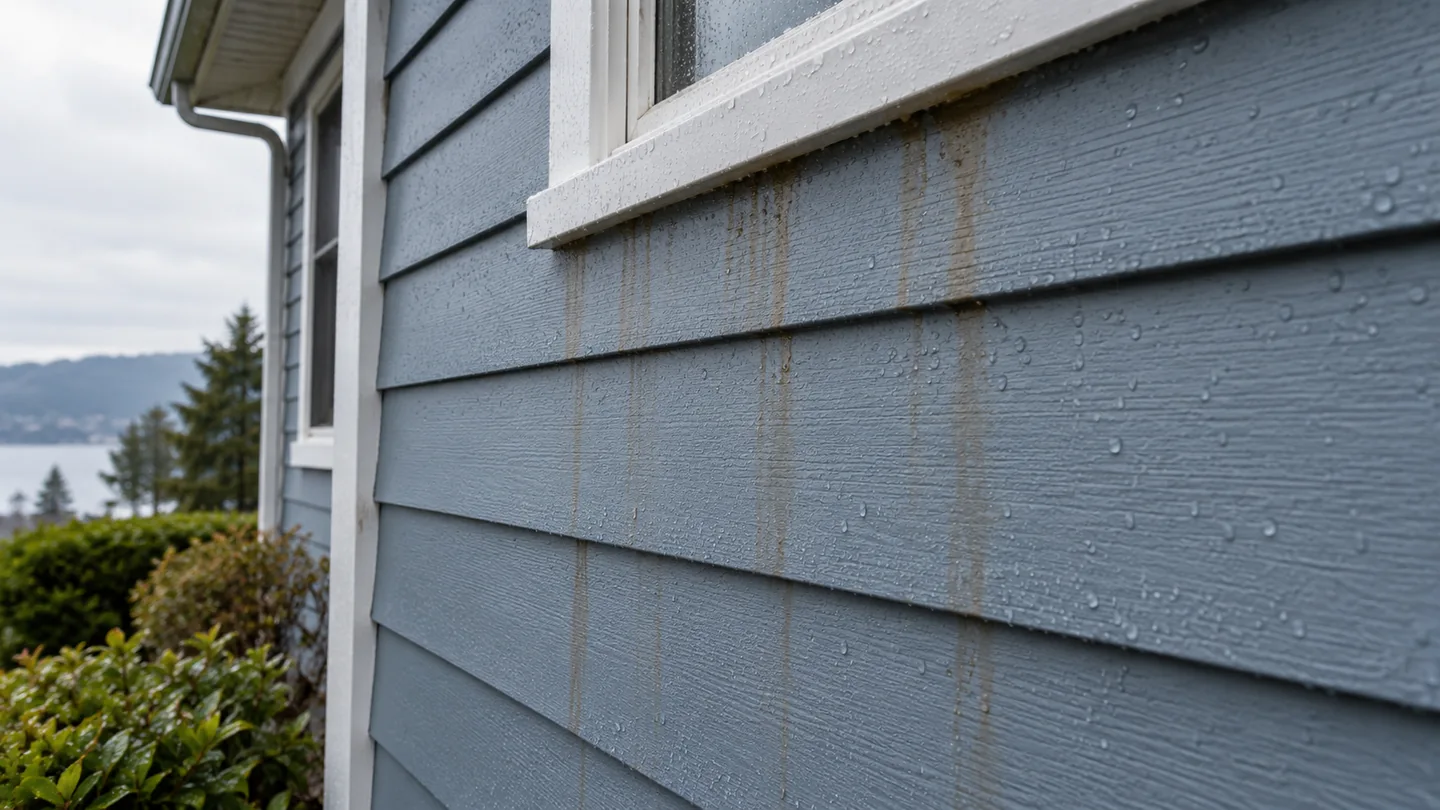
In this Reddit discussion, a coastal California exterior developed streaks after humid nights, with no gutters on the curved roof above. Commenters suggested both runoff and surfactant leaching. The thread demonstrates the ambiguity of photographs, not a confirmed diagnosis. Its useful lesson is to compare the coating, weather and drainage evidence before deciding on the remedy.
Map the marks against drainage paths
Look for repeated tracks below roof edges, seams, overflow points, windows or fixtures. Compare those paths with the marks. A concentrated pattern below one detail deserves a drainage inspection even if the paint has only just been applied. A diffuse pattern across several faces may prompt a different investigation.
Do not assume that any line beneath a roof proves a gutter defect. Wind-driven rain and ordinary condensation can also affect a wall. Record whether the same pathways were visible before painting, if earlier photographs exist. That comparison can separate a newly noticed building condition from a change associated with the fresh coating without relying on recollection alone.
- Compare sheltered and exposed areas on the same elevation, noting where streaks begin beneath ledges, downspouts, joints, or surfaces painted late in the day.
- Record the interval between application and the first dew or rain event using the job log where available, without inventing an exact weather history.
- Check whether the marks sit on an otherwise intact film or accompany blisters and peeling; these conditions call for different next steps.
- Have the painter document a small cleaning trial and its dry appearance before washing the entire elevation or committing to another coat over the marks.
Check whether the coating itself remains intact
Examine accessible areas for blisters, peeling, soft film or color loss. An intact film with surface residue is not the same condition as a coating lifting from the substrate. Use appropriate access equipment and avoid climbing merely to inspect a photograph-worthy spot; a contractor can document higher areas safely.
Sherwin-Williams: Blistering describes several causes of blistering, including moisture and unsuitable application conditions. If the streaked area also has adhesion loss, washing off the color of the mark will not complete the repair. Record the failed layers and investigate the underlying condition. Where the film is sound, keep the investigation focused on residue and staining before proposing unnecessary removal.
Review the actual weather and application record
Record more than the daytime forecast. Surface exposure, overnight humidity, dew and rain after application can matter. Ask which product was used, when each coat was applied, and how work was divided across the elevation. Compare those facts with that product's environmental and exposure requirements.
A general statement that the weather was warm does not establish suitable conditions throughout drying. Likewise, a humid night does not prove that every streak is paint residue. The application record should support a specific explanation. If the proposed cause involves a product defect, retain batch information and invite the manufacturer to review the evidence rather than relying on a verbal guess.
Understand the limits of the leaching explanation
Benjamin Moore: Surfactant Leaching explains that water-soluble ingredients in fresh latex paint can collect at the surface under humid drying conditions. Confirmed surfactant leaching can look sticky, glossy or discolored and is a cosmetic concern. The manufacturer distinguishes it from water stains and recommends cleaning rather than painting directly over the residue.
That guidance does not mean every fresh exterior stain can be ignored. Tannins, corrosion, contaminated runoff and water entry can require different action. A diagnosis should account for the mark's pattern, the substrate and what happens during cleaning. Use the leaching explanation when the evidence supports it, not simply because the paint is new.
Try one controlled cleaning sample
Select a small, representative accessible area and follow the coating manufacturer's guidance. Start with the least aggressive appropriate method. Note whether the residue releases, whether the film changes sheen or color, and how the area looks after drying. Protect nearby materials and manage runoff as the method requires.
Do not jump from a damp-cloth test to high-pressure washing across a newly painted elevation. Fresh coating and vulnerable building details may not tolerate that treatment. A sample should answer a question while limiting unintended damage. Photograph the cleaned and adjacent uncleaned areas from the same position so the comparison remains useful when discussing the result with the contractor or manufacturer.
When several elevations were painted on different days, keep their timelines separate. A shaded north wall and a sunlit entry may have experienced different drying conditions even with the same batch of paint. Compare affected and unaffected elevations before treating the entire building as one uniform failure.
Let the cleaning result define the next decision
If the sample clears and the film remains sound, agree on an appropriate cleaning scope and observe for recurrence. If the mark returns along the same runoff route, investigate that route. If the film lifts or an embedded stain remains, revise the repair plan rather than repeating a cleaning method that has already reached its limit.
A recoat proposal should explain why coating is needed and what will change beforehand. Simply respraying the affected areas may leave a sheen difference or reproduce the original cause. Consider natural architectural boundaries and the appearance of the dry test repair. Cleaning, drainage correction and recoating are separate tasks that should be identified clearly in the scope.
Close the issue with evidence and a practical handoff
Keep the weather notes, product details, original photographs, cleaning sample results and agreed correction together. If a coating representative inspected the building, record the findings and limitations. A statement that the marks are cosmetic should describe the condition actually observed, not dismiss unexamined areas of peeling or dampness.
Inspect the completed work under ordinary daylight and observe the relevant elevation through normal weather. Avoid a promised permanent cure unless the cause and correction justify it. For a commercial property, give the maintenance team instructions for reporting recurrence without immediately washing away the evidence. That makes any later follow-up faster and keeps a finish complaint from becoming an untraceable cycle of washing and repainting.
Questions & answers
Does morning dew ruin new exterior paint?
Not every dew exposure causes failure. The risk depends on the coating, drying stage, conditions and surface. Compare the actual weather with the product instructions and inspect the film. Residue on an intact coating and loss of adhesion are different outcomes that require different responses.
Should the whole house be pressure washed to remove streaks?
Start with a limited cleaning sample and manufacturer guidance for the fresh coating. Aggressive washing can damage paint or force water into building details. Extend a method only after the sample shows that it removes the mark without harming the surface or adjacent materials.
Who should decide whether the paint was defective?
Collect the product, batch, application and weather information and have the contractor and coating supplier review it. Appearance alone rarely establishes a manufacturing defect. The review should distinguish residue, application conditions, substrate issues and drainage before a correction is agreed.
Sources & further reading
- Benjamin Moore: Surfactant LeachingHumidity during curing can draw water-soluble ingredients to the surface; confirmed leaching is cosmetic and should be cleaned before repainting.
- Sherwin-Williams: BlisteringBlistering has multiple possible causes; the failed layer and moisture conditions guide repair.
Reader discussions
These conversations describe problems people encountered. They do not establish the cause of a defect or replace product instructions and applicable requirements.