The Final Painting Walkthrough: Inspect Dry Work and Record a Clear Punch List
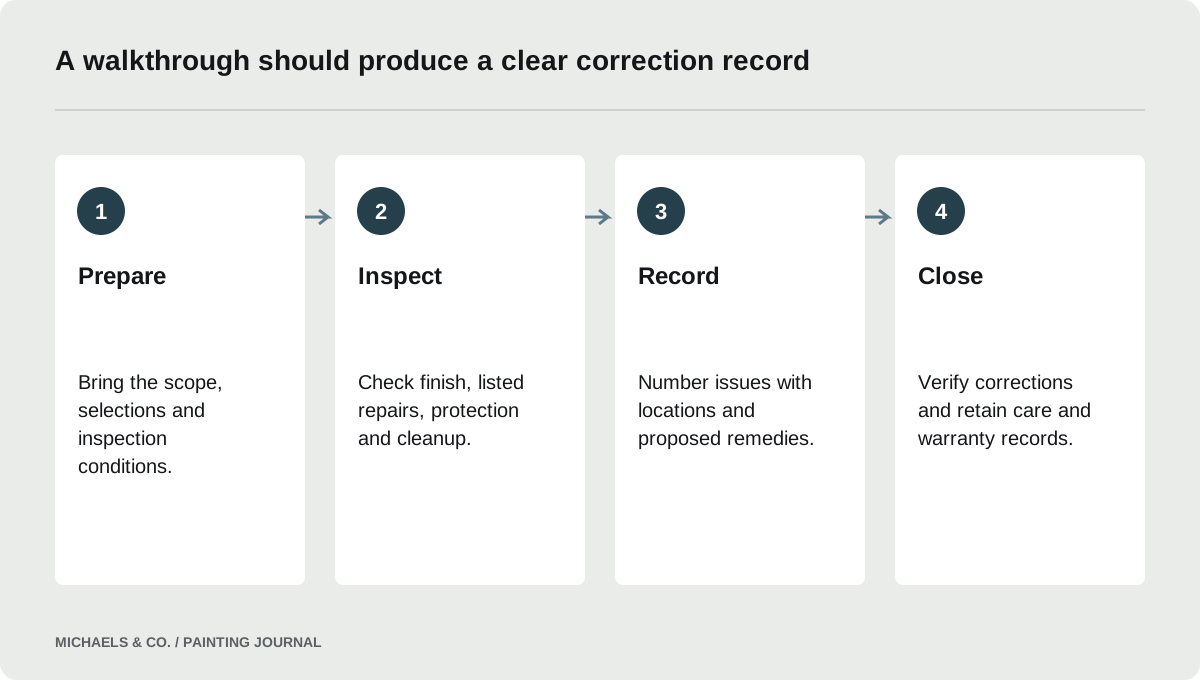
Inspect a completed painting job when the coating can be meaningfully assessed, using the accepted scope and agreed conditions. Check coverage, edges, sheen, listed repairs, protected items, hardware and cleanup. Record defects by location with photographs, then agree on corrections and dates. A walkthrough is not the same as a warranty or an occupancy clearance, and final-payment decisions should follow the actual contract and applicable law.
Choose a useful inspection time
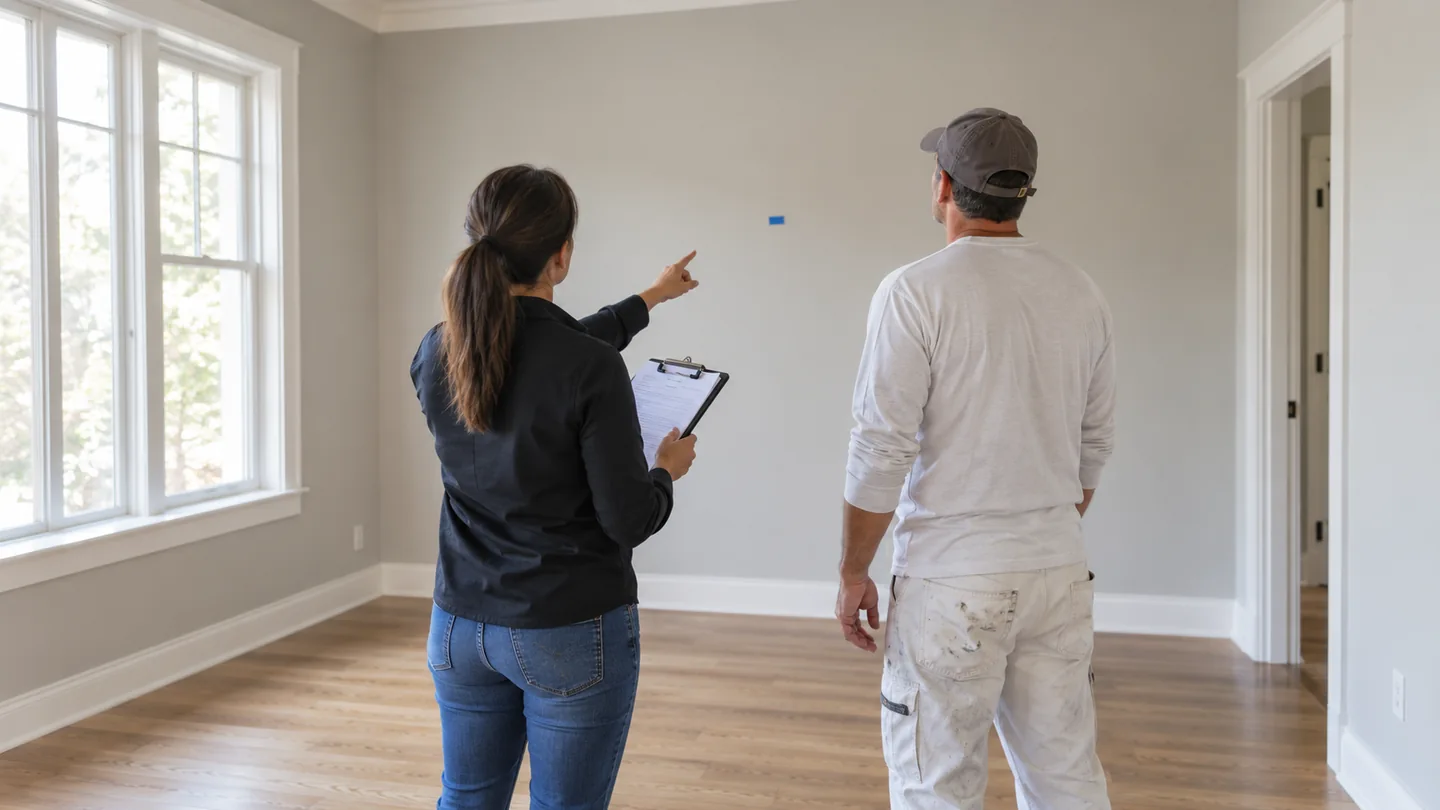
A rushed inspection of visibly wet paint can miss the final appearance or mistake temporary differences for defects. Ask the contractor when the actual coating and site conditions allow a meaningful finish review. Separate this question from when the room can be occupied, cleaned or returned to full service.
A condo owner's discussion describes being asked to conduct a final walkthrough before all paint would have dried. That concern is reasonable to raise with the contractor. Manufacturer data, such as the example Emerald Satin sheet, distinguishes drying and recoat information under stated conditions. It does not create one inspection or occupancy interval for every product. Schedule the review around the actual system rather than an assumed universal waiting period.
Bring the scope and final selections
Use the accepted room list, product schedule, approved changes and any sample agreement during the walkthrough. Memory is a weak substitute when ceilings, closet interiors or particular trim were excluded. Identify the surfaces being accepted and the items still waiting for another trade or an owner decision.
Check colors and sheens against the final approval, not an early option that was later changed. If a material substitution was approved, include that record too. The walkthrough should establish whether the contracted result was delivered. It should not become an opportunity to add new preparation expectations without acknowledging that they were outside the original scope. At the same time, a vague description should not be used to dismiss a specific commitment that appears elsewhere in the agreement.
Inspect the finish under relevant conditions
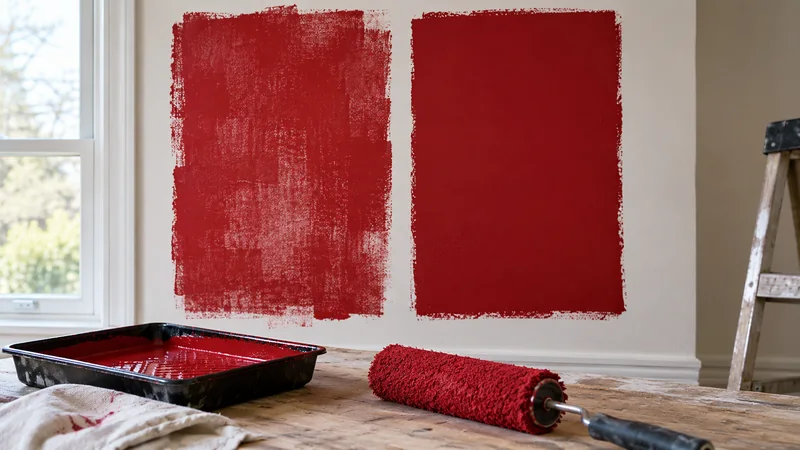
Look for incomplete coverage, missed edges, inconsistent sheen, drips, application marks and the appearance of listed repairs. Use the project's agreed lighting and acceptance requirements. Walk the room as it will normally be used, while also checking the details that were explicitly included.
Avoid declaring that a flashlight test or a particular viewing distance is a universal legal rule. If the contract incorporates a trade standard, identify the actual document and provision. Note when lighting is temporary or a surface is obstructed. A wall behind stacked furniture cannot be fully accepted simply because the accessible half looks good. Arrange access or record the limitation so a later complaint can be considered against what was actually visible at the inspection.
Distinguish paint defects from existing wall conditions
A bump, joint line or old texture variation may originate in the substrate. Whether it should have been corrected depends on the agreed preparation and finish. Compare the condition with starting photographs and any accepted sample. Ask the painter to explain the cause and proposed remedy without assuming that another finish coat fixes every problem.
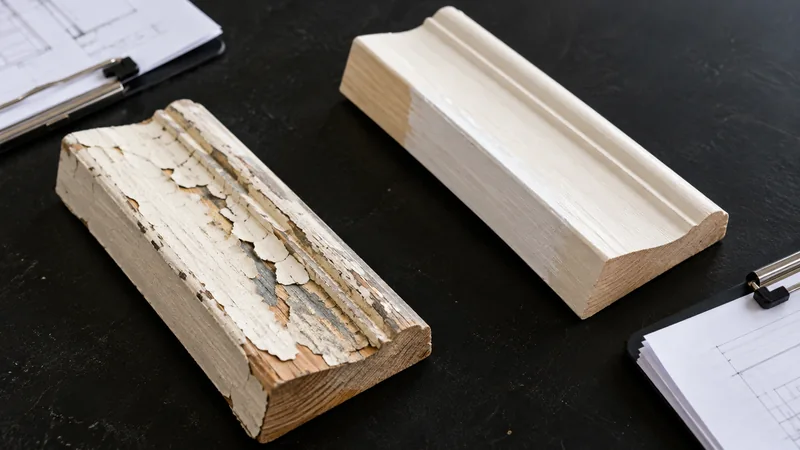
If the dispute concerns adhesion, staining or moisture, a visual punch list may not be enough. The cause may require further investigation before repair. Do not scrape, cut or sand an old or unknown coating during an improvised inspection. Preserve the condition and obtain appropriate advice. A good walkthrough identifies questions that need technical assessment rather than forcing every concern into an immediate cosmetic touchup.
Check the property around the painted surface
The finish is only part of completion. Inspect hardware, switch plates, glazing, floors, furnishings and other protected items for damage or paint contamination. Confirm that removed items were reinstalled as agreed and that waste and temporary protection have been handled appropriately.
- Match completed rooms and surfaces to the scope.
- Check the specified finish and listed repairs.
- Inspect adjacent items for damage or contamination.
- Confirm hardware and contents responsibilities.
- Record cleanup and any remaining restrictions.
- Collect final product and maintenance information.
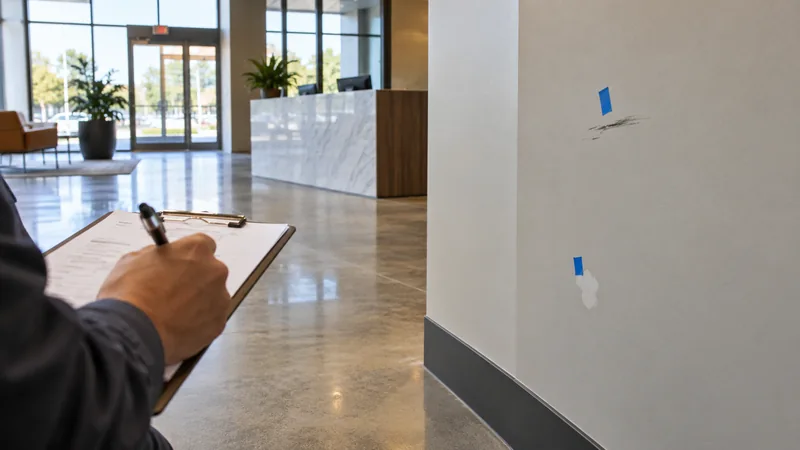
An owner's punch-list account includes spatter and scattered paint chips among other unfinished details. Those observations illustrate why a review limited to wall color can miss practical completion issues.
Make the punch list specific and finite
Number each item, identify the room and location, describe the observable condition and attach a photograph where useful. State whether the remedy is agreed or requires assessment. Ask the contractor to confirm the correction scope and expected date.
Avoid vague entries such as “make everything perfect,” which are difficult to price or verify. Also avoid signing away unresolved items merely because the contractor calls them minor. Group related issues so the crew can correct them efficiently, but preserve enough detail to check the result afterward. A coordinated list reduces repeated visits and misunderstandings. If another condition is discovered later, record when it became observable and handle it through the contract or warranty process rather than pretending the first list anticipated every possible issue.
Handle payment through the actual agreement
Read the completion, correction and payment terms together. A contract may distinguish substantial completion from later punch-list work, but that does not mean all defects become optional. A homeowner's discussion questions a clause describing post-payment touchups as a courtesy; its effect depends on the full agreement and applicable law.
For covered Massachusetts HIC work, state contract guidance describes final-payment requirements. The HIC scope and exemptions must be checked before applying them to a painting job. Seek appropriate advice if payment is disputed. Do not assume that withholding the entire balance or paying immediately will always produce the best legal or practical outcome.
Keep a useful closeout package
After corrections, record what was completed and any remaining agreed exception. Retain the final product, color and sheen schedule, labeled leftovers where appropriate, maintenance instructions and warranty documents. Identify the contact for later problems and the information they will need.
A signed walkthrough should accurately state what was inspected and accepted. It should not be described as a guarantee that concealed conditions do not exist or that the coating can immediately tolerate every cleaning method. Keep separate records for occupancy decisions or lead-related completion documentation where those apply. A clear closeout helps both owner and painter distinguish a missed item, later damage and a future coating failure without reconstructing the entire project from memory.
Questions & answers
Should I inspect before the paint is fully cured?
A finish review does not necessarily require waiting for every aspect of cure, but the coating must be at a stage where the relevant appearance can be assessed. Use the actual product guidance and site conditions. Keep inspection timing separate from handling, cleaning and occupancy decisions.
Can I add items after the final walkthrough?
Record the condition and when it became observable. It may be an overlooked original issue, new damage or a later failure, and the contract or warranty determines the appropriate process. A clear first walkthrough helps evaluate later reports without automatically accepting or rejecting them.
Should I mark defects with painter's tape?
Ask the contractor what marking method is appropriate for the actual coating and its condition. Tape can damage some fresh finishes or complicate a repair. Numbered photographs and a room list may be sufficient. Do not apply an adhesive simply because another project's punch list used it successfully.
Sources & further reading
- Massachusetts home improvement contract sample languageCovered HIC contracts require detailed scope, materials, dates and payment terms; applicability must be checked.
- Massachusetts HIC homeowner resourcesState guidance: interior painting is exempt from HIC registration; covered-work remedies require scope and eligibility checks.
- Sherwin-Williams Emerald Interior Satin product dataExample manufacturer instructions specify recoat time and film build under stated conditions; use the actual selected product's current sheet.
Reader discussions
These conversations describe problems people encountered. They do not establish the cause of a defect or replace product instructions and applicable requirements.