Two Painting Quotes, Different Prep: How to Compare What You Are Actually Buying
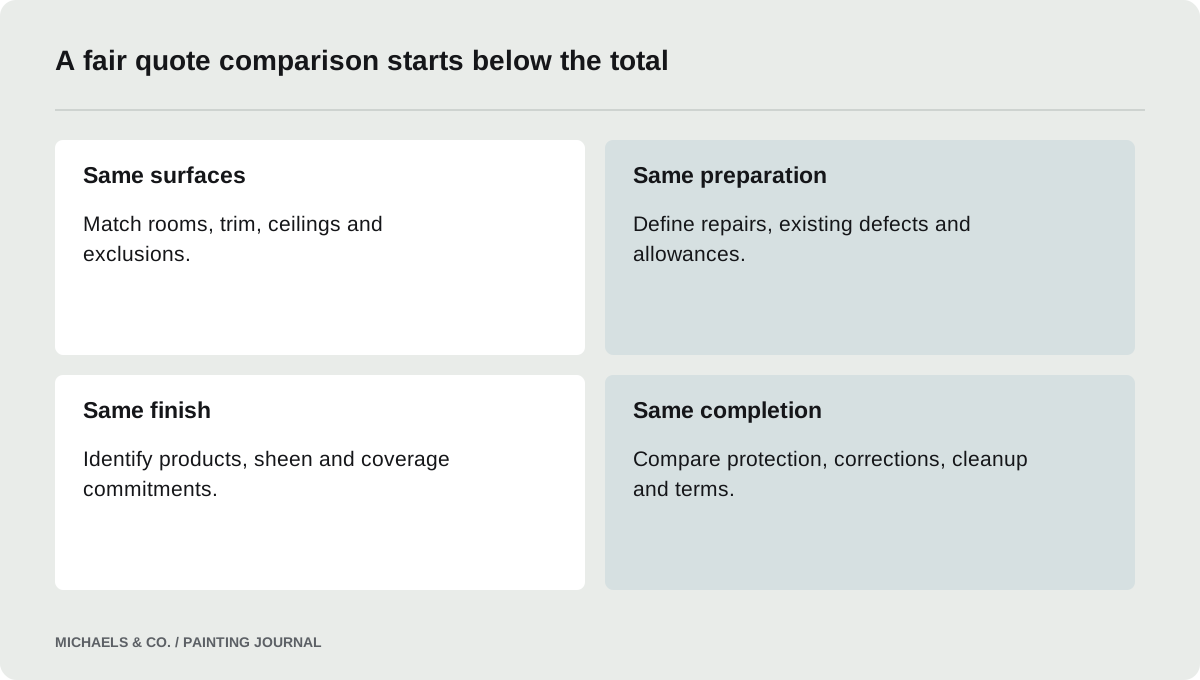
Compare painting quotes by matching the preparation and finish deliverables line by line. Confirm the same rooms, surfaces, repairs, products, primer assumptions, coverage commitment, protection and cleanup. A lower price may reflect efficiency, a narrower scope or unresolved assumptions; the total alone cannot tell you which. Ask bidders to clarify missing items and put the final agreement in writing before choosing on price.

Create one surface list for every bidder
Start with a room-by-room list that identifies walls, ceilings, trim, doors, closets and other surfaces. Mark what is excluded. “Entire interior” can mean different things to different contractors, especially for closets, cabinet interiors, stair components or previously unpainted wood. Give bidders the same list so their proposals answer the same request.
A homeowner comparing widely different estimates could not tell whether the cheaper proposal was incomplete or the expensive one excessive. That question cannot be resolved from totals alone. A common surface schedule makes the differences visible. It also prevents an owner from assuming that a casually mentioned area was included when the written proposal never listed it.
Translate preparation into observable work
Preparation is where apparently similar quotes often diverge. One contractor may include washing, removal of loose coating and localized repairs; another may allow only filling a few nail holes. Ask what the phrase “standard prep” includes on the surfaces actually present.
Photograph representative cracks, damaged corners, rough patches and contamination during the walkthrough. Have each bidder explain the proposed treatment and the expected remaining appearance. A repaint does not necessarily include flattening every old wall irregularity. If you want a smoother result, request that scope explicitly. Avoid specifying abrasion of old or unknown coatings without the appropriate lead or other hazard assessment. The comparison should describe a suitable process for the building, not reward whichever bidder promises the most aggressive preparation.
Separate included repairs from allowances
An allowance can be reasonable when the extent of a repair cannot yet be determined. It becomes a problem when the proposal presents an attractive total without explaining how the allowance changes. Ask for its basis: a defined quantity, labor allowance or provisional scope.
Identify how additional work will be measured and approved. A statement that hidden damage costs extra should be paired with a process for documenting the condition before it is repaired. Conversely, a contractor should not use an allowance to reclassify visible conditions that were already part of the agreed work without explanation. Compare the likely range of scope as well as the base price. You are choosing an agreement that can be administered when conditions vary, not merely buying a number on the first page.
Compare the coating system, not only the brand
A brand name covers many product lines, sheens and intended uses. Request the exact proposed finish and relevant primer, together with the surfaces on which each will be used. Confirm whether the estimate assumes the current color, a selected new color or an unspecified future selection.
Distinguish the number of coats from the finish commitment. Two proposals may each say two coats while handling difficult coverage or repairs differently. Ask how a change in color or product affects the price, and whether a sample area is appropriate. Product instructions govern application conditions; the contract governs what the parties agreed to purchase. A premium product name does not by itself establish that the preparation, compatibility or finished appearance will meet the project's requirements.
Discuss existing defects and realistic appearance
Some imperfections originate in the substrate rather than the fresh coating. An old wall may contain texture variation, earlier repairs or uneven construction that a routine repaint will leave visible. Ask the contractor to distinguish what will improve from what will remain.
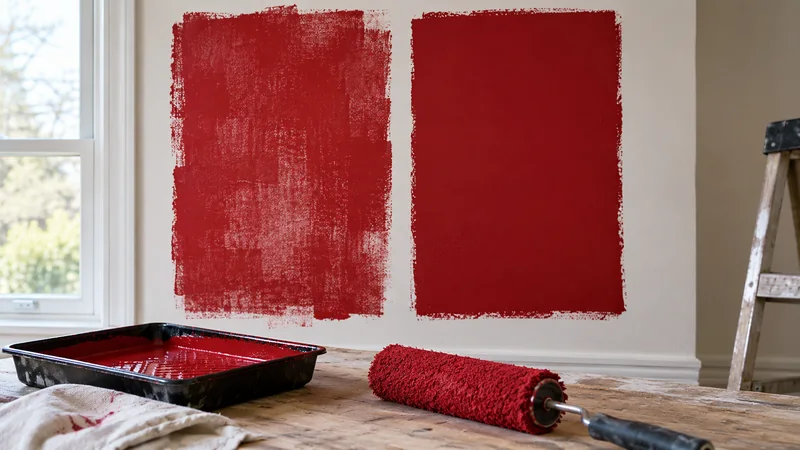
A sample area can help when expectations differ or a selected sheen emphasizes irregularities. Record the preparation used and the appearance accepted, rather than treating a small color swatch as approval of the entire wall finish. Lighting matters too: inspect the sample in the conditions relevant to normal use and the project requirements. Do not introduce an unverified universal viewing-distance rule. If a trade standard is part of the agreement, identify it precisely so both parties know what acceptance means.
Read the payment and change terms in context
A clear scope should be accompanied by a schedule, change-approval process and payment terms appropriate to the project. In Massachusetts, HIC contract guidance describes requirements for covered work. However, state homeowner guidance lists interior painting among registration-exempt activities. Do not assume every painting quote has the same statutory treatment.
For any project, written detail is a practical way to reduce misunderstandings. Check whether verbal clarifications become part of the agreement and which document controls if terms conflict. Ask how the contractor will document unforeseen conditions or owner-requested additions. A bid that looks complete can still be difficult to manage if its change and acceptance process remains vague.
Choose on explained differences, then freeze the baseline
Price is important, but first understand what produces the difference. A contractor may have lower overhead, a more efficient approach or a narrower scope. A higher price may include repairs or access constraints that another bidder overlooked. Neither conclusion should be assumed without a clear explanation.
Once you select a proposal, incorporate the agreed clarifications into the final documents. Keep the room list, preparation notes, product selections, sample approvals and exclusions together. Photograph the starting condition before work. This baseline gives you a useful reference if a final invoice changes or an expected repair is omitted. Comparing quotes carefully is valuable because it improves the eventual project agreement, not because it guarantees that the cheapest or most detailed proposal will always be the best choice.
Questions & answers
Is a much cheaper painting quote automatically a warning sign?
It deserves clarification, not an automatic rejection. Check whether it covers the same surfaces, preparation, materials, protection and completion process. A lower total can reflect genuine efficiency or a narrower scope. Ask for the missing details before deciding whether the price represents a useful saving or an unresolved risk.
Should every crack and patch be listed separately?
Not necessarily, but representative conditions and the extent of included repairs should be clear. A room schedule, photos and a defined repair allowance can work together. The important distinction is between routine included preparation, specifically excluded improvement and uncertain work that requires later approval.
Can I accept a quote and choose colors afterward?
You can if the agreement states how later selections affect coverage, materials and price. Some changes may require a different application plan or additional work. Establish the selection deadline and approval process before signing, then keep one final color schedule so the crew receives consistent instructions.
Sources & further reading
- Massachusetts home improvement contract sample languageCovered HIC contracts require detailed scope, materials, dates and payment terms; applicability must be checked.
- Massachusetts HIC homeowner resourcesState guidance: interior painting is exempt from HIC registration; covered-work remedies require scope and eligibility checks.
Reader discussions
These conversations describe problems people encountered. They do not establish the cause of a defect or replace product instructions and applicable requirements.