A Painting Invoice Is Higher Than the Quote: Build a Change-Order Record
When a painting invoice exceeds the accepted price, compare each extra charge with the original scope and the record of authorized changes. Ask for an itemized explanation identifying the work, reason, date and approving person. Separate owner-requested additions from unforeseen conditions and estimating mistakes. Do not assume an overrun proves fraud, but do not accept a revised total as evidence that you agreed to it.

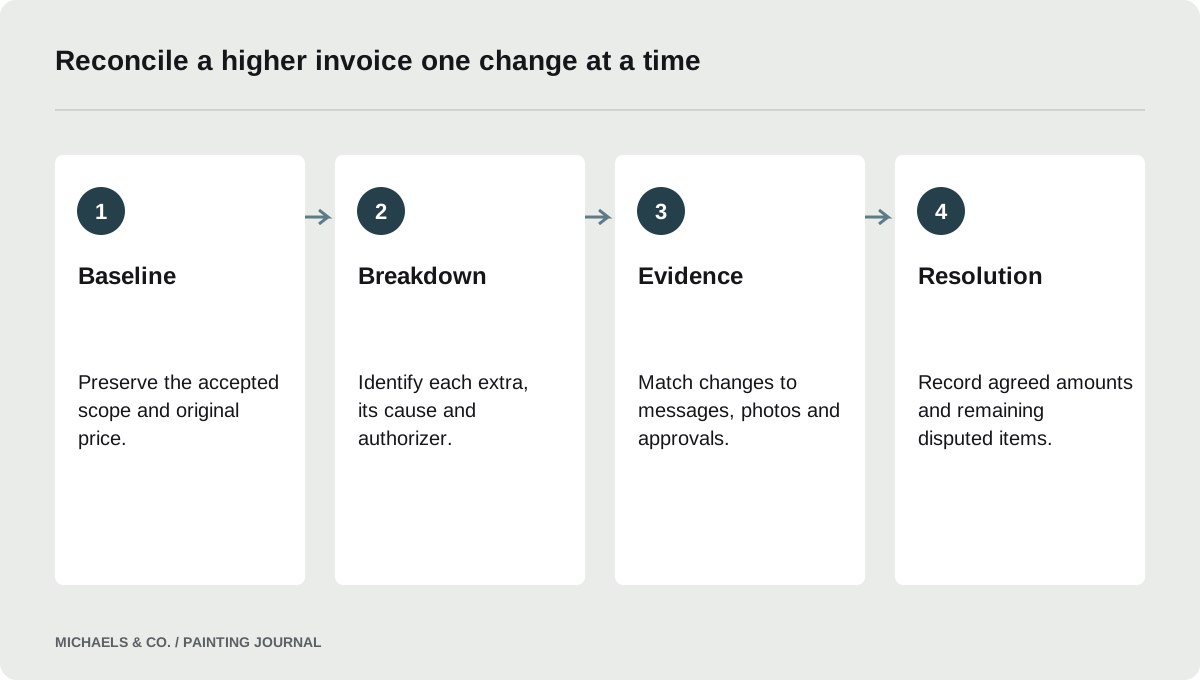
Preserve the original price and its assumptions
Collect the accepted quote, contract, purchase order, revisions and payment records. Keep the original versions even if the contractor sends an updated document. Identify whether the price was fixed, an estimate, an allowance-based arrangement or another agreed structure. The label on the document is relevant, but the complete terms and applicable law need to be considered together.
A Vermont homeowner reported a 40% labor increase despite a clause requiring written approval before scope or price changes. That allegation does not establish the outcome of the dispute. It does provide a concrete reason to preserve the baseline: without it, a final invoice can make a disputed change look like the original agreement.
Turn the overrun into individual questions
Ask for a breakdown that identifies every additional task and amount. A line reading “extra labor” is not enough to understand what changed. Request the location, work performed, reason it fell outside the original scope, date of instruction and person who approved it.
A useful response might distinguish an added room, extra repair discovered after removal of loose material and a customer-requested color change. Those are different events and should not be combined into one percentage increase. Compare the breakdown with daily messages and photographs. If an item remains unclear, state the specific question rather than rejecting the whole invoice without explanation. A factual item-by-item record often reveals which amounts are agreed and which need further investigation.
Separate additions from estimating errors
An owner who asks for an extra ceiling may have requested new work. A contractor who underestimated the time needed for an unchanged scope may be describing an estimating problem. A hidden condition may fall under a contract allowance or change procedure. None of those categories should be assumed solely from the contractor's or owner's preferred label.
Review what was visible at the initial walkthrough, what the documents excluded and what actually emerged. If the contractor claims unexpected damage, ask for the record made before it was covered or repaired. If the owner requested a change, identify its extent and whether a price or adjustment method was discussed. The objective is to classify the event accurately before debating whether the final charge is reasonable or authorized.
Build a change log that both parties can read
A simple table is more useful than a long argument about the overall bill.
| Change | Record needed |
|---|---|
| Added surface | Area, request, agreed price and approval |
| Unexpected repair | Condition photos, exclusion or allowance, proposed remedy |
| Color or product change | Previous approval, new selection and rework extent |
| Delay or extra visit | Cause, contract treatment and authorization |
Add columns for the invoiced amount and whether it is agreed, disputed or awaiting information. Keep the language neutral. A change log can support a practical settlement, a mediation discussion or professional advice without claiming that your first classification is already a legal finding.
Use Massachusetts contract guidance with the right scope
For covered residential HIC work, Massachusetts contract guidance requires a detailed agreement and payment information. That source should not be treated as a blanket rule for every painting job. Interior-only painting can fall within an HIC registration exemption, and commercial work has a different contractual context.
Even where a particular HIC requirement does not apply, written authorization remains a sensible project-control practice. State the added scope, amount or pricing method, schedule effect and approving person before the work proceeds whenever possible. For an existing dispute, obtain advice based on the actual agreement and jurisdiction. Avoid borrowing a forum comment's statement that a quote can never change or that all overruns must always be paid.
Propose a resolution that names the remaining disagreement
After reviewing the records, tell the contractor which items you accept and which require explanation or correction. Request a revised itemized invoice if the accounting is wrong. If there is a genuine ambiguity, the parties may choose a negotiated adjustment, but the agreement should describe what it resolves.
Do not assume that paying an undisputed amount, withholding a balance or hiring a replacement has the same legal effect in every situation. Seek appropriate advice before taking a step that could affect contract rights or a claim. The FTC's consumer guidance emphasizes records and clear written terms. Preserve your documents and avoid threats, unsupported accusations or rushed releases that make a practical resolution harder.
Set a workable rule for the remainder of the project
If work is continuing, appoint one person to approve changes and require the crew to raise uncertain scope before proceeding. A change form need not be elaborate. It should say what is changing, why, the cost basis and whether the completion date moves.
Define how urgent discoveries will be handled if the approving person is unavailable. That may mean protecting the area and waiting rather than performing an undefined repair. Keep the current scope and approved changes together so the final invoice can be reconciled without reconstructing weeks of conversations. A good process protects both parties: the owner avoids surprise charges, and the contractor has a clear record of additional work that was requested and accepted.
Questions & answers
Does an estimate allow the contractor to charge any higher amount?
No document label should be interpreted in isolation. Review the terms, scope, allowances, change procedure and applicable law. Ask for a specific explanation of the difference and the authorization record. An estimate is not a blank check, but the legal effect of a particular price statement requires the actual agreement.
What if I requested extra work but no price was discussed?
Record exactly what you requested and ask for an itemized account of the additional work and proposed charge. The missing price creates a question to resolve, not an automatic conclusion that the work was free or that any amount is acceptable. Get agreement on remaining changes before they are performed.
Should I pay the final invoice while disputing part of it?
The appropriate treatment depends on the contract, jurisdiction and circumstances. Identify agreed and disputed items clearly, preserve records and obtain advice if needed before deciding how to pay. Avoid assuming that withholding everything or paying without qualification will always protect your position.
Sources & further reading
- Massachusetts home improvement contract sample languageCovered HIC contracts require detailed scope, materials, dates and payment terms; applicability must be checked.
- FTC: How to avoid a home improvement scamFTC consumer guidance favors written scope and documented payments and identifies pressure and advance-payment warning signs.
Reader discussions
These conversations describe problems people encountered. They do not establish the cause of a defect or replace product instructions and applicable requirements.