When an 18-Inch Paint Roller Helps and When It Slows You Down
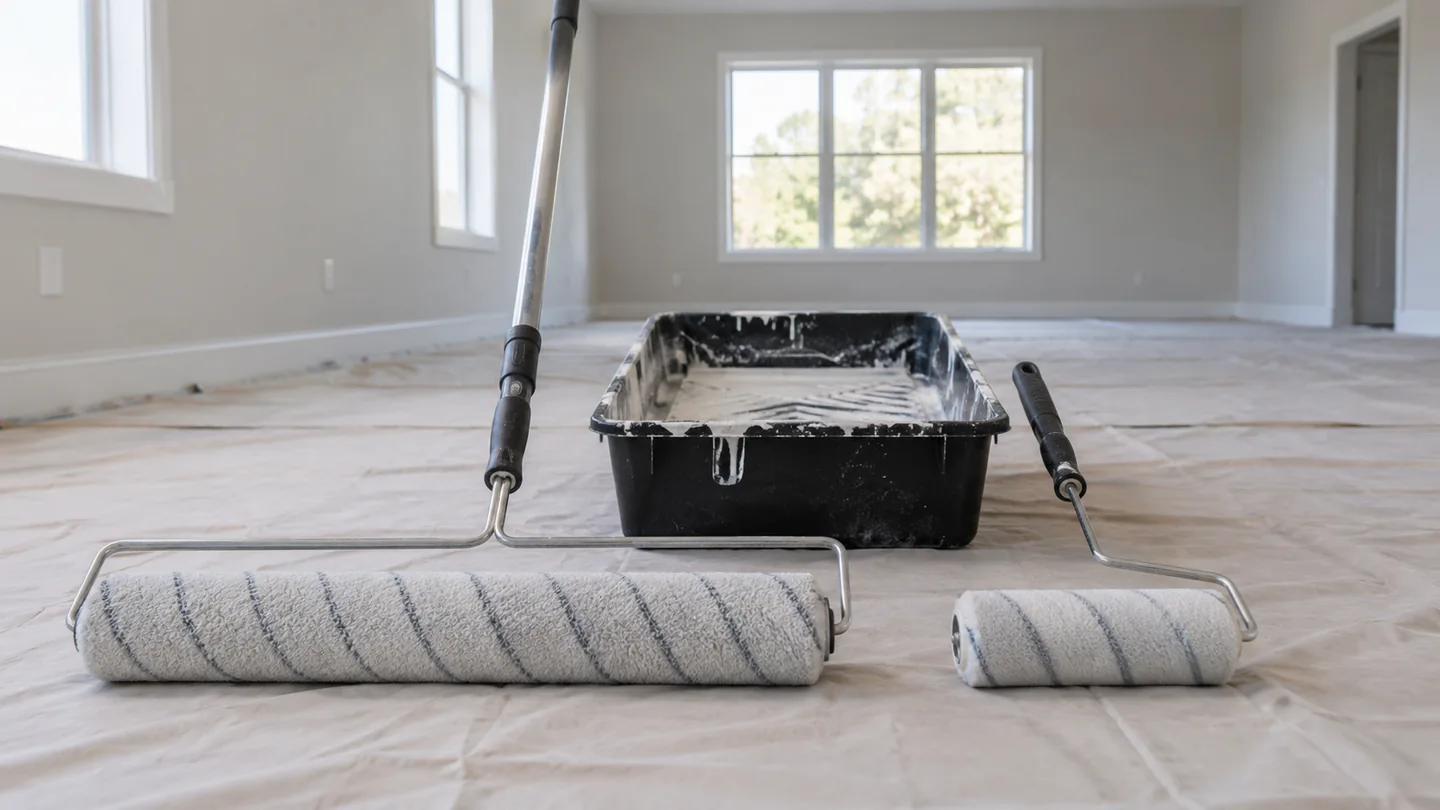
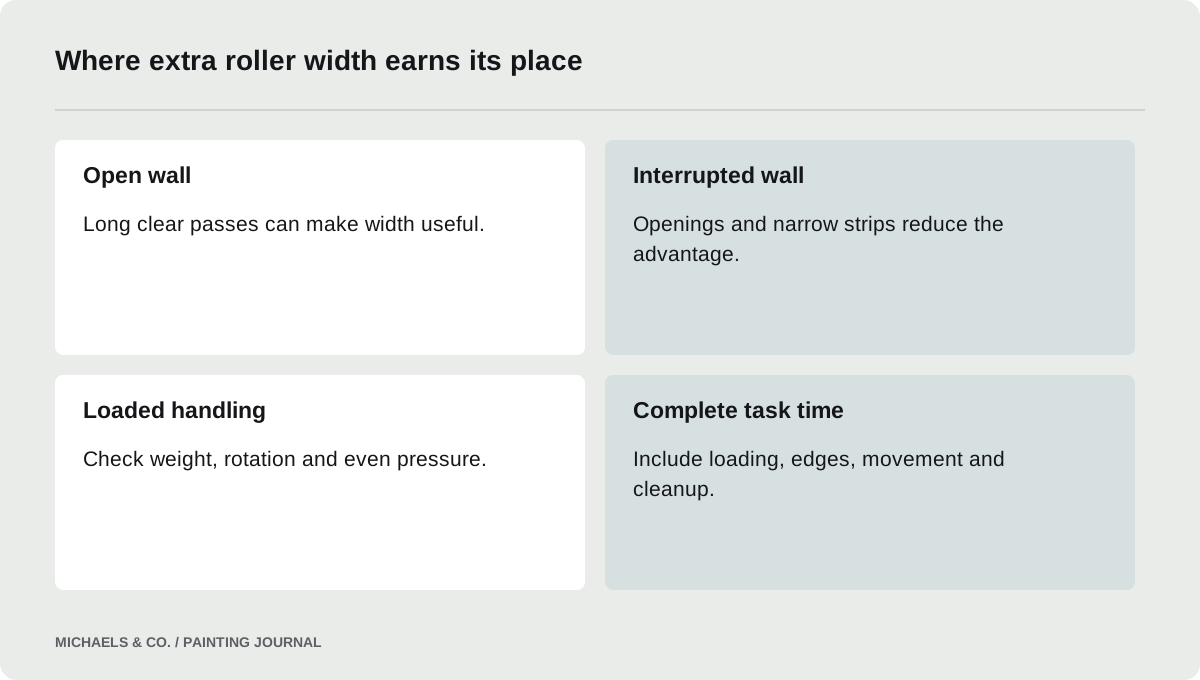
An 18-inch roller is useful on broad, accessible walls and ceilings when you can load it evenly and control the added weight. It is less convenient in small furnished rooms, narrow wall sections and crowded access routes. Compare total working time, including loading, cutting in and cleanup, rather than assuming twice the width of a 9-inch sleeve means twice the productivity.
Measure the uninterrupted surface, not just the room
An open warehouse wall and a small bedroom may have similar total paint quantities but very different opportunities for a wide roller. Windows, doors, cabinets and furniture divide the work into smaller zones. Measure how much of the surface can be coated with long, comfortable passes. If most sections are narrower than the roller or interrupted by obstacles, a wider frame may spend more time being repositioned than painting.
A Reddit discussion about 18-inch roller naps for smooth walls shows that width and finish quality are separate choices. Moving to a larger sleeve does not settle which fabric or nap suits the coating. Start by identifying the broad areas where the extra width is useful, then plan a smaller roller and brush for restricted spaces. A mixed tool plan is often more practical than committing the whole project to one roller size.
Count the complete equipment change
An 18-inch sleeve needs a compatible frame, loading tray or bucket arrangement and a suitable extension. Check clearances through doorways and around protection before opening paint. A narrow tray that worked with a 9-inch cover will not load the wider sleeve evenly. Improvised loading can leave one end starved and the other overloaded, creating a problem that looks like inconsistent paint.
Purdy's roller-system guidance treats the handle, extension and cover as a working assembly. Apply that approach when comparing costs: include the frame, tray, liners where used and cleanup space. Make sure the loaded assembly can be set down safely during interruptions. If the project contains only one broad feature wall, purchasing and managing the larger system may not produce a meaningful saving. Repeated open-room work provides more opportunity to recover the setup effort than a single tight repaint.
Choose nap independently of width
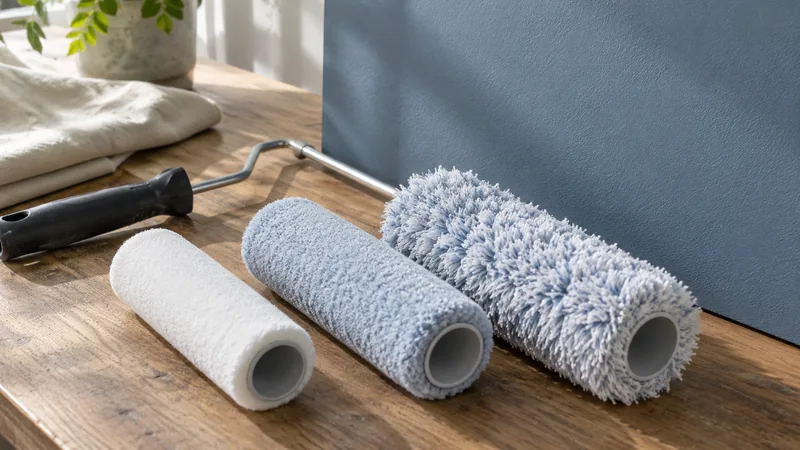
Width determines the area covered by a pass; nap influences paint capacity and how the cover reaches the surface. A wider roller with a deep nap can carry a substantial load, which may help production on a textured substrate but feel heavy overhead. A shorter nap can reduce texture on suitable smooth surfaces while requiring more frequent reloading.
Purdy's cover-selection guidance links nap and fabric to the substrate and coating. For a smooth-wall comparison, start with the paint's permitted cover range rather than choosing a thick sleeve merely because it is available in 18 inches. If you already approved a sample with a smaller cover, match its fabric and nap as closely as practical, then test the wider assembly. Similar sleeve specifications do not guarantee identical handling. Frame pressure and loading change when the width changes, so the sample remains necessary.
Test control at the top and bottom of the wall
A roller can feel manageable at waist height and become awkward near a ceiling or baseboard. Test the actual working reach before deciding it is faster. You should be able to keep the cover in controlled contact without leaning hard, twisting the frame or pushing one end more firmly than the other. Repeated correction passes erase much of the theoretical speed advantage.
Use an extension length that permits comfortable movement in the room. Too much extension in a confined space can make corners and tray access cumbersome. Too little can encourage stretching or steep roller angles. On ceilings, account for the weight of the loaded sleeve over an entire work period, not just a brief demonstration. If fatigue causes uneven pressure after several minutes, a smaller tool may produce more consistent work with fewer interruptions. Productivity includes sustained control, not only the first few passes.
Compare real coverage with a timed section
Choose two similar prepared areas and use the same paint, coat count and acceptance standard. Time loading, painting and repositioning, not just roller contact with the wall. Note how often each tool needs reloading and how much edge work remains. Judge both areas after drying before deciding which method was faster at the required quality.
| Job condition | Likely advantage |
|---|---|
| Long open walls with clear floor access | 18-inch system deserves a trial |
| Many narrow strips between openings | Smaller roller reduces repositioning |
| Heavy coating overhead | Compare fatigue and permitted applicators carefully |
| Small occupied room | Compact loading and movement may matter more than width |
Do not compare a familiar small roller with an unfamiliar wide one after a single rushed pass. Allow enough practice to learn normal loading, while keeping the comparison realistic for the project's schedule.
Coordinate cutting in with the wider pace
A wider roller can cover open areas quickly, but edges still require attention. If one person is cutting in and another rolling, agree on section size and sequence so the work remains coordinated. The relevant window depends on the coating and room conditions. A large roller does not make dried edge bands disappear.
In a solo project, stage the work so cutting in does not leave an entire room waiting while you move a heavy loading station. Complete manageable areas using the coating's recommended approach. Keep the smaller applicator close enough to handle narrow sections without carrying wet tools across the room. If multiple rollers are used on one visible plane, maintain a compatible application texture. A fast broad-wall pass beside a different mini-roller pattern can draw attention to the boundaries even when both areas have adequate color coverage.
Choose the tool that preserves the approved finish
At the end of the trial, compare the dried wall for consistent texture, edge tracks and coverage. Look from ordinary viewing positions and under the actual room lighting. If the wider tool requires excessive pressure to maintain contact or leaves end ridges, investigate the frame and loading before assuming the paint is responsible.
For repeated commercial work, record the successful frame, cover and loading arrangement so another crew member can reproduce it. For a one-room homeowner project, the simpler system may be the better choice even if the broad section takes a little longer. There is no need to make width a statement about professionalism. The useful outcome is a controlled, repeatable coat with acceptable cleanup and access. Keep the 18-inch roller for work that benefits from it, and use a smaller tool where it lets you finish correctly with fewer corrections.
Questions & answers
Does an 18-inch roller use twice as much paint?
Width alone does not determine the required coating quantity. Coverage and film build come from the product and substrate. A larger cover holds more paint during use and can change loading habits, so poor control may increase waste even though the specified finished coverage is unchanged.
Can I use an 18-inch roller on a small ceiling?
You can if the coating, access and equipment fit, but test loaded weight and maneuvering first. A narrow room can make the extension and wide frame awkward. The best size is the one that lets you maintain an even coat without fatigue or excessive repositioning.
Should my mini roller match the large roller?
Match fabric and nap where possible when both tools finish the same visible surface, then check a dried sample. Different covers can leave different patterns. The smaller tool still needs to suit the coating and reach its assigned area without forcing paint into corners.
Sources & further reading
- Purdy: How to Use a Paint Roller SystemRoller width, frame, tray and extension pole form a system; larger rollers suit broad surfaces.
- Purdy: How to Choose a Paint Roller CoverSelect cover fabric, nap and width for the coating and substrate; short nap is not a promise of zero texture.
Reader discussions
These conversations describe problems people encountered. They do not establish the cause of a defect or replace product instructions and applicable requirements.