A Neighbor's Painter Spread Dust onto Your Property: A Lead-Safety Response Plan
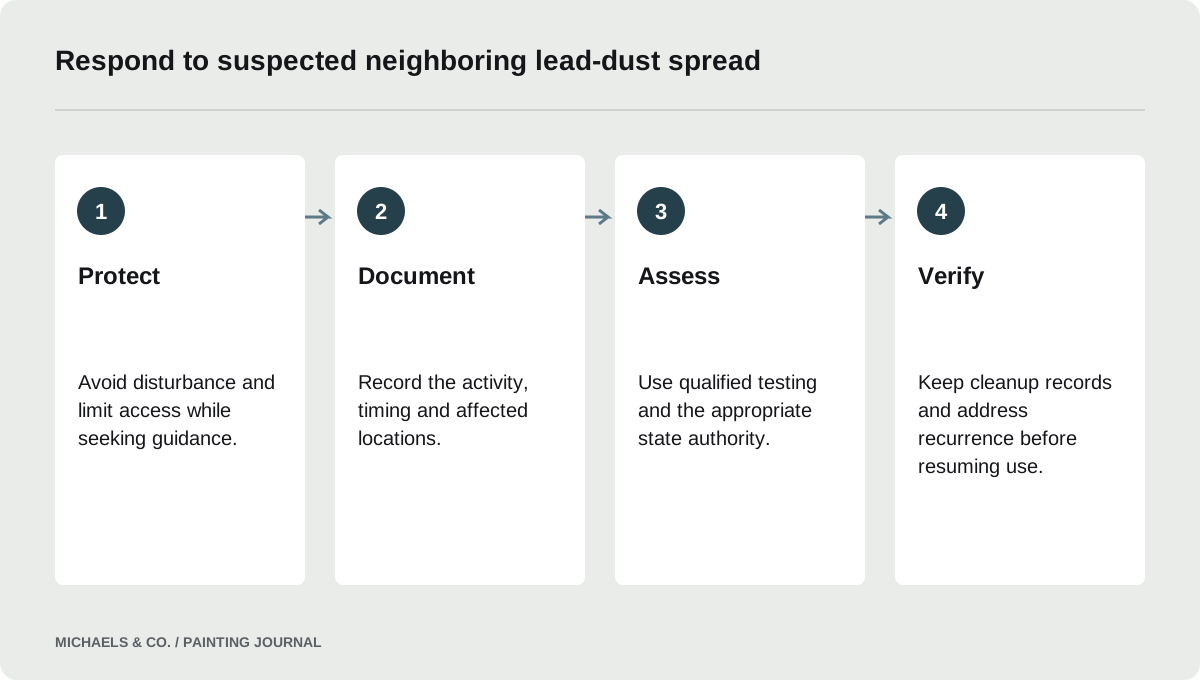
If a neighbor's painting work spreads suspected lead dust onto your property, avoid disturbing the affected area and obtain qualified guidance. Document the work, timing and visible deposit from a safe location, keep children and others away as appropriate, and contact the owner, contractor and relevant Massachusetts authority. Lead content cannot be determined by appearance. Testing, cleanup and verification should be planned professionally; responsibility for costs is a separate question.
Limit further contact while you seek guidance
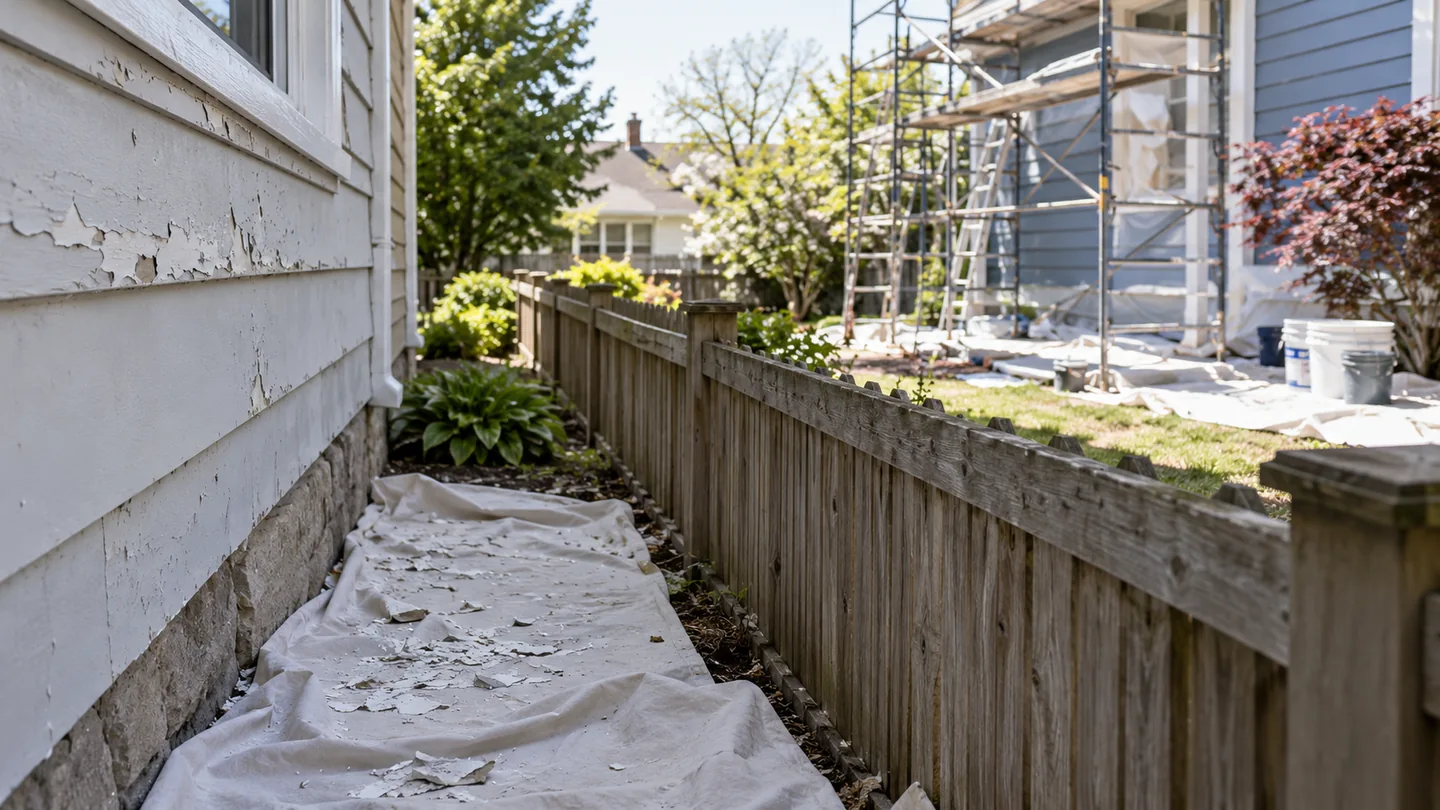
Do not walk through visible dust or chips to collect a dramatic photograph. Keep people and pets away from affected areas as appropriate and avoid activities that could spread the material. If it may have entered living spaces or contacted belongings, ask the relevant qualified professionals or public-health authority what immediate steps are suitable.
A Massachusetts resident's report describes exterior sanding dust settling on neighboring property where children lived, with the lead content unknown. That is precisely the distinction to preserve: suspected contamination warrants a careful response, but its composition is not established by seeing pale dust. Avoid both dismissing the concern and announcing a confirmed lead exposure without the evidence needed to support it.
Record observations without entering the work zone
Note the address, date, approximate time, visible activity and affected locations. Photograph from your own safe and lawful position where possible. Identify whether you observed sanding, scraping or another activity, and distinguish that from what someone told you afterward.
Preserve messages to the property owner or manager and record the contractor's business information if it is available. Do not confront workers in a way that places you in an active work area. A factual record should identify the concern clearly enough for an authority or assessor to investigate. It does not need an improvised sample, a close-up of a worker or a conclusion about intent. Keep original images and a short chronology rather than editing them into an accusatory narrative.
If conditions change before an assessor arrives, note the change and its time. Rain, additional work or someone attempting cleanup may affect what remains observable, so the chronology can be important to interpreting later findings.
Use the appropriate Massachusetts reporting route
For suspected noncompliant lead renovation, contact the Massachusetts program responsible for lead-safe renovation and ask which office should handle the situation. Local public-health or inspectional authorities may also have a role depending on the property and condition. Provide your concise record and follow the instructions for the actual jurisdiction.
The EPA's reporting guidance describes federal complaint routes and the kinds of lead-rule concerns that can be reported. Massachusetts has its own authorized program, so do not assume a federal form is always the only or fastest route. A report is a request for assessment or enforcement; it does not automatically establish contamination, liability or a right to reimbursement. Keep those outcomes distinct.
Arrange assessment that answers the actual question
Ask a qualified professional what type of assessment is appropriate for the affected surfaces and circumstances. Soil, interior dust and items with visible chips may present different questions. Explain the work timing and any cleanup already attempted so the assessor understands the condition.
Do not treat a consumer swab, a photograph or an unplanned sample as a complete assessment of the property. The professional should explain what will be examined, how results will be interpreted and what limitations remain. If a health concern involves a child or another person, seek appropriate medical or public-health advice rather than trying to infer exposure from a surface result alone. Environmental assessment and medical evaluation answer different questions and may need separate professionals.
Avoid cleanup methods copied from a comment thread
Dry sweeping, uncontrolled blowing or casual vacuuming can create additional spread. Do not improvise a cleanup system based on the claim that a particular household machine is dustless. Obtain a plan suited to the material, extent and applicable requirements.
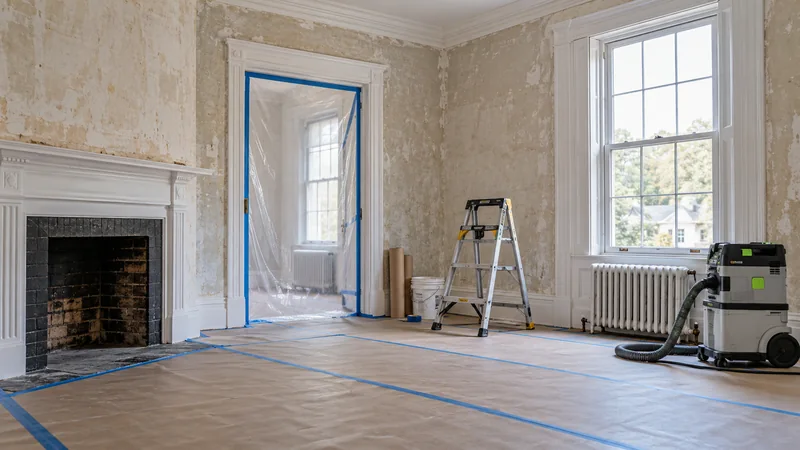
A homeowner's older-house account describes chips left broadly around a property after preparation. The EPA work-practice overview explains why containment, cleaning and verification are coordinated parts of covered renovation. It is not an invitation for an affected neighbor to perform hazardous cleanup. Ask who will do the work, what areas are included and how the result will be evaluated before agreeing that the incident is resolved.
Keep cost responsibility separate from immediate protection
The owner, contractor and insurers may need to investigate responsibility for testing or cleanup. Preserve invoices, assessment reports and communications, but do not delay urgent protective advice while waiting for someone to accept the bill. Document why any necessary intervention occurred.
| Issue | Record to preserve |
|---|---|
| Observed spread | Dates, locations and photographs |
| Assessment | Qualified findings and stated limitations |
| Cleanup | Approved scope, provider and completion record |
| Costs | Invoices and written agreements |
Do not assume that a neighbor's ownership or a contractor's insurance certificate automatically establishes who must pay. That is a fact-specific legal and coverage question, separate from determining what protection and cleanup the property needs.
Confirm the response before normal use resumes
Ask the responsible professionals what completion or verification process applies and what documentation will be supplied. Keep the report with the incident record. A statement that the area looks clean is not necessarily the same as completing the applicable assessment and cleanup process.
Before neighboring work resumes, ask how the plan has changed to prevent another spread event. Document any revised boundary, schedule or protective arrangement communicated by the responsible parties. Continue to report new observations factually. The aim is to restore appropriate use of the affected property and prevent recurrence, while leaving technical certification, medical assessment and liability decisions to the professionals and authorities responsible for those questions.
Questions & answers
Can I tell whether sanding dust contains lead by looking at it?
No. Appearance does not establish lead content or the extent of contamination. Document the material and the nearby activity, avoid disturbing it and obtain qualified guidance about assessment. Keep the distinction between suspected material, a confirmed environmental finding and any medical exposure question.
Should I clean the dust before reporting it?
Avoid improvised cleaning that could spread material or remove evidence. Seek prompt guidance from the appropriate qualified professional or authority about immediate protection and assessment. If urgent action is advised, document the condition, advice and work performed. Do not rely on a general household-cleaning method for suspected lead contamination.
Will the neighboring owner have to reimburse testing and cleanup?
That depends on the facts, applicable law and any insurance or contractual issues. Preserve evidence and expenses, notify the relevant parties and obtain appropriate advice. Immediate protection and qualified assessment should be considered separately from the eventual allocation of costs.
Sources & further reading
- Massachusetts lead-safe renovation for homeownersState LSR licensing and supervisor rules differ from deleading; renovation does not produce a Letter of Compliance.
- EPA RRP work practicesCovered renovations require containment, cleaning and verification; state programs and HUD requirements may add obligations.
- EPA lead disclosure and complaint routesLead disclosure concerns known information and available records for covered pre-1978 housing; fresh paint does not erase it.
Reader discussions
These conversations describe problems people encountered. They do not establish the cause of a defect or replace product instructions and applicable requirements.