Changing Paint Colors Mid-Project: Agree on Rework Before the Crew Continues
When you change a paint selection after work begins, agree on the affected surfaces, additional materials, repeated labor and schedule before the crew continues. First establish whether the issue is the selected color itself or a defect in application. Review the approved sample and conditions, then test the revised selection where useful. A clear change order protects the owner from a surprise invoice and the contractor from performing undefined rework.

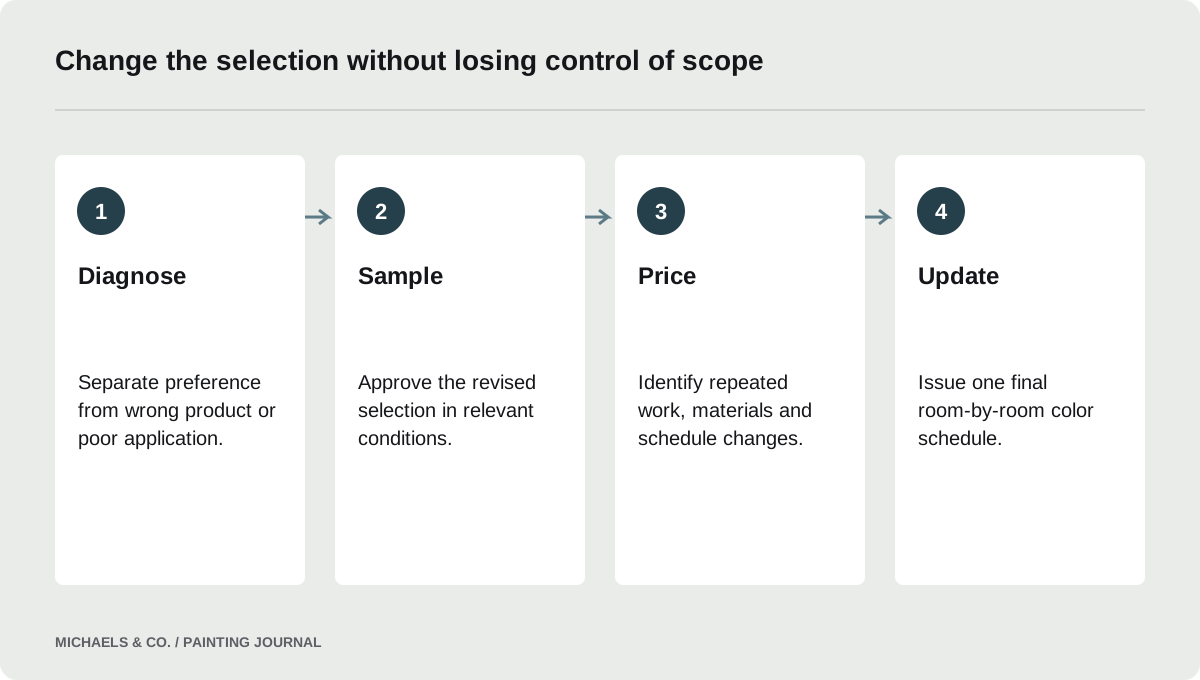
Decide whether this is a preference change or a defect
A room can look wrong because the selected color is unsuitable, because the sheen differs from the approval or because coverage is uneven. Those problems should not automatically be treated as the same paid color change. Compare the result with the final selection, product schedule and any approved sample.
Describe the observable issue before asking the crew to start over. If the wrong product or color was supplied, investigate that discrepancy separately. If the approved color is correctly applied but you dislike it in the completed room, acknowledge that the requested work may change the original scope. This distinction helps the discussion remain fair and makes the next decision easier to price. A contractor should likewise avoid calling a workmanship correction a preference change without explaining the basis.
Review the sample in the room's real conditions
A small color card, a phone image and a sample painted with the actual product can produce different impressions. Review the sample in the room, under the lighting relevant to normal use. Consider adjacent finishes and the selected sheen. Do not assume a color name alone communicates the final appearance.
If the original approval was based on a limited sample, record that fact without pretending it guarantees a particular remedy. A revised sample should answer the uncertainty that caused the problem. Use an appropriate representative area and the intended coating system, then allow the product-specific conditions needed for evaluation. Avoid approving the replacement while it is still visibly changing or under temporary lighting that will not be used in the room.
Count the work already performed
Ask the contractor to identify which surfaces have been prepared, primed or finished, which materials have been purchased and which areas remain untouched. Rework on a completed wall differs from changing a selection before the first finish coat. The revised price should reflect the actual stage.
A discussion about the number of colors included in estimates shows how late selections can complicate labor and material assumptions. Its prices are not local benchmarks. Use the thread's practical question instead: what did the original estimate allow, and what has now changed? Record rooms and surfaces individually where different stages apply. That prevents a broad “repaint charge” from obscuring work that was never performed or materials that remain usable.
Ask for a specific revised coating plan
Changing from one color to another can affect the required application process, but there is no universal extra-coat rule for every color combination. Ask which preparation, primer or finish applications the contractor proposes and why. Review the actual product instructions rather than relying on a generic promise of coverage.
The Emerald Interior Satin data sheet is an example of manufacturer guidance that connects color development and application requirements. It is not a specification for all paints. If coverage is uncertain, an agreed test area can help establish the revised scope. Make clear whether the new price covers a defined process, an agreed appearance outcome or both, and how additional unexpected work would be authorized.
Separate materials, repeated labor and disruption
A change order should explain the sources of added cost without requiring the contractor to reveal every internal business expense. Useful categories include newly required materials, repeated application, additional setup or protection and a separate return visit. Ask whether unused material can still serve another included area.
| Change component | What to clarify |
|---|---|
| Selection | Exact color, product and sheen replacing the approval |
| Rework | Surfaces and completed stages that must be repeated |
| Materials | Additional supply and treatment of unused products |
| Schedule | Extra visits, access and revised completion |
The purpose is to understand the revision, not to demand that the contractor charge only the retail cost of a few gallons while absorbing all repeated work.
Approve the price and schedule before continuing
Identify one person authorized to approve the change. Write down the revised selection, scope, price or pricing method and completion effect. If an owner, designer and tenant are all involved, make sure their instructions agree before the crew acts.
For covered Massachusetts HIC work, state contract guidance provides requirements for detailed project and payment information. Applicability depends on the actual scope; interior-only and commercial jobs should not automatically be assigned the same HIC rules. As a practical matter, written approval helps any project. A casual request to “make it warmer” is not an adequate replacement for a final color schedule and an understood rework price.
Prevent the old selection from reappearing
Once a change is approved, remove superseded instructions from the crew's active work packet while retaining them in the project history. Label the current selection by room and surface. Tell the supervisor which materials may still be used and which are no longer approved for the changed area.
Check adjacent trim, ceilings and doors for any related decisions. A wall-color change does not necessarily authorize changing every connected surface. If a second decision remains open, state the hold point so the crew can continue elsewhere without guessing. This is especially useful on projects with many colors or several decision makers. A clear current schedule prevents the expensive mistake of correcting one room while another worker follows the outdated selection in the next room.
Accept the revised result against the revised scope
Inspect the changed area when it is appropriate to assess the coating and compare it with the approved revised sample. Record any remaining application issues separately from another preference change. If you want another color adjustment, repeat the authorization process rather than treating the first change order as unlimited repainting.
At closeout, retain only the final material schedule for routine maintenance, while preserving earlier approvals in the contract file. Label leftover products accurately and identify which surfaces they match. The most useful outcome is a room you accept and a clear record of how the price changed. That reduces the chance that a later invoice dispute becomes a disagreement about conversations nobody documented while the crew was waiting for a decision.
Questions & answers
Can I change colors after the painter has purchased materials?
Yes, if the parties agree on the revised scope and cost. Ask what has already been purchased or applied and how the change affects labor and schedule. Approve the exact replacement selection in writing before more work proceeds, rather than assuming the existing price covers an unlimited number of revisions.
What if the painted color does not match the approved selection?
Investigate the product, tint, sheen, sample and application before treating it as an owner-requested change. A supplied-material or workmanship discrepancy is different from disliking a correctly executed choice. Document the mismatch and ask for a written explanation and proposed remedy.
Should a third color choice use the same change-order price?
Not automatically. The cost depends on what has been completed, the new selection, required process and additional visits. Ask for an updated scope and price each time. Keep one current approval so the contractor can distinguish the latest instruction from options that were considered and rejected.
Sources & further reading
- Massachusetts home improvement contract sample languageCovered HIC contracts require detailed scope, materials, dates and payment terms; applicability must be checked.
- Sherwin-Williams Emerald Interior Satin product dataExample manufacturer instructions specify recoat time and film build under stated conditions; use the actual selected product's current sheet.
Reader discussions
These conversations describe problems people encountered. They do not establish the cause of a defect or replace product instructions and applicable requirements.