The Store Matched the Color, but the Wall Patch Still Looks Wrong
A store color match addresses one part of a wall repair. The product, sheen, texture, existing wall condition and application method also affect what you see. Compare a dry sample on the actual surface before judging the formula or buying more paint. If the color is close but the patch flashes from the side, a new color match may not help; a broader repaint may be the practical solution.
Identify whether the problem is color or reflection
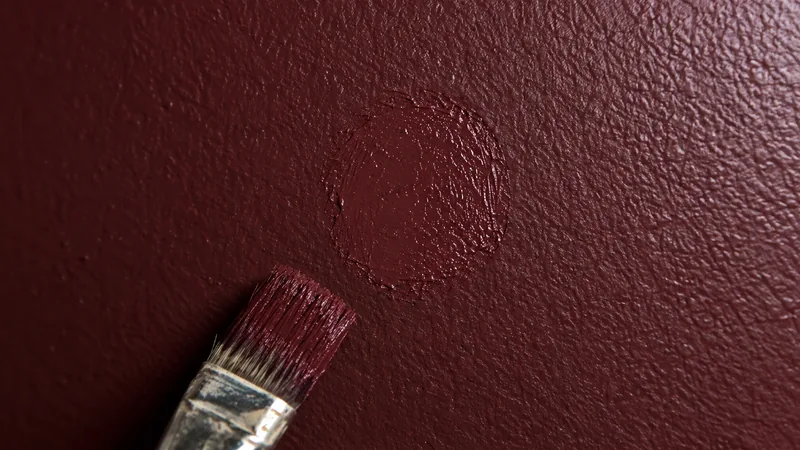
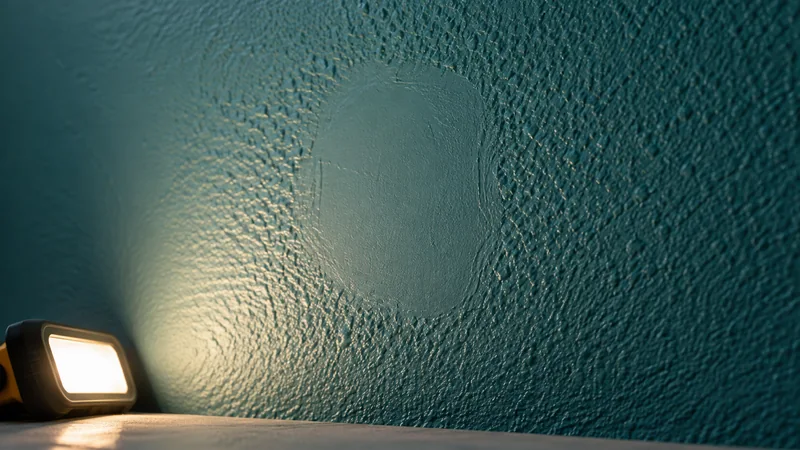
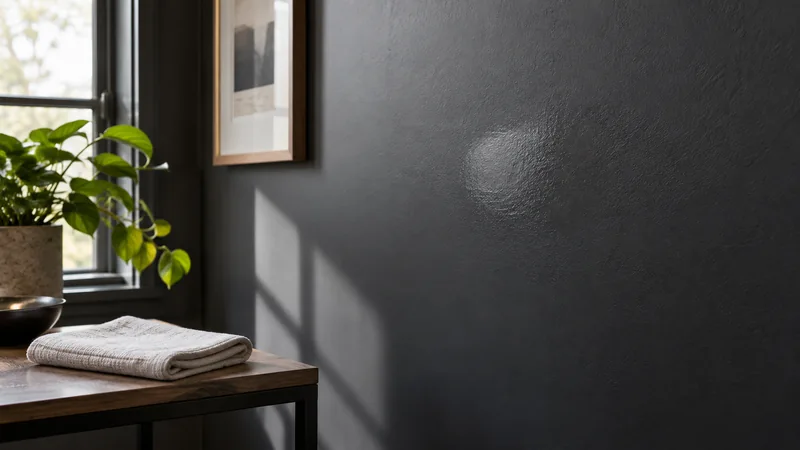
View the repair from the front and from ordinary positions in the room. A color difference visible in diffuse light deserves a different conversation from a patch that mainly stands out beside a window. Feel or inspect the surface for a smooth filler island, brush marks or raised edges without damaging the fresh coating.
In this Reddit discussion, an owner preparing a property quickly bought paint to match the reported color and sheen, then tried another sheen when it still looked wrong. The thread shows how urgency can lead to multiple guesses. It does not establish which label was correct. The first useful step is to identify exactly what differs on the wall.
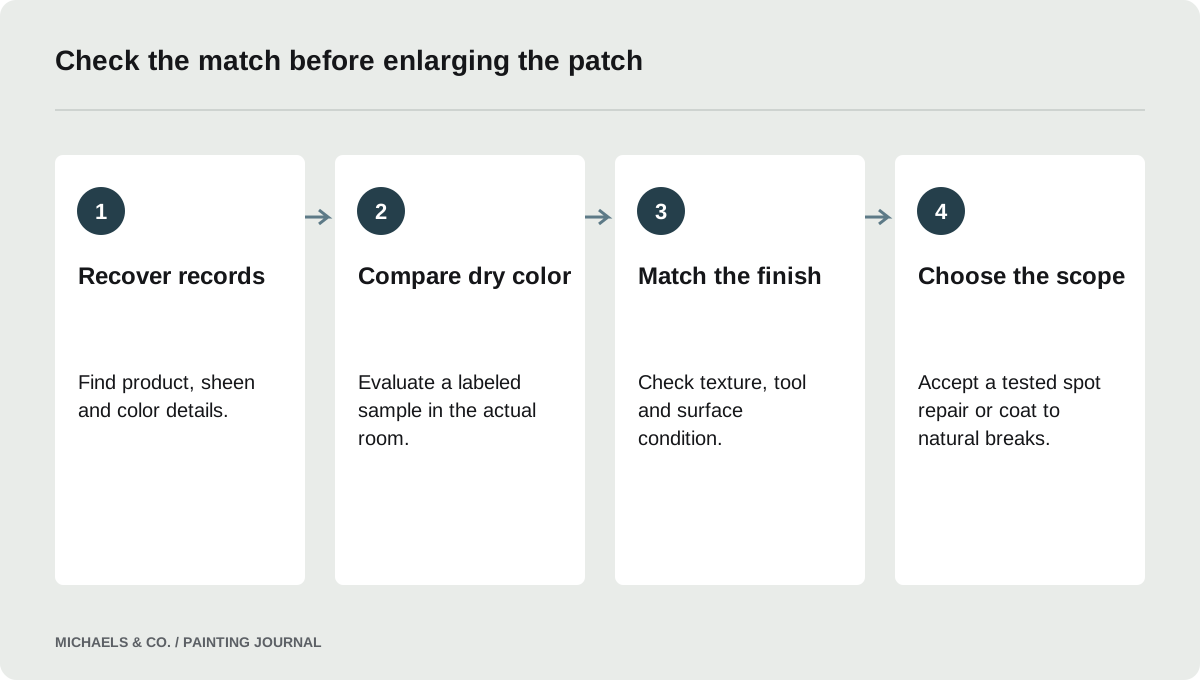
Recover the complete specification
Look for the old invoice, a paint schedule, container labels or a room record. Collect brand, product line, sheen and color formula. A familiar color name is not enough to reproduce a finish across different products. Also ask whether the original painter combined containers before finishing the wall.
Benjamin Moore: How to Touch Up Paint recommends retaining the product and room information for future touch-ups. If the records conflict, keep that uncertainty visible. Do not tell the store that the existing wall is definitely satin merely because someone remembers it that way. Explain what information is verified and ask for a sample-based approach instead of making a confident but unsupported specification.
- Bring a sound physical sample large enough for the store's measuring equipment, and identify whether it comes from the same wall and exposure.
- Ask the store to record the matched product and sheen as well as the formula, since a color reading does not reproduce surface texture.
- Make a modest trial in the actual room and compare its dry appearance in daylight and artificial light before buying material for every repair.
- Record whether the remaining mismatch is color, gloss, or relief at the patch; a second tint adjustment cannot correct a raised repair edge.
Give the store a representative sample when appropriate
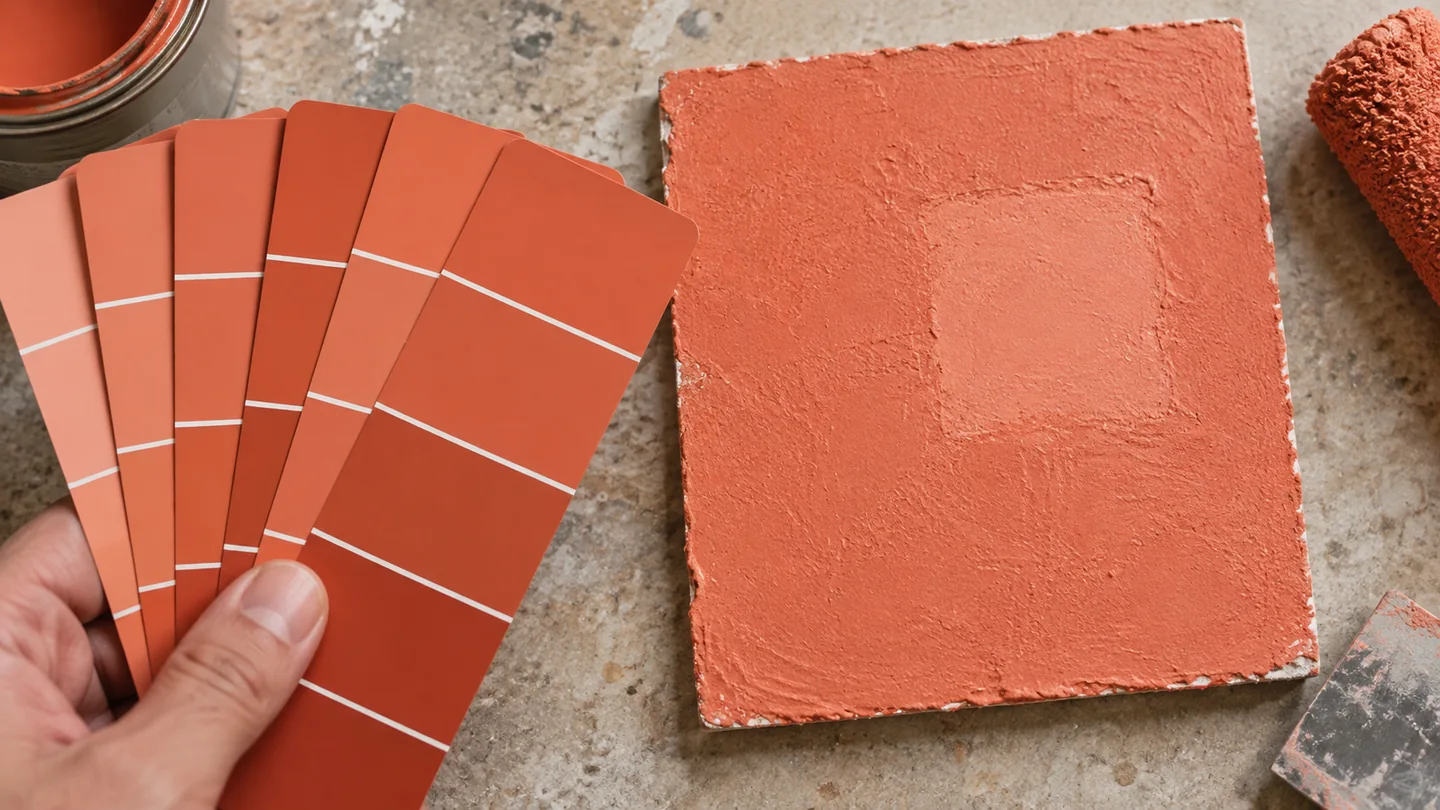
A physical sample can help evaluate color, but the sample should represent the finish you are trying to match. A stained, sun-exposed or repeatedly cleaned spot may differ from the rest of the wall. Discuss sample requirements with the store before removing material, and consider whether the surface can be sampled without unnecessary damage.
A color reading does not reproduce roller texture, repaired-wall porosity or every lighting condition. Keep those limitations in mind when reviewing the result. For old or unknown coatings, avoid casually cutting or abrading material without considering relevant lead precautions. The goal is useful information, not a new repair larger than the mark you originally wanted to cover.
Judge a dry sample in the actual room
Apply a controlled sample following the product instructions and let it reach the appropriate evaluation stage. Compare it where the repair will be seen, under the room's normal daytime and electric lighting. A wet spot or a dab on the lid is not a fair substitute for a dried application on the intended surface.
Record the product and sample formula. If a second sample is necessary, label it rather than relying on memory. Keep the viewing conditions consistent so you can tell whether the change improved the match. The aim is not endless experimentation; it is to determine whether the remaining difference is color, sheen or the physical finish before choosing the final scope.
Reproduce the surrounding texture
Sherwin-Williams: Obvious Repair (Touch-Up) identifies application tools and repair texture as contributors to obvious touch-ups. A brush patch on a rolled wall may remain visible even when the pigment match is excellent. A smooth repair compound surrounded by years of roller texture presents another problem that color matching cannot solve.
Inspect and prepare the patch before the final sample. Match the surface profile as closely as the repair allows, using materials and methods appropriate to the existing finish. If the wall was originally sprayed, establish whether it was also rolled. The question is how the visible surface was produced, not which tool is fastest for covering the small mark today.
Avoid changing several variables at once
Switching sheen, adding water, using a different roller and enlarging the patch simultaneously makes the result hard to interpret. If a sample is wrong, name the problem and change the relevant variable. Ask the coating supplier before using additives or thinning a product beyond its directions.
Repeated coats in the same spot can also build a visible edge. If that happens, the repair now includes leveling the profile rather than merely correcting color. Stop before the wall becomes a collection of overlapping experiments. Agree on a limited sample process and a clear point at which the owner chooses broader finishing or accepts a small visible variation.
If the schedule is urgent, tell the store and contractor before sampling begins. They can then compare a limited matching attempt with a complete-wall option using known material. That is a scope decision, not evidence that the first color match was necessarily inaccurate.
Compare the real cost of spot repair and full-wall coating
A touch-up may use little paint yet require identification, samples, drying and another visit. For a time-sensitive property, a full-wall scope can sometimes be easier to schedule and evaluate. Compare total work and expected appearance rather than assuming that the smallest painted area must always be the cheapest completed solution.
If the chosen scope is a whole wall, define its natural boundaries and include the edge work. A large patch that stops short of the ceiling or corners can preserve a visible border. Keep adjacent walls in mind where their finish differs. The objective is an intentional, agreed result, not a promise that every older surface will become identical without repainting it.
Create a record that prevents the same problem next time
After the result is accepted, label the retained material and record where it was used. Include the product line, color, sheen, batch information where available and application method. If a custom match was used, keep its formula with the project records rather than only on a lid that may eventually be discarded.
For property managers, connect the record to the unit and wall, not simply the building. Similar neutral colors across several renovations can otherwise be confused. Note whether the final work was a spot repair or a wall-wide repaint and preserve a photograph. These small administrative details turn the next maintenance job into a defined task instead of another round of color guesses.
Questions & answers
Should I ask the store to make the paint lighter?
Only after a dry sample confirms a color difference under the intended lighting. A patch that mainly changes with viewing angle may have a sheen or texture problem. Changing pigment to compensate for reflection can make the head-on color match worse.
Can the same color name look different in another product?
Yes, the visible result also depends on product and sheen, so a color name alone is incomplete for repair planning. Keep the complete coating specification and compare a sample. Do not assume two containers are interchangeable because the color label is familiar.
Is it worth trying a physical sample if I already know the color?
It can help when the records are uncertain or the existing finish has changed, but it does not solve texture or sheen automatically. Discuss the sample with the paint store and evaluate a dry application on the actual surface before committing to the repair.
Sources & further reading
- Sherwin-Williams: Obvious Repair (Touch-Up)Application tools, batch, repair texture and environmental differences affect how a touch-up blends.
- Benjamin Moore: How to Touch Up PaintRetain product, color, sheen and room records rather than relying only on a color name.
Reader discussions
These conversations describe problems people encountered. They do not establish the cause of a defect or replace product instructions and applicable requirements.