Do You Need Permission to Repaint in Boston? Separate Building Permits from Historic Review
Ordinary painting finish work is generally exempt from a building permit under the cited Massachusetts tenth-edition provisions, but that does not remove other approval requirements. Boston landmark or historic-district review may apply to the property and proposed change. Repairs, access equipment, public-space use or a broader renovation can raise separate questions. Define the full scope and check the property's designation with the appropriate authority before scheduling work.
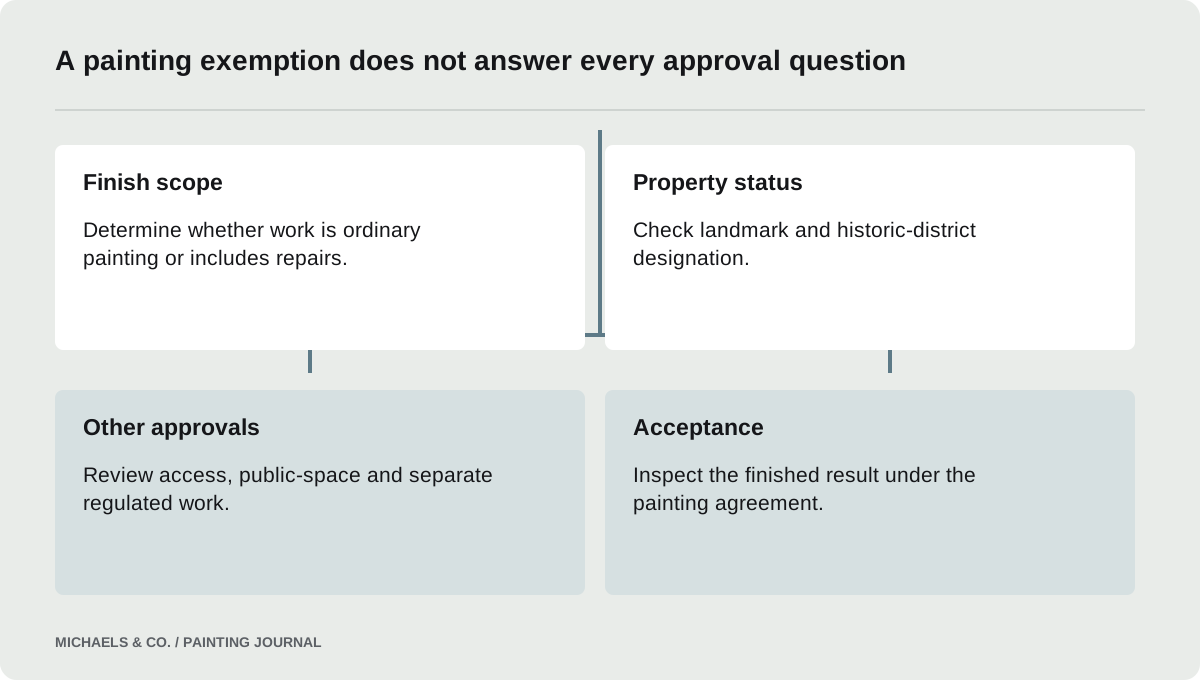
Define whether the project is only finish work
A repaint may include more than applying a new color. Replacing deteriorated components, opening a wall, repairing structural material or changing another building system can create a different permit question. Describe the entire project rather than using painting as a shorthand for every activity.
The Massachusetts tenth-edition building-code amendments list painting and similar finish work among activities exempt from a permit under the cited section. The same provision preserves requirements arising under other laws and specialized codes. Read the exemption with that limitation. It should not be used to argue that all work performed by a painting company is exempt, or that a broader renovation becomes permit-free because its final step is paint.
Check the property's designation, not only its age
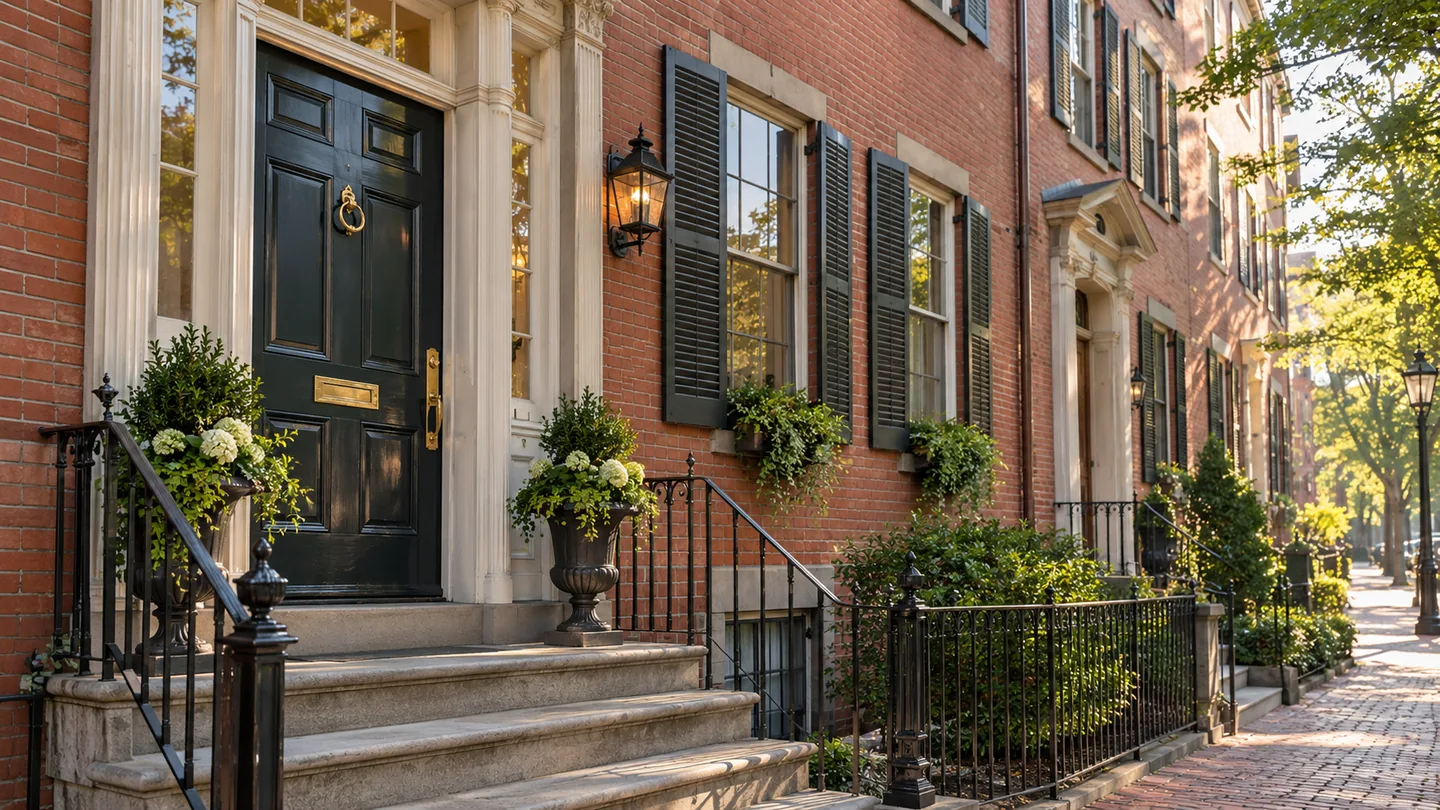
An old building is not automatically subject to the same review as every other old building. Determine whether the exact address is an individual landmark, lies within a local historic district or has another designation relevant to the proposed work. Use the responsible local commission's information and ask for clarification where boundaries or status are uncertain.
A Boston discussion about historic-building alterations shows common confusion over which preservation body has authority. The answer should come from the property's actual status and local process, not a generalized claim that every hundred-year-old facade is regulated identically. Keep the designation information with the project record so the contractor and owner are working from the same starting point.
Separate landmark review from the building permit
Boston's individual-landmark guidance explains that proposed changes reviewed by the commission can include general repairs and painting. A building-permit exemption therefore does not, by itself, answer the preservation question.
Ask the relevant commission how the proposed color, material, treatment or repair is handled for that property. Do not assume that the process for an individual landmark is identical to every district's standards. The review may depend on the designated features and project details. A painter's statement that no construction permit is needed can be correct yet incomplete. The owner still needs to determine whether another approval is required before the finish is changed.
Check local rules beyond Boston when working in Metro West
Boston guidance applies to Boston's process. A property in another municipality may have its own historic commission, district standards and administrative procedure. Do not copy a Boston answer into a Metro West project without checking the responsible local authority.
A homeowner's limewashing question from another city illustrates the general confusion between ordinary finish-work exemptions and historic review, but it is not evidence of Massachusetts law. Similarly, online accounts of review fees or simple repaint applications do not establish your town's current requirements. Use those discussions only to identify questions worth asking. Obtain the relevant local answer for the address, treatment and scope you actually propose.
Consider access and other approvals separately
Scaffolding, lifts, loading, sidewalk occupation or other project arrangements may involve requirements beyond the painting exemption. The appropriate questions depend on where equipment will be placed and how the work affects public or shared space. Ask the responsible municipal offices and building personnel rather than assuming the finish-work answer covers the entire setup.
The same separation applies to lead-safe renovation requirements and workplace safety. A project can be exempt from an ordinary building permit while still needing a regulated lead work process or other controls. Do not use a permit determination as proof that the preparation method is suitable. Record each authority's scope so an answer about one subject is not accidentally presented as approval of every aspect of the project.
Assign applications and timing before work begins
Identify who will obtain any required determination or approval and what information the contractor must supply. Include the process in the schedule rather than assuming an application can be completed after materials are purchased or preparation starts. If an approval changes the proposed finish or method, revise the contract before proceeding.
Ask the contractor to keep the approved scope available to the crew. A supervisor should know when a color or treatment is subject to a specific condition and whom to contact before changing it. If no approval is required, retain a written determination where the authority provides one. Clear records help avoid later disagreements over whether a casual phone conversation actually addressed the proposed work.
Do not confuse official approval with cosmetic acceptance
A permit or preservation approval addresses the matters within that authority's review. It does not automatically certify straight cut lines, uniform sheen, full coverage or compliance with every private contract promise. Establish a separate owner-contractor walkthrough for the painted result.
Keep the approved specifications, final product schedule and completion photographs together. If the scope changes during work, ask the relevant authority whether the change needs further review rather than assuming the original approval expands automatically. The practical approach is to separate questions: whether a building permit is needed, whether a preservation approval applies, whether other work requirements are met and whether the owner received the contracted finish. Each question needs the appropriate evidence and decision maker.
Questions & answers
Does Massachusetts require a building permit for ordinary painting?
The cited tenth-edition provisions exempt painting and similar finish work from a building permit under that section, while preserving other laws and approvals. Confirm that the project is actually finish-only work. Repairs, broader alterations, historic review or access arrangements may create separate requirements for the specific property.
Can a Boston landmark require review even when painting needs no building permit?
Yes. Boston's individual-landmark guidance includes painting among changes that may be reviewed. Check the exact property's designation and applicable standards with the responsible commission. Do not assume a construction-permit exemption also exempts the project from preservation approval.
Does an approved permit mean the owner must accept the paint finish?
Not automatically. Official review and private workmanship acceptance address different subjects. The painting contract should define surfaces, preparation, products and completion expectations, followed by an appropriate walkthrough. An approval should not be described as a guarantee that every cosmetic or contractual requirement has been satisfied.
Sources & further reading
- Massachusetts tenth-edition building-code amendmentsSection 105.2 exempts painting finish work from a 780 CMR permit while preserving other laws and approvals.
- Boston individual landmarksBoston landmark design review can include painting and general repairs; check the property's designation and specific guidelines.
Reader discussions
These conversations describe problems people encountered. They do not establish the cause of a defect or replace product instructions and applicable requirements.
- Are there any building codes that make sure not to destroy or alter these types of buildings in Boston? Aren't these buildings at least 100 years old?
- Do I need a permit or approval to lime wash my house in Charles Village?
- Turns out when you buy a house in a historic district that has restrictions on changes, there's restrictions on changes.
- Historical society application fees for renovation/addition