How to Raise a Painting Complaint Without Losing the Evidence
A useful painting complaint states the observable problem, identifies the affected surface and connects it to the accepted scope. Attach dated photographs and request an inspection and written response. Keep color preference, workmanship concerns, property damage and payment disputes separate. Neutral documentation is more effective than accusations, threats or a demand for a refund before the condition has been assessed.
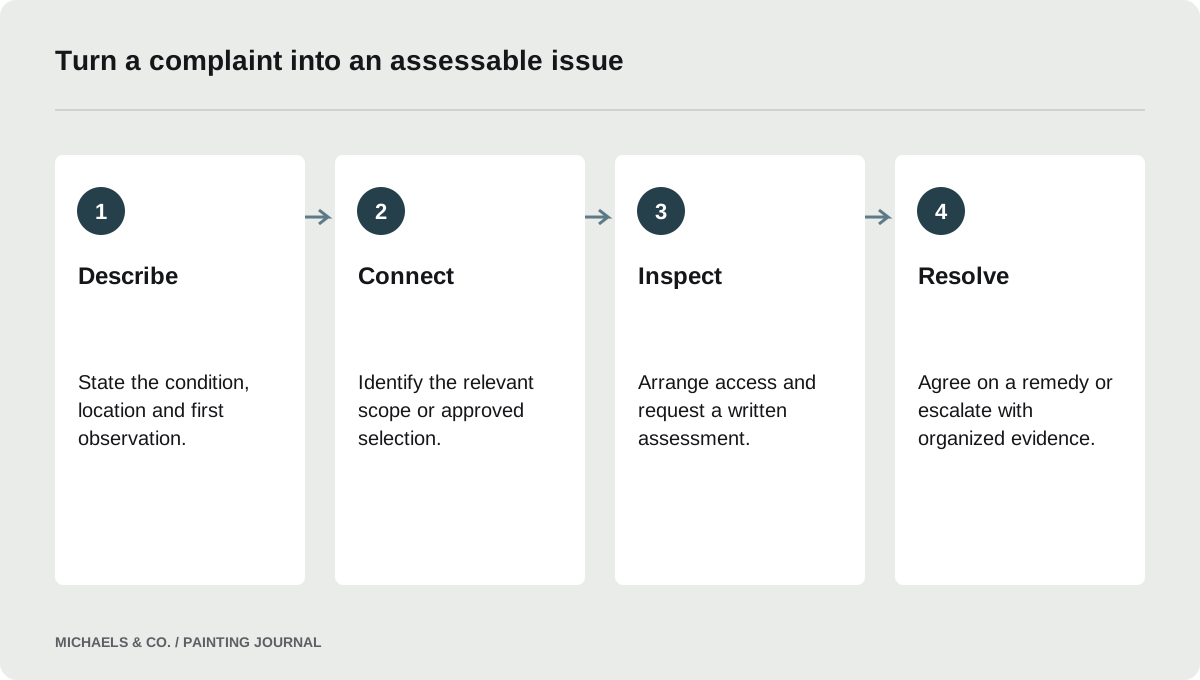
Describe what happened without deciding the motive
Begin with the location and visible condition: peeling at a door edge, paint on a window, missed trim or a product that differs from the specification. State when it was first noticed and whether it is changing. Avoid diagnosing the cause from appearance alone or claiming the contractor intentionally deceived you unless there is evidence supporting that allegation.
A painter's account of a post-completion refund demand illustrates how quickly a dispute can move away from inspection and toward competing narratives. The account is one party's version, not a finding that either side was right. A clear first complaint gives both parties a chance to inspect the same condition before arguing over intent or compensation.
Link the concern to the agreement
Attach the relevant scope line, product selection, approved sample or change record. Explain the difference between what was agreed and what you observe. If the documents are unclear, state the question you need resolved rather than rewriting the agreement after the fact.
Color disappointment is different from the wrong color being supplied. Existing wall texture is different from a repair that was specifically included and omitted. A missed surface is different from damage caused by a mover after completion. Separating these issues makes the complaint easier to evaluate and prevents a legitimate concern from being weakened by unrelated demands. It also helps the contractor propose a remedy that addresses the actual obligation rather than offering a generic touchup visit.
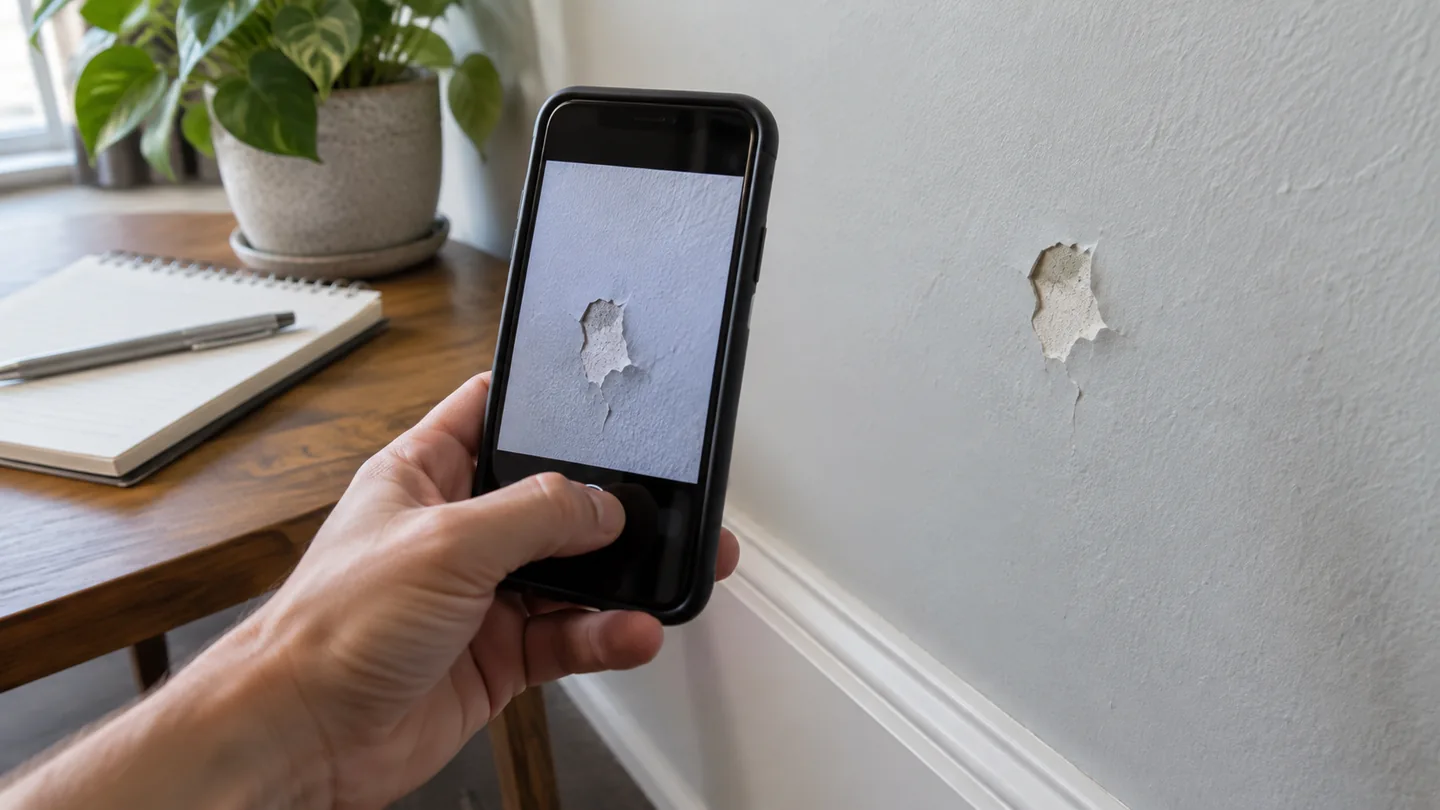
Photograph the condition so another person can locate it
Take a wider image showing the room or component and a closer image showing the issue. Use consistent lighting where possible and retain the original files. Label the location in your list; a contractor should not need to infer which of several identical doors appears in a close-up.
Record relevant timing and events, such as a leak, cleaning, furniture installation or first use. Do not alter the condition merely to make the photograph more dramatic. Avoid destructive investigation or abrasion of older coatings without appropriate assessment. If the problem involves property damage, preserve evidence before attempting cleanup. The goal is a reliable record of what exists, not a collection of images selected to imply a cause that has not been established.
Request a joint inspection and a defined response
Offer reasonable access and ask who will attend. State whether the purpose is to verify the condition, investigate the cause or review a proposed repair. Request a written summary afterward so verbal conclusions are not lost.
- Identify the project and accepted scope.
- List each concern by number and location.
- Attach relevant photographs and dates.
- Propose access times for inspection.
- Ask for the proposed remedy and completion date.
- Keep a record of responses and missed commitments.
Do not secretly record a visit based on a forum suggestion. Recording rules and consent requirements vary, and a written summary with photographs may provide the practical record you need. If recording is important, obtain appropriate guidance and agreement first.
Evaluate the proposed remedy before accepting it
A promise to “take care of it” needs enough detail to be useful. Ask which surfaces will be repaired, how the cause will be addressed and what finished result is expected. If the proposal changes products or involves another trade, identify those responsibilities too.
A homeowner reporting repeat coating failures describes repairs that did not settle the underlying problem. That does not establish the cause in your project, but it shows why the remedy should be more than an unexamined repeat of the same step. Request technical assessment where needed. A limited trial repair may help, provided its purpose, safety and acceptance are agreed before it is used throughout the property.
Keep money and correction issues distinguishable
An owner may want correction, a price adjustment or both, while a contractor may ask for an outstanding payment before returning. Review the payment and correction provisions together. Do not assume either party's preferred sequence is automatically required by law.
The FTC's consumer guidance supports written records and careful review of project terms. Massachusetts HIC homeowner resources describe covered-work dispute options and exemptions. Determine the actual applicability before invoking a specific remedy. If payment withholding, termination or a settlement is being considered, seek advice appropriate to the agreement. A complaint letter should preserve a clear factual position without making legal threats that the writer has not checked.
Escalate with a concise evidence package
If the contractor will not respond or the proposed remedy is inadequate, organize the file for the next appropriate process. Include the contract, payments, issue list, photographs, inspection notes and communication chronology. State the outcome you are requesting and what remains disputed.
Different processes serve different purposes. An agency complaint, mediation, arbitration and court claim are not interchangeable, and eligibility varies. Verify the route before investing time in the wrong form. An independent technical assessment can help where cause or correction scope is the central disagreement, but it is not automatically a legal ruling. Keep the assessment questions specific so you obtain useful evidence rather than another broad opinion that the job looks bad.
Make public statements and settlements carefully
A factual review can describe your experience, but public accusations can complicate a dispute if they exceed the evidence. Keep observed facts, opinions and unresolved allegations distinct. Avoid threatening publication as a substitute for a clear correction request.
If a settlement is offered, read what it resolves and whether it releases future claims. Record any promised work, payment and deadline. Do not assume that accepting a partial refund leaves every other right unchanged, or that signing a general satisfaction statement accurately describes unresolved defects. The objective is a documented resolution you understand. Even when the relationship cannot be repaired, a calm record of the agreement, condition and attempted correction remains more useful than a collection of angry messages.
Questions & answers
Should my first complaint demand a full refund?
Usually it is more useful to identify the condition and request an inspection and proposed remedy first, unless the circumstances require another immediate step. A refund demand without a documented scope or assessment may skip the information needed to resolve the problem. Preserve your position and review the actual agreement.
What if the painter says the defect is normal?
Ask what specification, product guidance or agreed sample supports that view. Document the condition under the relevant inspection circumstances. If the explanation does not resolve the disagreement, a qualified independent assessment may help distinguish a substrate condition, application defect or expectation that was outside the original scope.
Can I refuse all access until the contractor agrees to my remedy?
Be cautious. Access and an opportunity to inspect or correct may matter under the agreement and applicable law. Document reasonable arrangements and any legitimate concerns, and obtain advice if access is disputed. Do not assume that preventing inspection will strengthen a later claim.
Sources & further reading
- FTC: How to avoid a home improvement scamFTC consumer guidance favors written scope and documented payments and identifies pressure and advance-payment warning signs.
- Massachusetts HIC homeowner resourcesState guidance: interior painting is exempt from HIC registration; covered-work remedies require scope and eligibility checks.
Reader discussions
These conversations describe problems people encountered. They do not establish the cause of a defect or replace product instructions and applicable requirements.