The Painter Used a Different Paint: Verify Substitutions Without Guessing from the Can
If the painter appears to have used a different product, compare the exact written specification with labels, delivery records and any approved substitution. Ask for a material reconciliation before deciding what happened. A can on site is useful evidence but may not prove what was applied everywhere. Evaluate the significance of a confirmed mismatch with the manufacturer or a qualified coating professional, then discuss a remedy tied to the actual contract and condition.

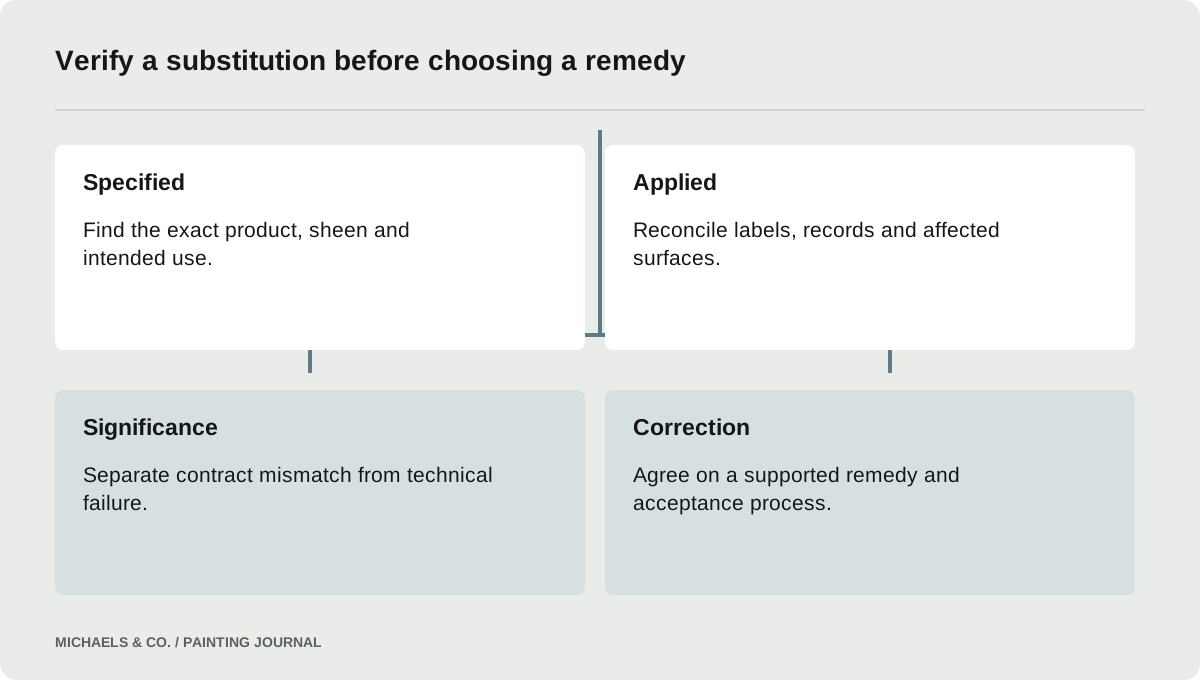
Identify exactly what the agreement specified
A brand name alone is not a complete product description. Find the line, sheen, base, intended use and any primer requirements in the accepted quote or material schedule. Check whether substitutions were permitted and whether the agreement identified an approval procedure. Preserve the original documents before requesting clarification.
In a homeowner's product-substitution report, the owner said the quote named Duration while the crew used SuperPaint, with discovery occurring after payment. The article cannot verify the application or determine the remedy, but the concern is specific: the delivered product may differ from the purchased scope. Start with that mismatch rather than assuming that any product from the same manufacturer is equivalent.
Record labels and locations without jumping to conclusions
Photograph containers, labels and batch or product identifiers that are accessible without interfering with the work. Note where and when they were observed. Ask which rooms or surfaces received each material. A primer container or a product left from another project may not describe the finish on every wall.
At the same time, do not accept an unsupported explanation that all containers are irrelevant. Request a coherent account supported by delivery or purchase records where appropriate. Distinguish what you observed from what remains uncertain. The goal is a traceable material record, not an argument based on one photograph. Keep any leftover labeled material available for the assessment rather than discarding it during cleanup.
If different crews worked on different days, ask whether the same approved product was used throughout. A room-by-room answer can reveal a limited discrepancy that would be obscured by treating the entire project as one material batch.
Ask for a written material reconciliation
Send the contractor the specified product and the observed discrepancy. Ask them to list the actual products used by surface, explain any substitution and identify when it was approved. If a supplier shortage or availability issue prompted the change, ask how the proposed alternative was evaluated.
A reconciliation should address primer and finish, not merely repeat the brand name. It should also explain a change in interior versus exterior use, sheen or coating type. A customer's cabinet-painting account describes both a selection mismatch and exterior product used indoors. That allegation highlights why the significance of a substitution is not always measured by the price difference per gallon. Suitability and the complete system may be more important.
Separate a contractual mismatch from a performance failure
A different product may produce an acceptable-looking finish while still departing from the agreement. Conversely, the specified product can perform poorly if preparation or application was unsuitable. Keep those issues separate so the requested remedy addresses the actual problem.
Ask what has been observed: wrong sheen, incompatible use, adhesion failure, an undocumented downgrade or simply uncertainty over material identity. If the concern is technical, consult the actual manufacturer's documentation and seek product-specific advice. The data sheet for an example wall coating illustrates the detail available, but its requirements cannot be transferred to another product. A manufacturer's suitability opinion also does not independently decide whether the contractor complied with the contract.
Evaluate the evidence before choosing the remedy
The appropriate response depends on what was specified, what was applied and why the difference matters. A price adjustment, additional documentation or corrective work may be discussed, but none is automatically adequate in every case. Avoid assuming that the retail shelf-price difference measures the entire loss.
| Finding | Next question |
|---|---|
| Identity uncertain | What records establish the material used? |
| Approved equivalent | Does the approval cover this surface and system? |
| Unauthorized substitution | What contract remedy addresses the mismatch? |
| Technical incompatibility | What correction is supported by qualified assessment? |
Keep destructive testing or removal under appropriate professional guidance, particularly where older coatings or hazardous materials may be present.
Put corrective work in writing before recoating
If correction is agreed, identify the affected surfaces, preparation, products, appearance requirement and schedule. Simply adding the originally specified paint over an unknown or incompatible coating may not resolve the issue. The contractor should explain the proposed system and obtain relevant manufacturer guidance where necessary.
Record how the work will be inspected and which costs are included. Preserve photographs and material evidence before alteration. If the parties disagree, obtain advice before authorizing another contractor to remove the finish or signing a release in exchange for a partial refund. The FTC's consumer guidance supports clear written records, but a specific remedy depends on the facts, agreement and applicable legal framework.
Check contract applicability without overstating it
Massachusetts HIC contract guidance calls for detailed materials and work descriptions in covered projects. That does not mean every interior-only painting contract has the same HIC treatment. Review the actual scope before invoking a particular statutory remedy.
Regardless of the applicable framework, a written material schedule is a useful commercial tool. It reduces the chance that a contractor interprets “premium paint” differently from the owner. Specify who can approve changes and what information must be supplied. Avoid treating a salesperson's broad description as a technical specification when the project requires a particular product or performance characteristic. The clearer the original selection, the easier a later discrepancy is to evaluate.
Prevent silent substitutions on the next project
Before materials are ordered, confirm the product schedule and selection deadline. Require proposed alternatives to identify the original product, replacement, reason for change and any effect on price, appearance, application or maintenance. Name the person who can approve the proposal.
During work, keep an updated record of products used by room or surface. At closeout, obtain labeled leftovers where appropriate and the final schedule for maintenance. Do not require unnecessary access to a contractor's unrelated purchasing information; request the records needed to verify your project. A transparent material process protects both sides by making an approved adjustment easy to distinguish from an unexplained substitution discovered after the crew has left.
Questions & answers
Does finding a cheaper paint can prove the painter substituted it?
It is evidence worth investigating, but it may not establish what was applied to every surface. Photograph the label and ask for a room-by-room material reconciliation supported by relevant records. Compare that account with the accepted specification and any approved changes before reaching a conclusion.
Is a refund of the gallon-price difference always enough?
Not necessarily. The significance of the mismatch may involve suitability, appearance, warranty terms or corrective work, not only purchase price. Establish what was specified and applied, then assess the consequences. The appropriate remedy depends on the contract, condition and any qualified technical evaluation.
Should I insist on the specified paint being applied over the substitute?
Only after the proposed correction is assessed for compatibility and appropriate preparation. Another coat may not resolve an unsuitable system or existing failure. Request a written repair plan tied to the actual products and surfaces, with manufacturer input where needed, before approving rework.
Sources & further reading
- Massachusetts home improvement contract sample languageCovered HIC contracts require detailed scope, materials, dates and payment terms; applicability must be checked.
- FTC: How to avoid a home improvement scamFTC consumer guidance favors written scope and documented payments and identifies pressure and advance-payment warning signs.
- Sherwin-Williams Emerald Interior Satin product dataExample manufacturer instructions specify recoat time and film build under stated conditions; use the actual selected product's current sheet.
Reader discussions
These conversations describe problems people encountered. They do not establish the cause of a defect or replace product instructions and applicable requirements.