Keeping Paint and Tools Clean Between Coats
Keep the working paint separate from the main supply, protect tools from dust during pauses and prevent drying at tray rims and brush heels. Choose temporary storage based on the coating's instructions and the length of the break. A sealed tool may remain usable for a short interruption, but wrapping cannot reverse dried paint or remove contamination already inside a roller or brush.
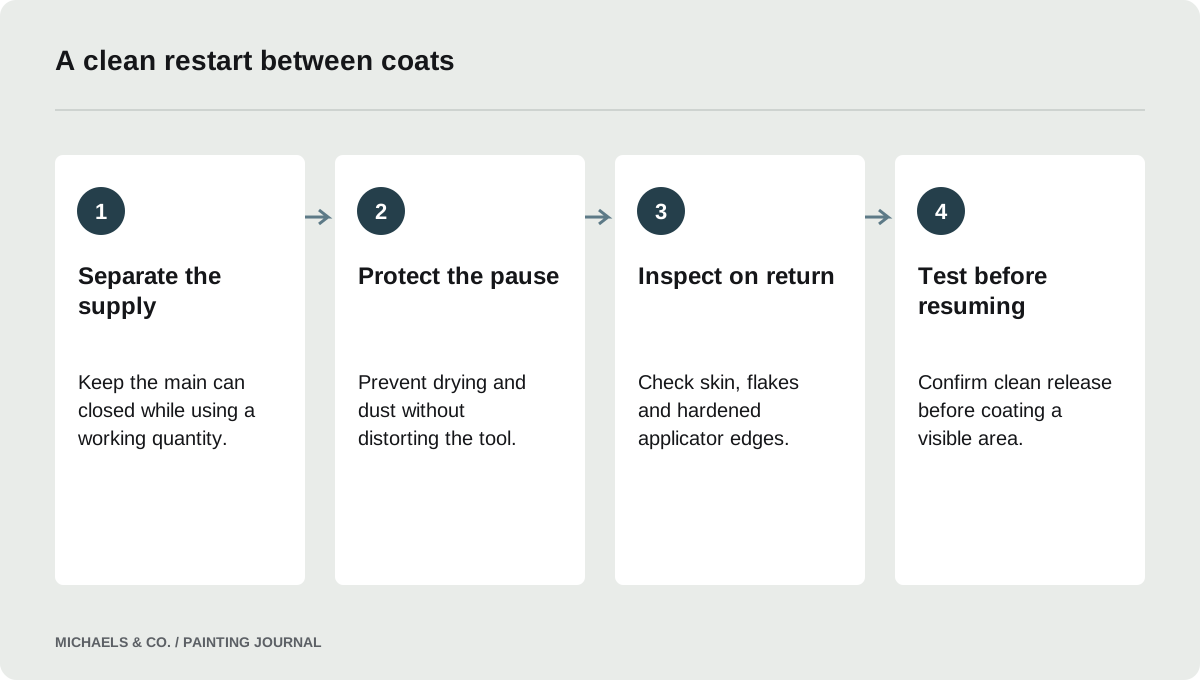
Find the route by which debris reaches the finish
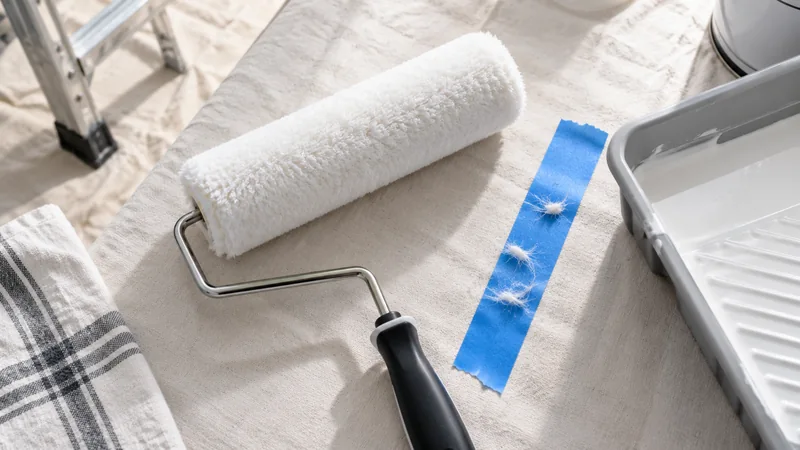
Small bumps in fresh paint are often blamed on the newest tool, but debris can enter at several points. A crusted can rim, dried tray edge, dusty work surface or previously used cover can supply particles. Before replacing equipment at random, inspect the paint supply, working container and applicator separately. This narrows the problem without assuming a chemical defect.
A Reddit report of lint across newly painted walls illustrates how disruptive visible contamination becomes once it is distributed through a room. The practical lesson is to protect the whole handling process. A perfectly clean new cover does not help if it rolls through flakes from yesterday's tray. Keep one clean working area for paint and tools, away from sanding, saw cutting and sweeping. If other trades are active, arrange the timing so dust-producing work does not overlap open coating containers and freshly applied finishes.
Decant a working quantity instead of exposing the whole supply
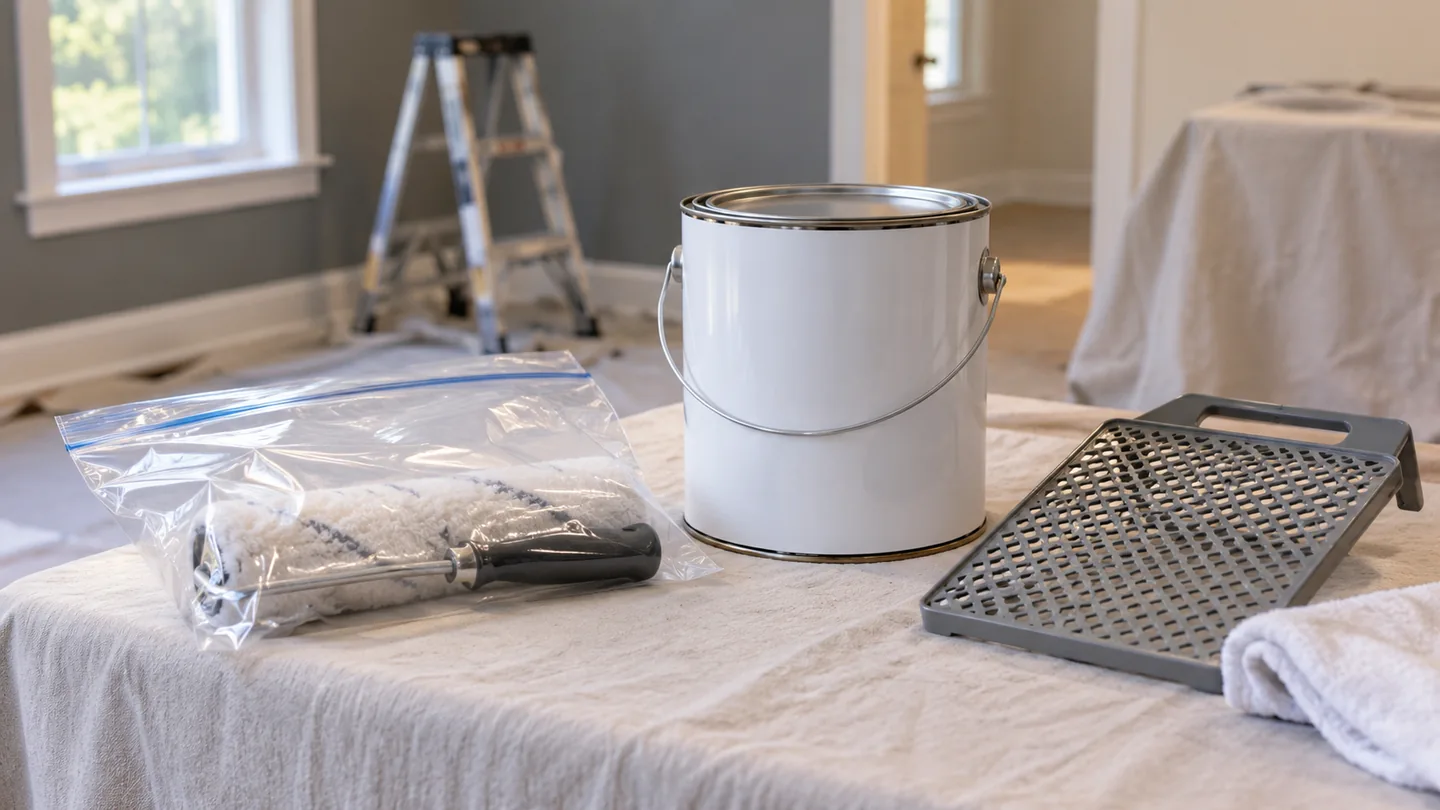
Pour enough paint for the next manageable stage into a suitable clean container. Close the main can promptly and keep its rim clean according to the container and coating instructions. This reduces the amount exposed to dust and drying while making it easier to isolate a contaminated working batch. It also avoids repeatedly moving a large, open container around furniture.
Do not return suspect tray paint to the main supply merely to avoid waste. Once debris or an unknown substance has entered, mixing it back spreads the uncertainty. If the product requires straining, use the specified compatible filter and method; filtering is not a cure for spoiled, frozen or chemically altered material. Label the working container with the product and sheen when several coatings are in use. A misplaced lid or unlabeled cup can create a compatibility problem that looks like an application problem much later.
Choose a pause plan before starting the coat
A five-minute interruption and an overnight delay need different decisions. For a short break, the goal is to prevent drying and contamination while keeping the tool ready to resume. For a longer interruption, proper cleaning may be more reliable than improvised wrapping. The coating's working characteristics, temperature and amount of paint in the tool all affect the choice.
Purdy's tool-care FAQs provide manufacturer guidance for maintaining brushes and rollers, including cleaning and storage considerations. Treat that guidance together with the paint label, especially when a coating uses a specific cleaning solvent or has short working limits. Do not assume a storage trick suitable for ordinary wall paint is suitable for a specialty finish. Decide who will protect tools if the crew stops unexpectedly. On a busy site, responsibility left unclear is how an otherwise sound brush ends up hardening in an open tray.
Protect the tool without deforming it
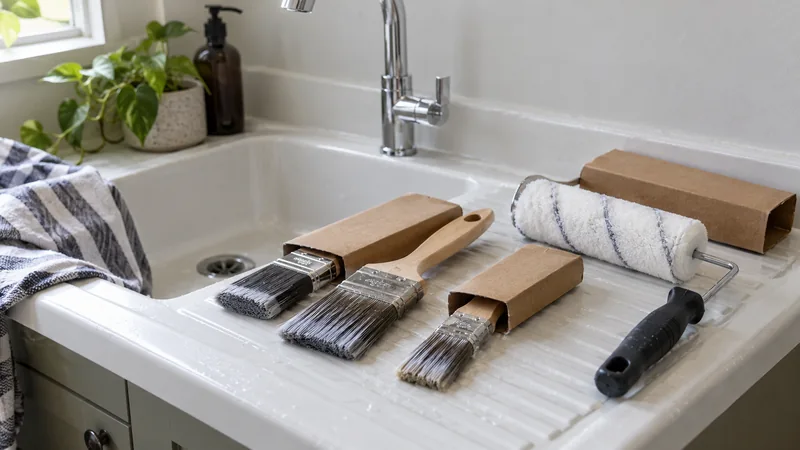
Place a paused roller or brush where its working surface cannot pick up dirt or become permanently misshapen. If the approved temporary method uses wrapping or a sealed container, close it effectively and keep it away from heat or direct sunlight. Loose plastic draped over a tray may keep out falling dust while still allowing substantial drying around the edges.
Avoid resting a brush on its bristle tips or compressing a roller against a hard edge. A distorted tool may leave marks even after its paint remains usable. Keep handles and frame hardware clean enough to operate safely; slippery grips and clogged mechanisms make control worse when work resumes. Do not use household food-storage space for paint equipment without considering contamination and label storage requirements. A designated job container is easier to identify, protect and remove at the end of the project than a series of improvised hiding places.
Restart with an inspection rather than the first wall pass
Before resuming, inspect the applicator, tray surface and paint. Look for dried skin, flakes, unusual separation or material that has hardened into the tool. A brush can look wet near its tips while paint dries at the heel. A roller can retain soft paint inside while its exposed ends begin forming hard edges. Those changes affect release and can shed debris.
Use a clean test area or sample to confirm normal performance before returning to a prominent wall. If the paint has changed beyond ordinary mixing permitted by its instructions, do not add water or solvent simply to recover the original feel. If only the tool is contaminated, isolate it from the clean supply and clean or replace it. A restart check takes little time compared with coating an entire room before discovering that yesterday's dried particles have become today's finish texture.
Keep sanding and coating equipment in separate zones
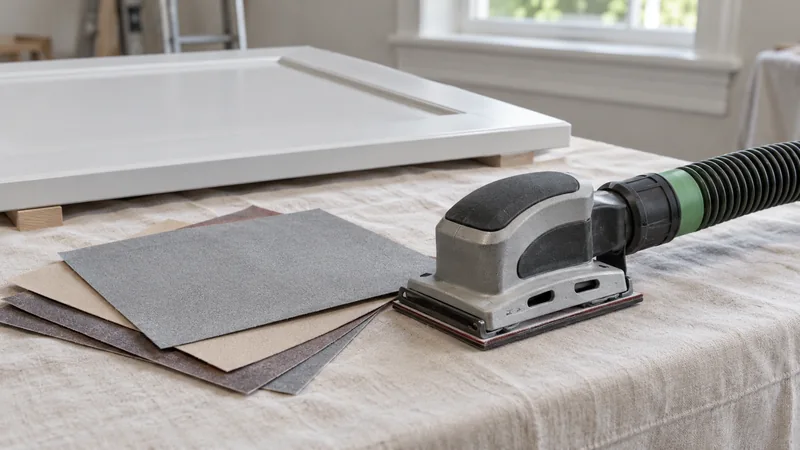
Sanding dust travels on hands, clothing, cords, shelves and air movement. A container left closed during sanding can still shed dust from its lid when opened. Clean the outside before removing the lid, and avoid placing a clean brush beside abrasive pads or used sanding cloths. Schedule surface preparation so the room can be cleaned before finish application begins.
- Cover or remove open paint before dusty work.
- Store clean applicators in a protected, identified container.
- Clean work surfaces before setting down lids or tools.
- Inspect tray rims for drying material before reloading.
- Use separate containers for different coating systems.
- Check the first restarted passes for debris.
For unknown old coatings, dust control starts with assessing what will be disturbed, not simply using a larger vacuum. Follow the applicable coating, substrate and hazard requirements. Avoid allowing cleanup practices from ordinary new drywall to become an automatic rule for every renovation surface.
Preserve a useful maintenance record
When a project spans several days, record which products and tools are in each work area. Include the exact paint line, sheen and color identification, plus any manufacturer-approved preparation or application adjustment. This helps another person resume without guessing which wrapped roller belongs in which tray. It also prevents a wall-paint roller from being reused casually for a different enamel.
At the end of the final coat, decide which tools are worth cleaning and which are spent. Store only tools that have been cleaned and dried appropriately; sealing damp residue away for months can make the next project start badly. Keep leftover coating in its original labeled container when practical, with the closure and storage conditions the manufacturer requires. Clean handling is a continuity problem as much as a cleaning problem. The important question at every pause is whether the next person can confidently identify and use what remains.
Questions & answers
Can I leave a roller wrapped overnight?
Only use a temporary storage method compatible with the coating and tool, and inspect it before restarting. Wrapping slows exposure but does not guarantee that the ends or surface remain usable. For a long or uncertain delay, proper cleaning or a fresh cover may be more dependable.
Should I pour unused tray paint back into the can?
Do not return material that contains debris, dried skin or an unknown contaminant. Keep the main supply protected. If the working paint remains suitable, follow the manufacturer's handling guidance rather than assuming that straining makes every exposed batch safe to combine with fresh material.
Why are flakes appearing with a clean roller?
Check the tray rim, can lip, frame and working paint as well as the cover. Dried material from an earlier coat can break loose when fresh paint is added. Isolate the source before continuing; replacing only the sleeve will not fix contamination already circulating through the tray.
Sources & further reading
- Purdy: Painting Tool FAQsClean immediately with the appropriate cleaner; remove residual coating and store brushes without bending their tips.
Reader discussions
These conversations describe problems people encountered. They do not establish the cause of a defect or replace product instructions and applicable requirements.