Peeling Paint and Crumbling Mortar on Old Brick: Why Repainting May Be the Wrong Next Step
When old painted brick has peeling, salts and crumbling mortar, assess the masonry and moisture condition before choosing another coating. Paint may be part of the drying problem, but the appearance alone cannot prove that it caused all damage. Use gentle investigation and representative removal trials, repair the supported building defects, and select compatible masonry and finish treatments with appropriate specialist input.
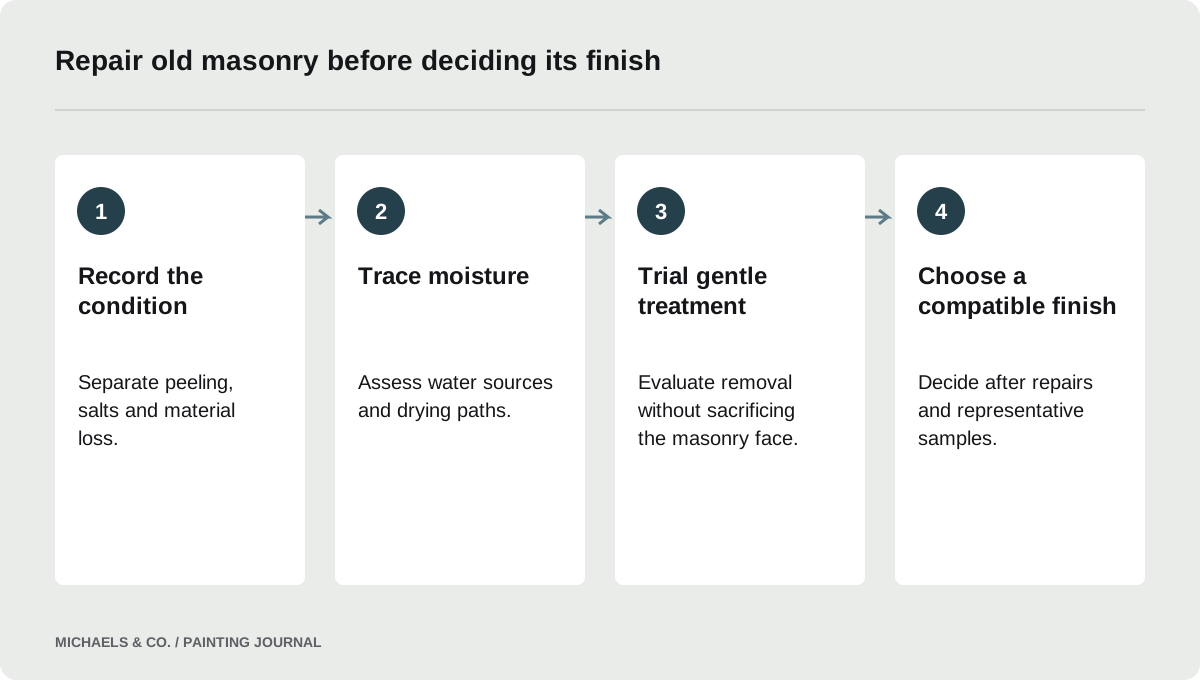
Separate the observations from the theory
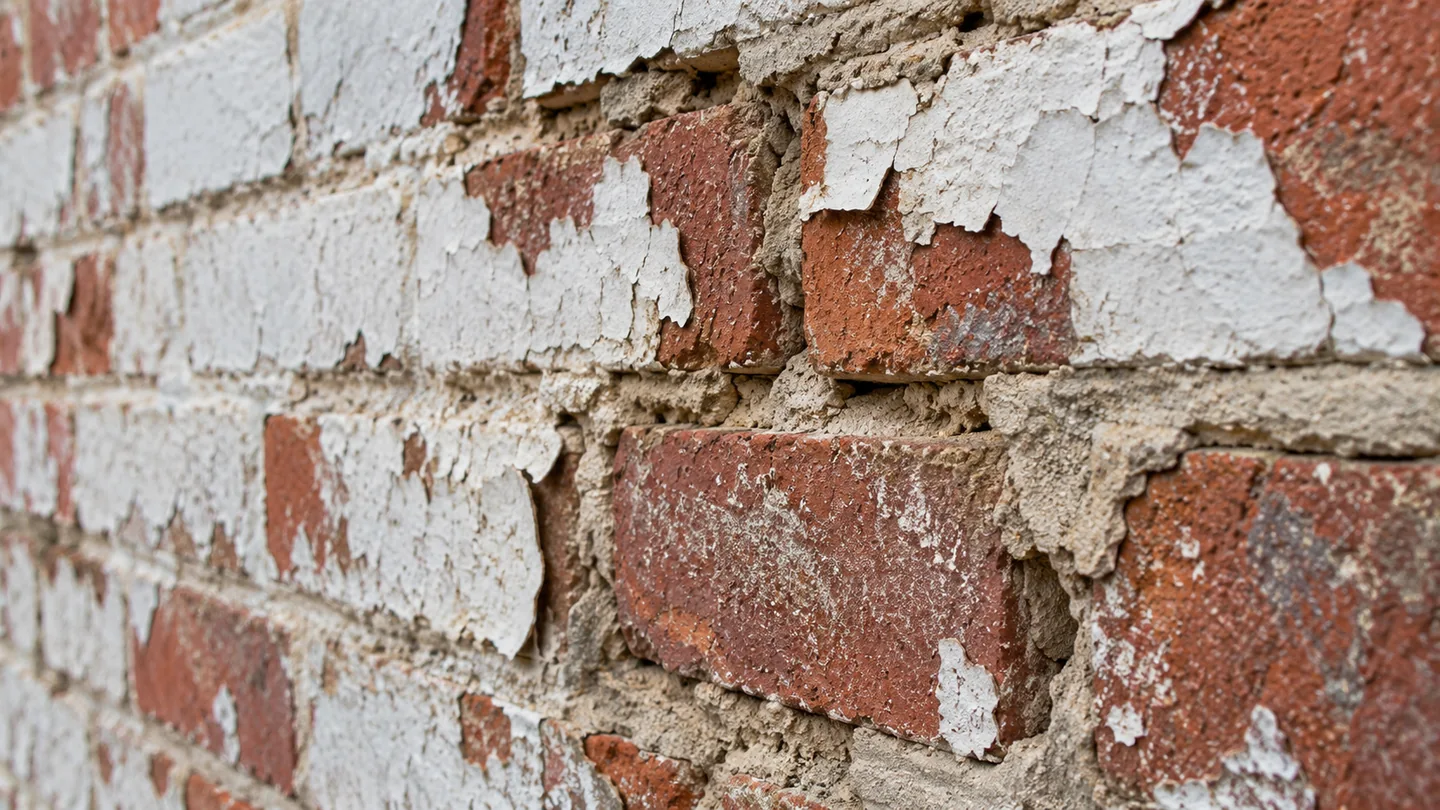
Record what is visible: peeling film, salt deposits, missing mortar, damaged brick faces and the location of damp areas. Then record the proposed explanation separately. A theory that paint traps moisture may be plausible, but it still needs to be tested against the building's construction and water history.
In this Reddit discussion, an older condo had deteriorating painted brick while an area protected by drywall appeared sound. The owner suspected the coating and wanted to strip and repoint. That comparison is worth investigating, but it does not establish that every difference came from paint. Exposure, repairs and construction details may also differ. Begin with evidence rather than turning the owner's hypothesis into a confirmed diagnosis.
Assess material condition before appearance
Have the extent of brick and mortar deterioration evaluated by an appropriate masonry or building professional. Determine whether the concern is limited surface damage or something requiring a broader repair. A prior structural opinion may be useful, but its scope and date should be understood rather than treated as approval of every proposed cleaning method.
Painting is not a way to restore lost mortar or a damaged brick face. The estimate should identify which materials can remain and what needs repair. Where joints are crumbling, a finish-only proposal leaves a fundamental condition unresolved. Keep the coating work distinct from masonry stabilization so the owner can see what each part of the project is intended to accomplish.
- Record which brick faces and mortar joints are crumbling, and compare painted areas with adjacent protected or unpainted masonry before deciding how broadly to intervene.
- Look for water entry at copings, gutters, grade, and damaged joints, documenting accessible observations for a qualified masonry assessment rather than diagnosing from paint appearance alone.
- Ask the repair proposal to identify compatible mortar and a cautious coating-removal trial where needed, with protection of the underlying masonry made an explicit objective.
- Resolve whether the wall should be recoated only after the material condition and moisture behavior are understood; a decorative sample cannot establish that covering deteriorating masonry is appropriate.
Investigate water sources and drying paths
Review roof drainage, openings, exterior repairs, ground-related moisture and indoor conditions as relevant to the assembly. Ask whether the wall has been wet historically or is still changing. Map those findings against the damaged areas rather than assuming one moisture path explains the entire building.
National Park Service: Preservation Brief 1 explains why coatings and water-repellent treatments on historic masonry need careful consideration and cannot replace maintenance of water-shedding details. The guidance is not a blanket ban on every painted brick wall. It supports understanding how the particular assembly gets wet and dries before choosing a treatment. Repairing one exterior detail may help without proving that all stored moisture or salts have disappeared.
Treat salt deposits as continuing evidence
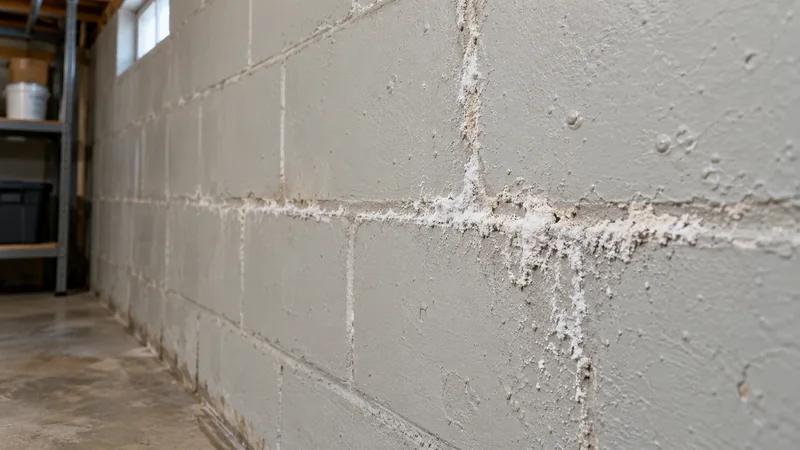
Sherwin-Williams: Efflorescence describes moisture transporting salts to a masonry surface and advises delaying painting while deposits continue to form. Record whether deposits return after appropriate cleaning and source repairs. Their recurrence can help distinguish a continuing process from an old stain left after a resolved event.
Do not cover the deposits merely to make the wall presentable during the investigation. Equally, do not assume their presence alone determines the wall's structural safety. Salt movement, material loss and coating condition are related observations with different implications. Keep them separate in the assessment so the proposed repair addresses both the building condition and the final appearance.
Test removal methods for the actual brick
Historic brick and mortar can be damaged by aggressive cleaning. National Park Service: Preservation Brief 1 emphasizes appropriate assessment and gentle treatment. A method that removes paint quickly from a modern hard surface may be unsuitable for older masonry or fragile joints.
Use a controlled trial in a representative area and inspect what happens to both the coating and the masonry face. Evaluate the dried result, not only how clean it looks while wet. If chemical removal is proposed, consider compatibility, residue, protection and disposal according to the products and project conditions. Old or unknown coatings also require relevant lead precautions. Do not treat sandblasting as an automatic solution to a stubborn painted wall.
Specify compatible masonry repairs
Where repointing or brick repair is needed, select the repair approach for the existing masonry rather than simply filling every gap with the hardest available material. An appropriate specialist should assess compatibility and the condition of the retained work.
Coordinate removal and repair so the sequence does not damage new joints or conceal areas still needing attention. Document a sample of the proposed work where appearance and material behavior matter. The painting contractor, masonry contractor and owner should understand who approves the substrate before finishing. Without that handoff, the final coating may be applied while unresolved masonry work remains underneath or adjacent to it.
Compare finish options after the wall is repaired
Possible outcomes may include retaining a suitable coating, removing incompatible layers and leaving masonry exposed, or applying a compatible finish. The correct choice depends on the building, its previous treatment, remaining material and desired appearance. A transparent or exposed-brick result may reveal old repairs or color differences that an opaque coating previously concealed.
Do not promise a uniformly decorative bare-brick wall from one small clean patch. Use representative trials and discuss accepted variation. Confirm the selected system's substrate and drying requirements. The finish decision should follow the assessment and repair, rather than force the masonry into a predetermined aesthetic through aggressive removal or an unsuitable sealer.
Questions & answers
Does paint always damage old brick?
No blanket statement fits every masonry assembly or coating. The condition depends on materials, moisture, previous repairs and the treatment used. NPS guidance supports assessing those factors before cleaning or coating historic masonry. Diagnose the specific wall rather than treating all painted brick as identical.
Can I sandblast the paint off to let the wall breathe?
Aggressive removal can damage older brick faces and mortar. Evaluate the material and use a representative trial with appropriate specialist guidance. Removing paint quickly is not the only objective; the masonry must remain suitable after the work, and unknown old coatings may require special precautions.
Can the brick be left exposed after stripping?
Possibly, but the result depends on what removal reveals and whether repairs and moisture issues have been addressed. Mixed bricks, old patches or damaged faces may remain visible. Review representative trials before choosing exposed masonry as the final appearance.
Sources & further reading
- National Park Service: Preservation Brief 1Historic masonry needs compatible, minimally damaging treatment; coatings can complicate moisture release and cannot replace building repairs.
- Sherwin-Williams: EfflorescenceMoisture transports masonry salts; correct the source and delay painting while deposits continue to form.
Reader discussions
These conversations describe problems people encountered. They do not establish the cause of a defect or replace product instructions and applicable requirements.