Stucco Paint Keeps Peeling After Patch Repairs: What the Surface Is Telling You
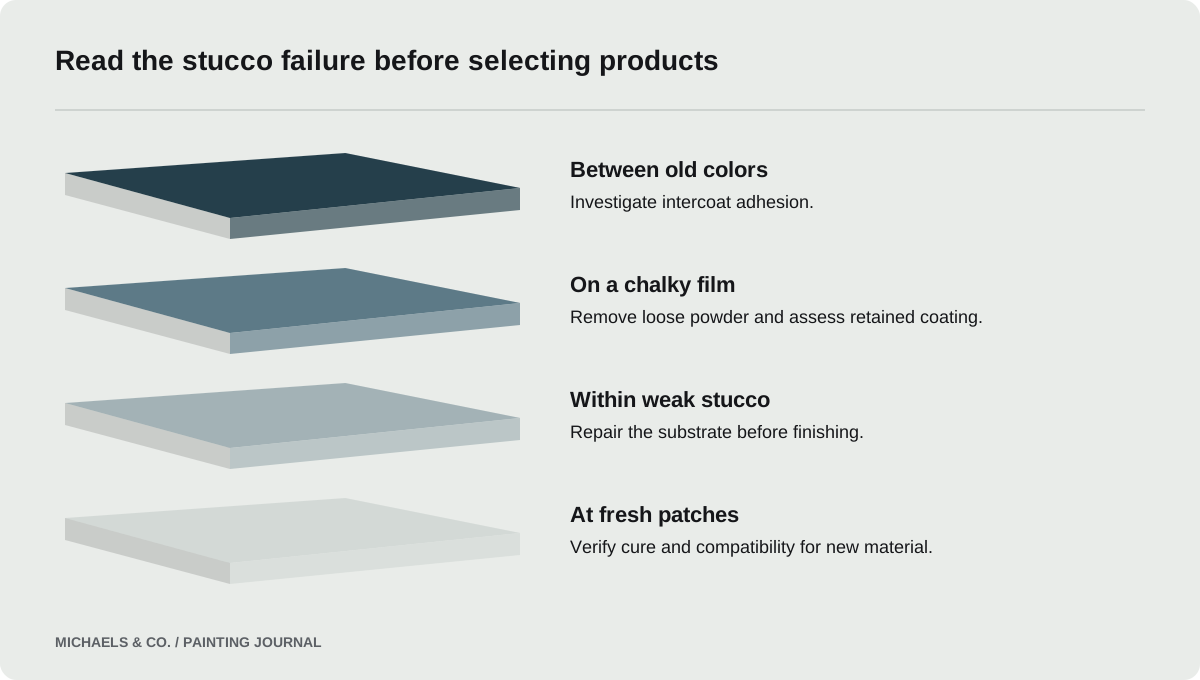
Stucco paint that keeps peeling needs an inspection of both the coating and the material beneath it. Find whether failure occurs between old colors, at a powdery surface or within weak stucco, then investigate moisture and repair history. Conditioners and primers serve specific surface conditions; they are not interchangeable cures. Correct unsound material and verify the proposed system on a representative area before another full exterior repaint.
Map peeling against the repair history
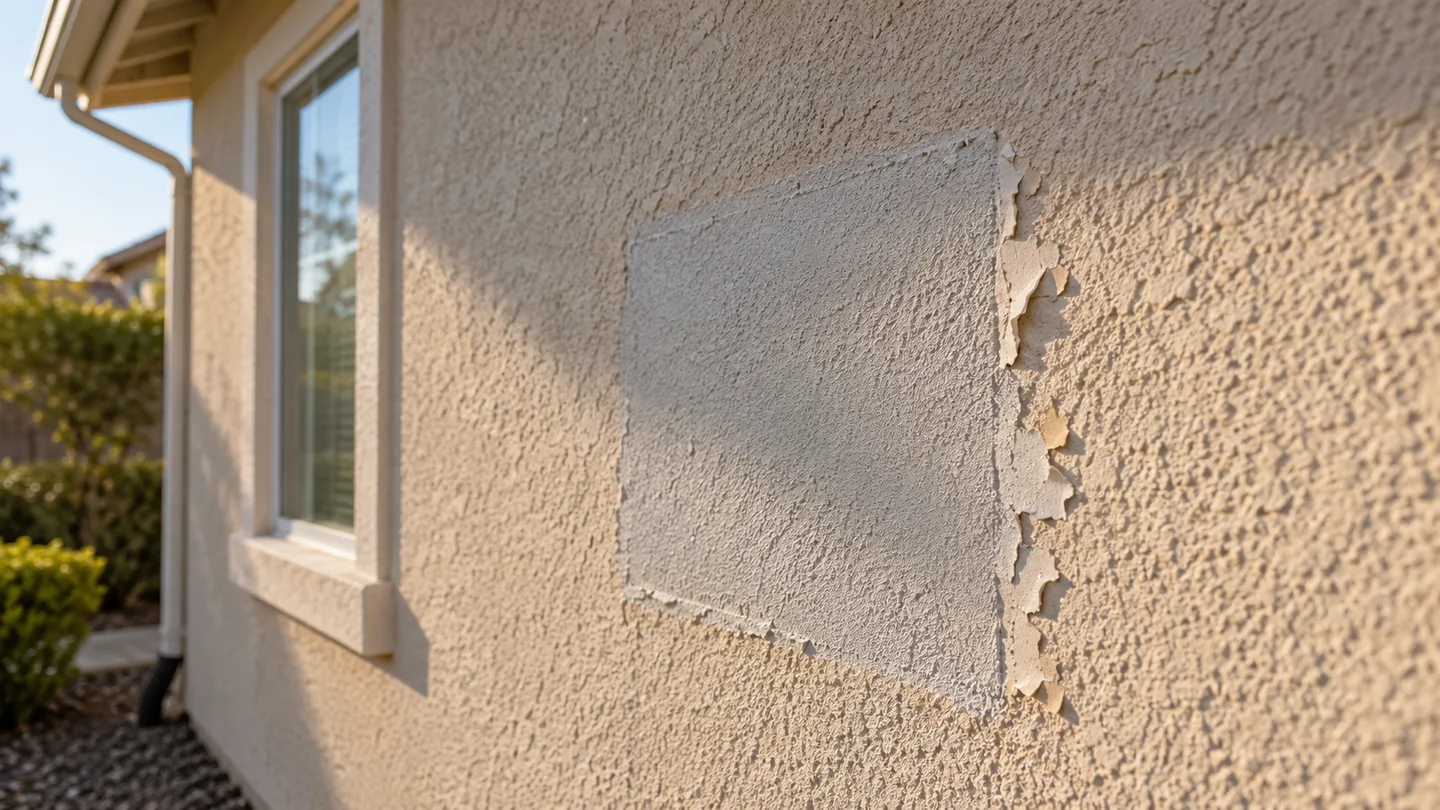
Photograph the full elevation and identify old patches, cracks, exposed substrate and different paint layers. Ask when the wall was last coated and whether the same locations failed before. Compare protected areas with locations exposed to rain, irrigation or roof runoff.
In this Reddit discussion, a homeowner saw peeling on a century-old stucco house with signs of repeated patching, and neighbors reported similar trouble. The discussion included different product recommendations. The repeated history supports a diagnostic scope, not a conclusion that one branded masonry paint will solve every house. Map the actual failure before assuming that the entire surface has the same cause.
Inspect what is attached to the loose coating
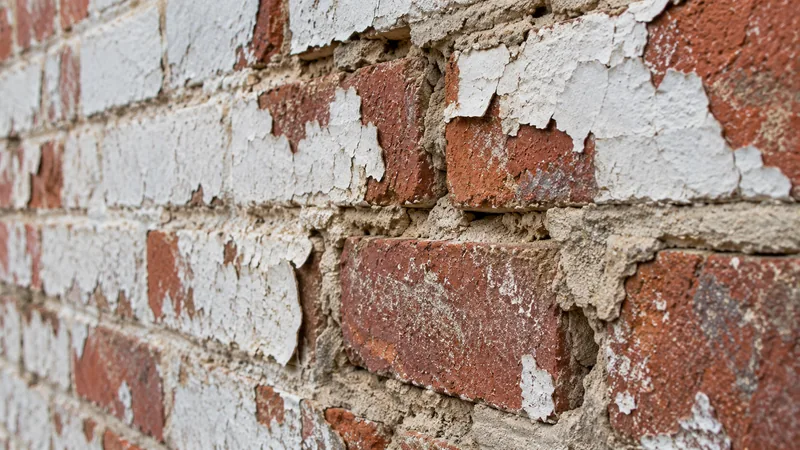
Examine a piece that has already detached and the surface below it. If the exposed layer is another old color, the weak interface may be between coatings. If powder or stucco particles are attached, assess the substrate condition as well. Different areas may show different failure layers.
Do not scrape every elevation bare before defining the investigation and precautions. Older or unknown coatings may require lead controls, and fragile stucco can be damaged by aggressive preparation. The objective is to understand which material is unsound and where a stable boundary can be found. A repair estimate should explain that boundary rather than promise a uniform method before inspection.
- Compare repeated peeling with stucco patches, hairline cracks, parapets, openings, and irrigation patterns, marking where the repair boundaries align with the new coating failures.
- Check accessible areas for powder, deposits, dampness, and loose material, keeping these observations separate because each may require a different preparation or building repair response.
- Ask for the patch material's application history and the coating manufacturer's substrate requirements, rather than assuming every apparently dry cementitious patch is ready for painting.
- Review a repaired test area that includes the patch edge and adjacent original stucco, then document both texture continuity and coating attachment before extending the method.
Separate chalky paint from deteriorating stucco
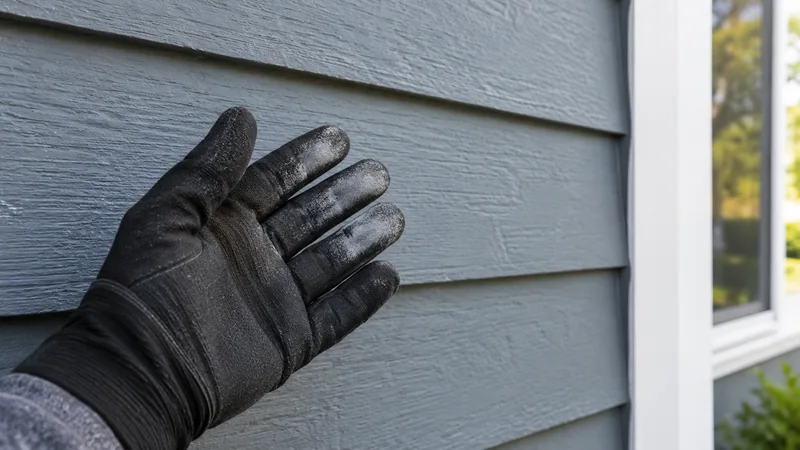
Powder from a weathered coating is different from a friable masonry surface beneath it. Sherwin-Williams: Chalking (Powdering) describes paint chalking and the importance of removing loose powder before recoating. If cleaning reveals weak stucco, a paint-only correction may not be sufficient.
Ask the contractor to identify the source of the powder and what condition the selected system requires. A conditioner may have a role on an appropriate substrate, but its label controls that use. It should not be described as glue that makes every loose layer acceptable. The substrate must be suitable to retain, and any underlying deterioration needs its own repair decision.
Investigate cracks and repeated wetting
Inspect relevant cracks, joints, openings and drainage details. Record whether peeling follows rain or occurs below a recurring water path. A crack beside a failed patch may be important, but a photograph cannot show the full route of water through the assembly.
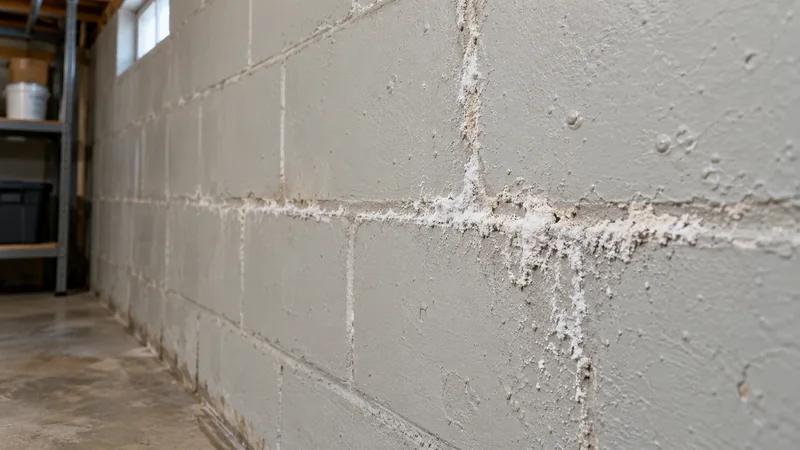
Sherwin-Williams: Efflorescence explains the relationship between moisture and salt deposits and advises postponing coating while efflorescence continues. Correct supported moisture sources before treating the surface as ready for paint. Where the assembly or crack behavior is uncertain, involve an appropriate building or masonry professional. A new finish should follow that assessment rather than conceal the evidence needed to make it.
Treat fresh repairs as a separate substrate condition
New stucco or mortar repairs may have different curing and alkalinity requirements from the surrounding aged wall. Sherwin-Williams: Alkali Burning and Discoloration describes alkalinity as a possible cause of coating discoloration and deterioration. The actual repair material and coating system determine readiness.
Do not apply a universal waiting period or pH limit from an unrelated product. Obtain the relevant material and coating instructions and document the condition before finishing. A product suitable for an older sound painted wall may require a different primer or preparation over fresh repairs. Include those transitions in the scope so the crew does not treat every visible surface as the same substrate on painting day.
Compare conditioner, primer and finish by purpose
Ask what each proposed product is intended to do. A conditioner may address a permitted marginal surface condition, a primer may support adhesion or manage a particular substrate, and a finish provides the specified exposed coating. These functions can overlap in some products, but the technical instructions define the system.
Avoid choosing between proposals solely because one includes more coats or a familiar brand. Compare the preparation assumptions, substrate limits and compatibility with retained layers. If a contractor says no primer is needed, ask which product instruction and observed condition support that statement. The answer should be specific to the proposed finish and wall, not a general slogan about masonry paint.
Trial the system across representative conditions
Include old sound coating, a prepared peeled area and a fresh repair where those conditions occur on the building. Apply the proposed sequence and evaluate it after the required conditions have been met. Document which layers remain underneath each part of the sample.
A trial only on the easiest wall cannot represent a repeatedly failing elevation. If a sample fails, identify the released interface and revise the preparation or system accordingly. Do not simply add another primer over the failed sample and call it solved. The trial's value is that it tests a reasoned repair before the cost and appearance consequences extend around the entire building.
Define completion beyond a uniform new color
At closeout, retain photographs of preparation, masonry repairs and the accepted sample. Check the agreed appearance and record any excluded preexisting surface variation. A full recoat can look uniform on completion while an unresolved weak layer remains below, which is why the preparation record matters.
Include maintenance of drainage and the reporting of new cracks or deposits in the handoff. If peeling returns, compare its location and failed layer with the original map. That evidence can distinguish recurrence of an unresolved condition from a new defect elsewhere. The next decision should build on the documented repair rather than begin another cycle of isolated patches and competing product guesses.
Questions & answers
Will masonry conditioner stop any stucco peeling?
No. Its suitability depends on the product and the condition it is designed to address. Loose coating, deteriorated stucco and active moisture require their own corrections. Inspect the failed layers and compare the actual substrate with the selected system instructions before using a conditioner.
Should all old stucco paint be stripped?
Not automatically. The necessary removal depends on which layers are unsound and whether the retained coating is compatible with the repair system. Aggressive removal can damage the substrate. Define the condition and test representative areas before agreeing to a blanket stripping scope.
Why do fresh stucco patches need special attention?
Their cure, alkalinity, absorption and surface condition can differ from the surrounding wall. The repair material and coating requirements determine when and how they can be finished. Treat those areas explicitly in the scope instead of assuming the instructions for aged painted stucco apply unchanged.
Sources & further reading
- Sherwin-Williams: Alkali Burning and DiscolorationMasonry alkalinity and moisture can damage coatings; curing and compatibility must follow the actual substrate and coating requirements.
- Sherwin-Williams: Chalking (Powdering)Weathered paint can leave powder; loose chalk must be removed before recoating.
- Sherwin-Williams: EfflorescenceMoisture transports masonry salts; correct the source and delay painting while deposits continue to form.
Reader discussions
These conversations describe problems people encountered. They do not establish the cause of a defect or replace product instructions and applicable requirements.