Does Paint and Primer in One Replace Primer on Bare Drywall?
Paint-and-primer labeling does not automatically eliminate a separate primer on bare drywall. New board and joint compound absorb differently, and the selected finish system may require a dedicated sealer before topcoats. Read the exact product's bare-surface instructions and any one-coat guarantee exclusions. Use primer for its substrate function, then apply the finish coats needed for the specified coverage, color and sheen.
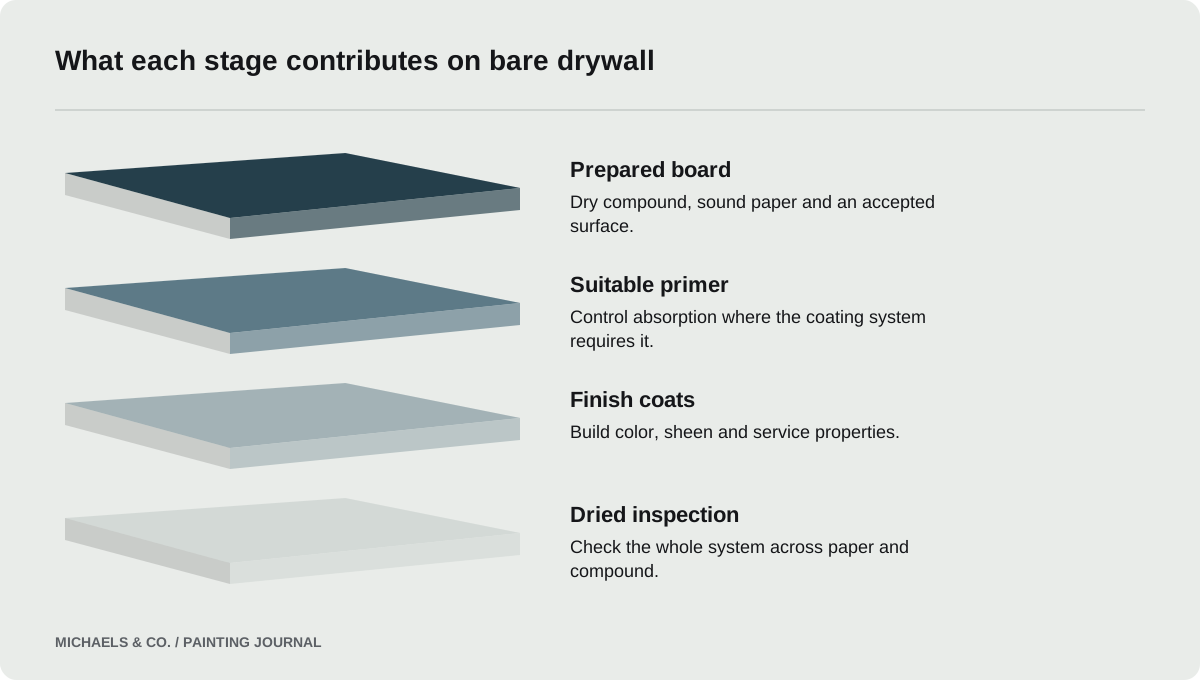
Ask what job the missing primer was supposed to do
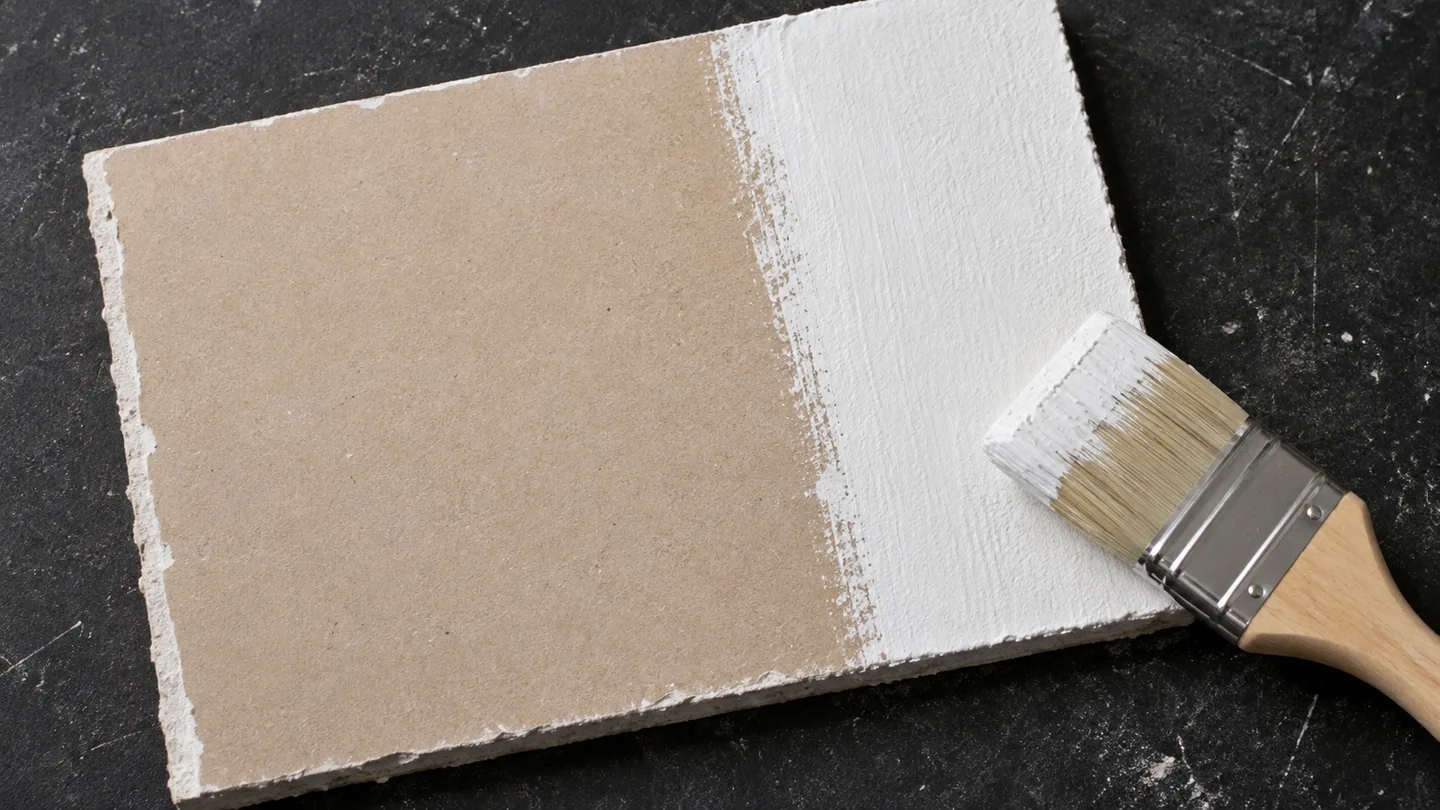
On new drywall, the main primer decision is not simply whether white paint can cover a pale surface. The board face, taped joints and joint compound can take up coating differently. A suitable primer helps establish a more uniform base for the finish. That role is distinct from blocking a stain or bonding to a slick existing coating.
A Reddit question about painting new drywall with two coats of paint-and-primer reflects a reasonable desire to avoid an extra whole-house pass. The problem is that a marketing phrase does not identify which substrate functions the first finish coat is approved to perform. Before comparing labor, identify the exact paint and its instructions for uncoated drywall. If those instructions require a primer, adding another coat of the same finish is not automatically an equivalent system. The product specification, not the front-label shorthand, defines the permitted sequence.
Separate hiding, sealing and adhesion
Hiding means the underlying color is no longer visible through the coating. Sealing porous drywall helps control absorption. Adhesion concerns the bond between layers and substrate. A product can perform well at one task without being intended to replace every specialty primer. These distinctions explain why an apparently opaque first coat is not proof that the wall is ready for a uniform final sheen.
BEHR's guidance on difficult substrates describes the different porosity of drywall materials and the role of priming in reducing uneven absorption. Use that as a substrate explanation, not a promise that primer hides physical defects. A raised joint, dusty compound or damaged paper still needs appropriate preparation. The right sequence begins with a sound surface, uses a primer suited to its condition where required and then applies a compatible finish. Skipping one function because another looks satisfactory is how a shortcut becomes difficult to evaluate later.
Read one-coat claims with their exclusions
A one-coat guarantee may apply only to designated colors, particular products and specified previously painted surfaces. It is not the same as permission to apply a finish directly to every bare material. BEHR's one-coat color guarantee includes conditions and exclusions that need to be checked alongside the product label.
When comparing products, write down the exact claim you expect to use. Does it concern color coverage, an approved repaint situation or a complete system over new drywall? Check whether a primer coat is excluded from the promised coat count. Also distinguish a manufacturer guarantee from a practical application estimate. Even within an approved system, substrate texture, selected color and application build can affect the work required. Do not purchase paint or schedule a crew on the assumption that the phrase paint and primer converts all projects into one operation.
Choose a drywall primer for the actual surface
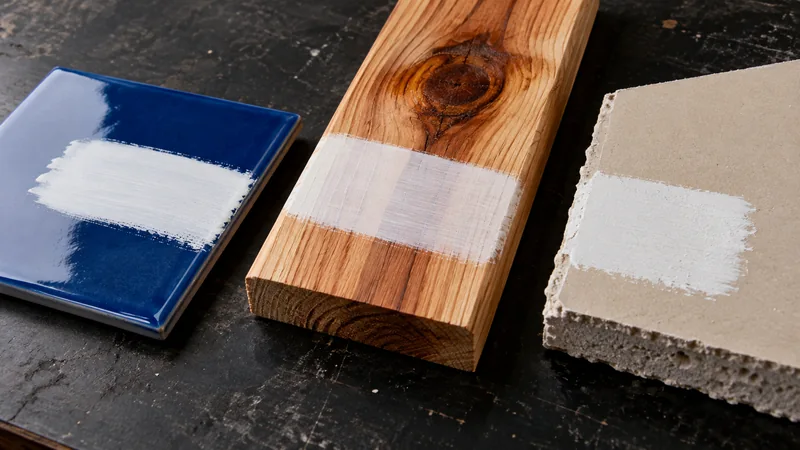
For straightforward new uncoated drywall, a dedicated drywall primer may be an economical appropriate choice. The KILZ PVA drywall-primer page describes that product for uncoated drywall under flat or low-sheen finishes and distinguishes it from stain-blocking or glossy-surface applications. Those limits belong to that product; other primers need their own review.
If the wall also contains old paint, adhesive residue, water stains or damaged paper, pause before treating the whole area as ordinary new drywall. The mixed conditions may require different preparation or a different primer system. Tell the supplier about those conditions and the intended finish sheen. A more expensive multipurpose primer is not automatically necessary, but the cheapest new-drywall sealer is not automatically suitable for every repaired renovation wall. Select by the substrate and topcoat rather than buying solely on a general reputation for strong primer.
Prepare and inspect before the priming pass
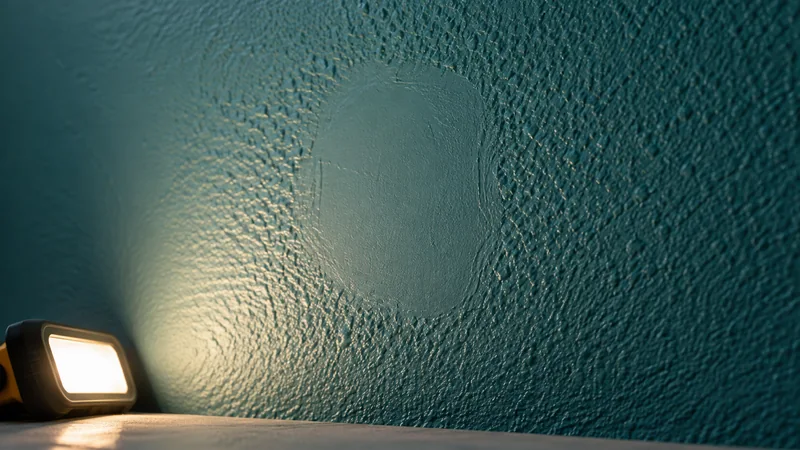
Allow joint compound to reach the condition required by its manufacturer, finish the surface to the agreed standard and remove preparation dust appropriately. Primer is not a substitute for drying compound or cleaning a dusty face. Inspect repairs, fastener areas and transitions under useful lighting before coating makes their boundaries harder to read.
Plan how the primer will be applied and whether the selected system calls for back-rolling after spraying. Use the specified applicator and coverage rather than spreading the material until it becomes a nearly transparent mist. After drying, inspect the primed wall for missed areas and physical imperfections that need attention. This stage offers a practical checkpoint before the more visible finish coats. Correcting a ridge now is usually a more coherent process than discovering it through the final sheen and assuming another expensive finish coat will flatten it.
Compare total job cost with a simple worksheet
A primer pass costs labor and material, but eliminating it can change finish consumption and the risk of rework. Compare complete approved systems, not only the price of the cans. Use the actual labeled spread rates and your prepared wall area for an estimate.
| Item | System A | System B |
|---|---|---|
| Substrate preparation | Required for both | Required for both |
| Primer | Specified product and coverage | Omit only if finish instructions permit |
| Finish coats | Specified sequence | Approved direct-to-surface sequence |
| Acceptance | Uniform dried sample | Same appearance standard |
Do not invent a savings percentage from a single room. Include the cost of an additional finish coat if the sample requires it and the disruption of correcting an unsuitable system after the room is occupied.
Approve the complete system on a representative area
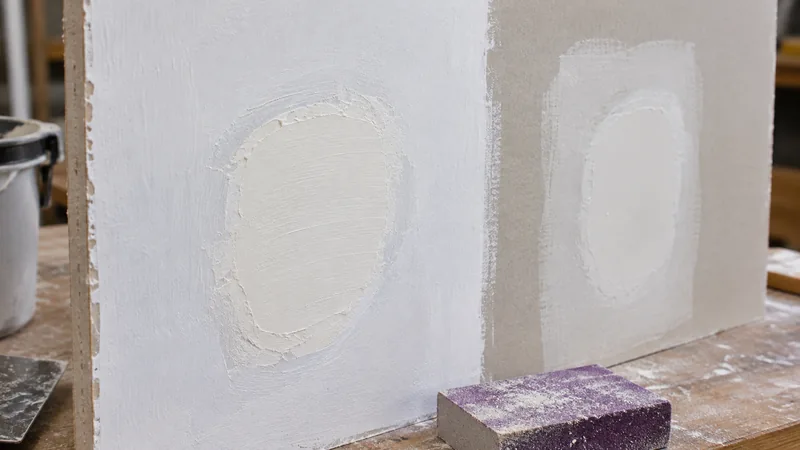
A meaningful sample crosses both board face and joint compound. Use the intended preparation, primer and finish sequence, with the actual color and sheen. A sample painted only on an already sealed scrap cannot answer whether new drywall will finish uniformly. Let each stage dry as directed before judging the result.
View the sample under the room's lighting and document the accepted sequence. If a contractor proposes omitting primer, ask for the exact product instructions supporting that approach and a representative sample, rather than arguing from the phrase paint and primer. If the instructions require priming, keep that step. Once the system is selected, maintain the same products and application method across the area. The useful economy is avoiding unnecessary work within a valid system, not removing a layer before understanding what that layer contributes.
Questions & answers
Can two coats of paint-and-primer replace one primer and two finish coats?
Only if the exact finish product approves that sequence for the actual bare substrate and the result meets its requirements. Coat counts are not interchangeable by arithmetic. A separate primer may perform absorption-control or adhesion functions that another finish coat does not automatically replace.
Does new drywall always need a stain-blocking primer?
Ordinary clean new drywall primarily needs an appropriate sealing system, not automatically a stain blocker. Stains, contamination or other special conditions can change the choice. Identify the surface and selected finish before paying for a specialty function the project may not need.
Should drywall primer look perfectly opaque?
Judge it by the product's coverage, application and performance requirements rather than demanding finish-paint appearance. Some visual variation can remain in a primer coat. Missed areas, excessive absorption or physical defects still need attention before applying the specified topcoats.
Sources & further reading
- BEHR: One-Coat Color GuaranteeOne-coat hiding has color and substrate exclusions; some surfaces still require primer and additional coats.
- KILZ PVA Drywall PrimerThis specific PVA primer is intended for uncoated drywall under flat or low-sheen finishes, not stains or glossy substrates.
- BEHR PRO: Dealing with Difficult SubstratesSealing differences in drywall porosity, assessing existing coatings and selecting a suitable primer are separate tasks.
Reader discussions
These conversations describe problems people encountered. They do not establish the cause of a defect or replace product instructions and applicable requirements.