Painting Galvanized Metal: Why DTM Does Not Mean No Preparation
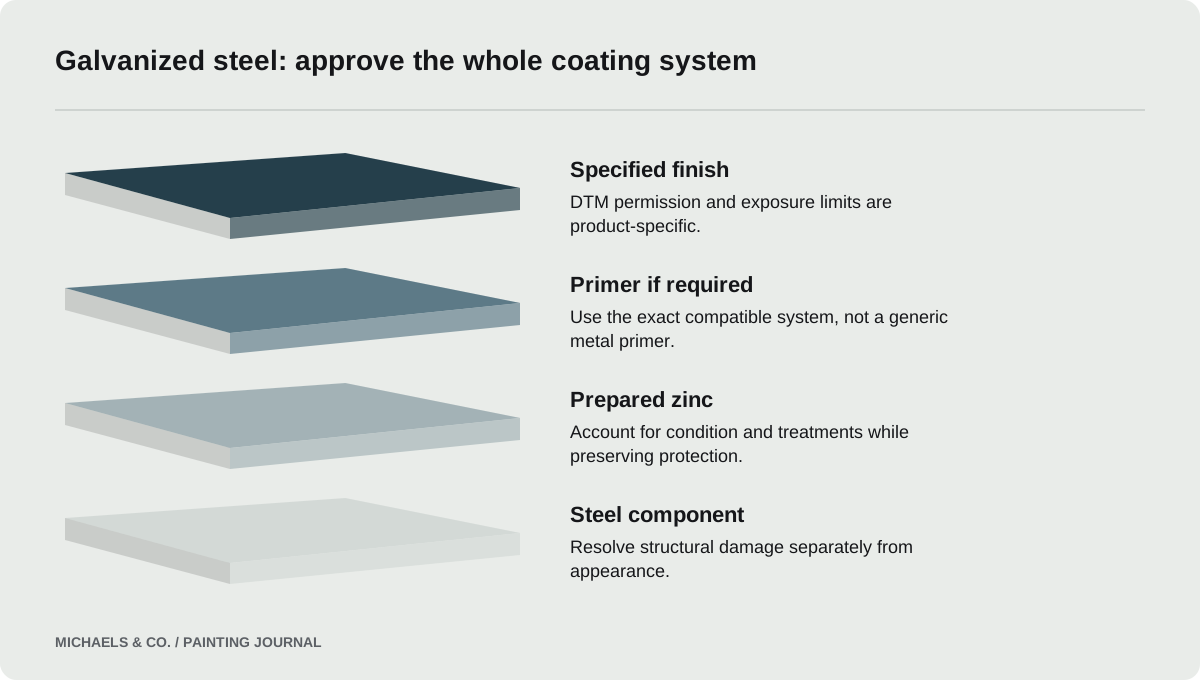
Galvanized steel has a zinc coating that must be considered when selecting paint. DTM means direct to metal within a product’s approved uses; it does not mean direct to every metal in any condition. Confirm that the exact system permits galvanized surfaces, identify their condition and any post-treatment, and follow the required cleaning and preparation. Do not use a general metal-paint label as permission to skip those steps.
Identify the metal and the existing surface
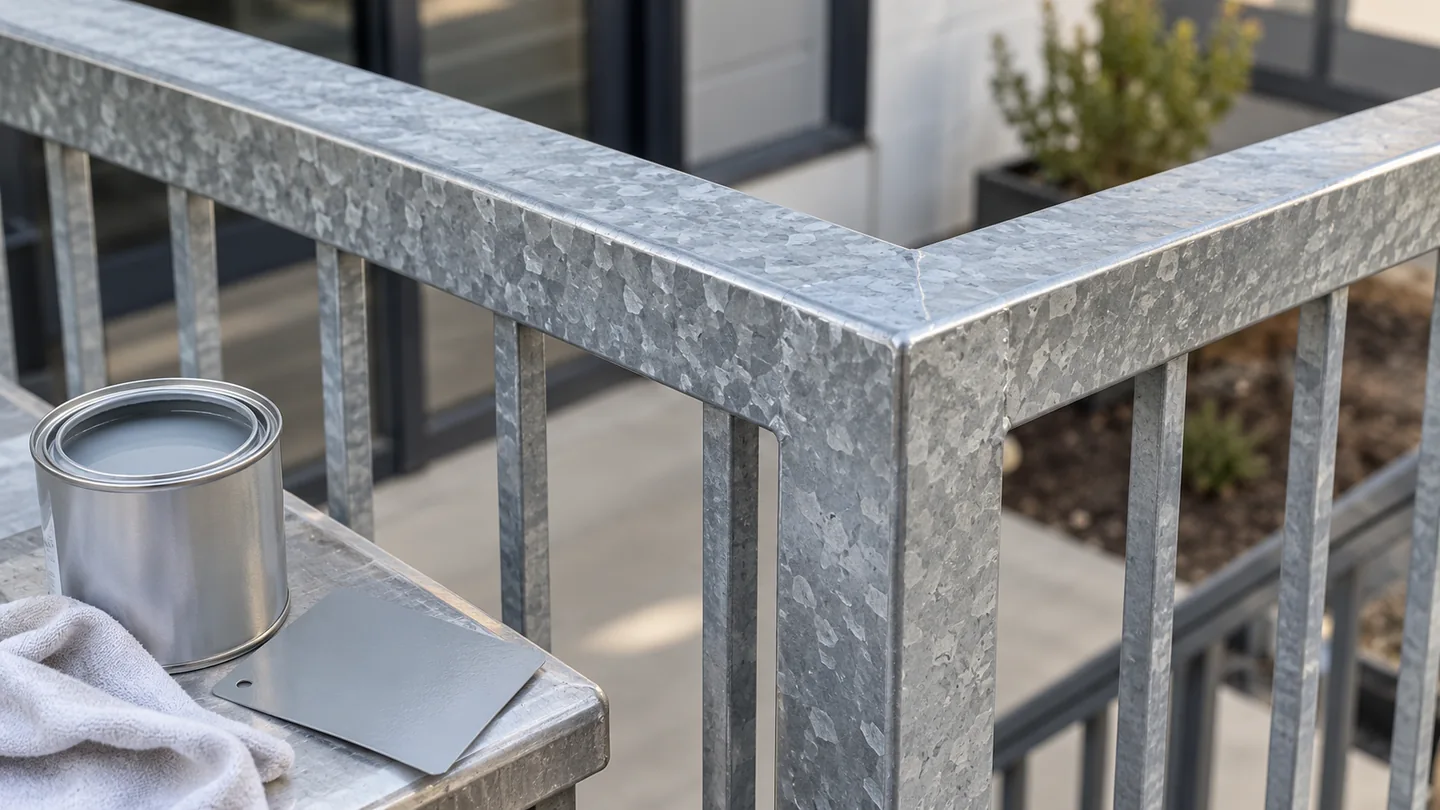
Start with the part's specification, supplier or installation records. A silver-colored component may be galvanized steel, another metal or a factory-coated product. Appearance alone may not establish the surface treatment. Ask what material the paint will actually contact before buying a primer intended for a different substrate.
A Reddit question about galvanized post bases attracted conflicting advice about DTM paint and primer. The product category did not resolve the key question: which coating system was approved for those parts and their condition? Keep the structural function separate from the finish. Paint should not conceal severe corrosion, uncertain fasteners or damage that requires assessment by the person responsible for the assembly.
Understand the zinc layer you are preserving
The galvanized surface is part of the corrosion-protection system. Preparation should establish a suitable surface for paint without unnecessarily removing the protective zinc. A method that is routine for heavily rusted bare steel may be inappropriate for a thin zinc coating on a different component.
The American Galvanizers Association's preparation guidance distinguishes newly galvanized, partly weathered and fully weathered surfaces. It also points to ASTM D6386 for detailed preparation of hot-dip galvanized products. This is a technical framework, not a rule that every homeowner must perform industrial blasting. The actual component, condition, selected paint and project specification determine the appropriate method and who should carry it out.
Ask about oils and post-treatment before preparation
Newly supplied metal is not necessarily ready to paint. Fabrication, handling and protective treatments can leave a surface that requires a specific preparation process. If the supplier knows the parts will be painted, communicate that early. Discovering an incompatible treatment after installation can make access and correction much harder.
Where treatment history is unknown, tell the coating manufacturer rather than assuming a clean appearance proves compatibility. Ask how that uncertainty should be assessed for the intended system. Avoid improvising acid washes, household chemical mixtures or abrasive methods from unrelated online examples. A treatment that changes the appearance of zinc is not automatically a validated preparation method for your paint. Include the necessary evaluation and cleanup in the scope before work starts.
Read DTM as a product-specific permission
Direct-to-metal describes a permitted application within the product's documentation. Some systems permit selected metals without a separate primer under stated conditions; others need a different sequence on galvanized steel. Look for galvanized metal in the approved substrate and preparation sections, not merely a picture of metal on the label.
Check exposure too. Indoor decorative brackets, exterior rails and components subject to persistent wetting do not share identical service conditions. Ask whether the selected finish is suitable for that environment and any required protective performance. If a separate primer is specified, confirm compatibility with the finish. Mixing a familiar primer with an unrelated DTM topcoat can create a new system that neither manufacturer has actually recommended.
Define a preparation endpoint that can be checked
A useful work description says what condition is required before coating, which method will create it and how it will be checked. “Clean the metal” is too vague when bidders may mean anything from a quick wipe to a complete specified preparation. Make the requirements visible before comparing prices.
| Question | Evidence to retain |
|---|---|
| What is the substrate? | Supplier or component identification |
| What is on its surface? | Treatment history and condition observations |
| Which system is approved? | Exact primer and finish documentation |
| How is preparation accepted? | Specified method, sample and inspection record |
For commercial work, use the project's applicable coating specification and qualified inspection requirements. A casual visual check should not be represented as an industrial surface-preparation certification.
Make a sample include an edge and a difficult area
A flat accessible center may be easier to coat than a weld, corner, fastener recess or underside. Include representative geometry in the sample and confirm that the application method can reach it without creating excessive buildup nearby. Identify any areas that cannot be accessed properly after installation.
Apply the complete system and follow the specified conditions before evaluating it. If adhesion testing is required, agree on the method and timing rather than using an immediate scratch as a universal verdict. Keep the sample record linked to the actual supplied products. A change in primer, tint, thinner or application method can invalidate the comparison. Resolve problems on the sample before coating every installed part.
Control application conditions and film build
The instructions may address substrate temperature, moisture, drying intervals and film thickness. Treat these as part of the system rather than optional refinements after the color has been selected. A film that appears opaque can still be outside the intended application range.
For specified commercial protective work, clarify who measures and records the required conditions and thickness. For a small residential component, at minimum keep the exact instructions and follow the permitted method rather than guessing at coverage. Avoid excessive buildup around moving parts, drainage details or fastener interfaces. If weather or access makes the specified application impractical, adjust the schedule or method. Adding a heavier coat does not automatically compensate for a missed requirement.
Inspect early service without covering up the evidence
Retain photographs and product records after completion. If paint later lifts, record where the separation occurs and whether bare zinc, old coating or corrosion is visible beneath it. Preserve a detached sample if it can be collected without creating unnecessary disturbance. The failure location helps the supplier investigate.
Do not immediately bury the problem under another generic metal primer. Revisit surface identification, treatment history and preparation first. A localized damage repair may differ from a system-wide adhesion failure. If the component is structurally important or corrosion appears significant, involve the appropriate professional before focusing on appearance. The goal is to preserve both the galvanized protection and the intended finish, with a documented repair rather than repeated unsupported coating changes.
Questions & answers
Does galvanizing mean the part never needs painting?
Galvanizing and decorative or protective paint can serve different project goals. Some parts are intended to remain galvanized; others use a specified combined system. Decide whether painting is needed for the actual component and exposure, then confirm a compatible preparation and coating rather than assuming one approach fits all galvanized steel.
Should I wait outside for galvanized metal to weather before painting?
Do not choose an arbitrary waiting period as a substitute for preparation instructions. Weathering changes the surface and can create different cleaning requirements. The supplier and coating manufacturer should identify the appropriate process for its actual condition and the project schedule.
Can any rust-inhibiting primer be used on galvanized steel?
No. A primer suitable for bare ferrous steel is not automatically approved for a zinc-coated surface. Read the explicit substrate list and preparation directions, then confirm the intended topcoat and exposure. A general claim about rust protection does not establish compatibility.
Sources & further reading
- American Galvanizers Association: preparing hot-dip galvanized steel for paintCondition-specific preparation, treatment history and the ASTM D6386 technical framework.
- INSL-X Stix SXA-110 technical dataAn example of a primer listing galvanized metal with defined preparation and service limitations.
Reader discussions
These conversations describe problems people encountered. They do not establish the cause of a defect or replace product instructions and applicable requirements.