Sealing MDF Trim Ends So They Paint Like the Factory Face
Treat an exposed MDF cut end as a different surface from the smooth factory face. Remove cutting defects without rounding the profile, clean the dust and use an edge-sealing or primer system compatible with the board and finish. After the sealer reaches its sanding stage, smooth raised fibers carefully and recoat any exposed areas as required. Caulk is for suitable joints, not a universal substitute for preparing a visible flat end.
Identify the raw edge and the factory coating
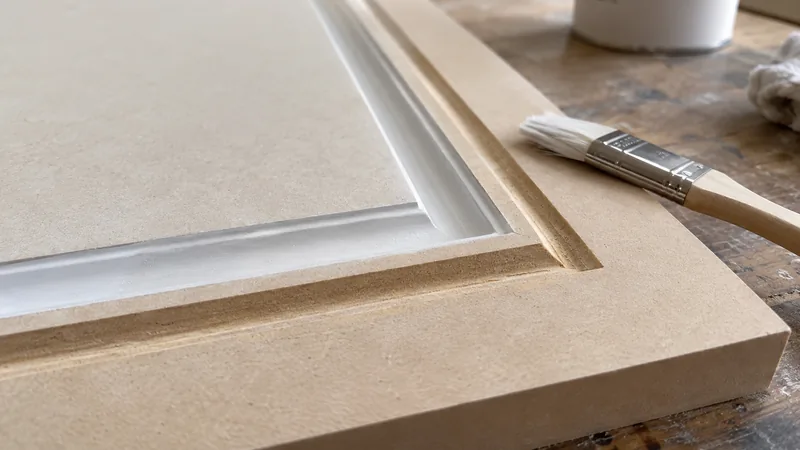
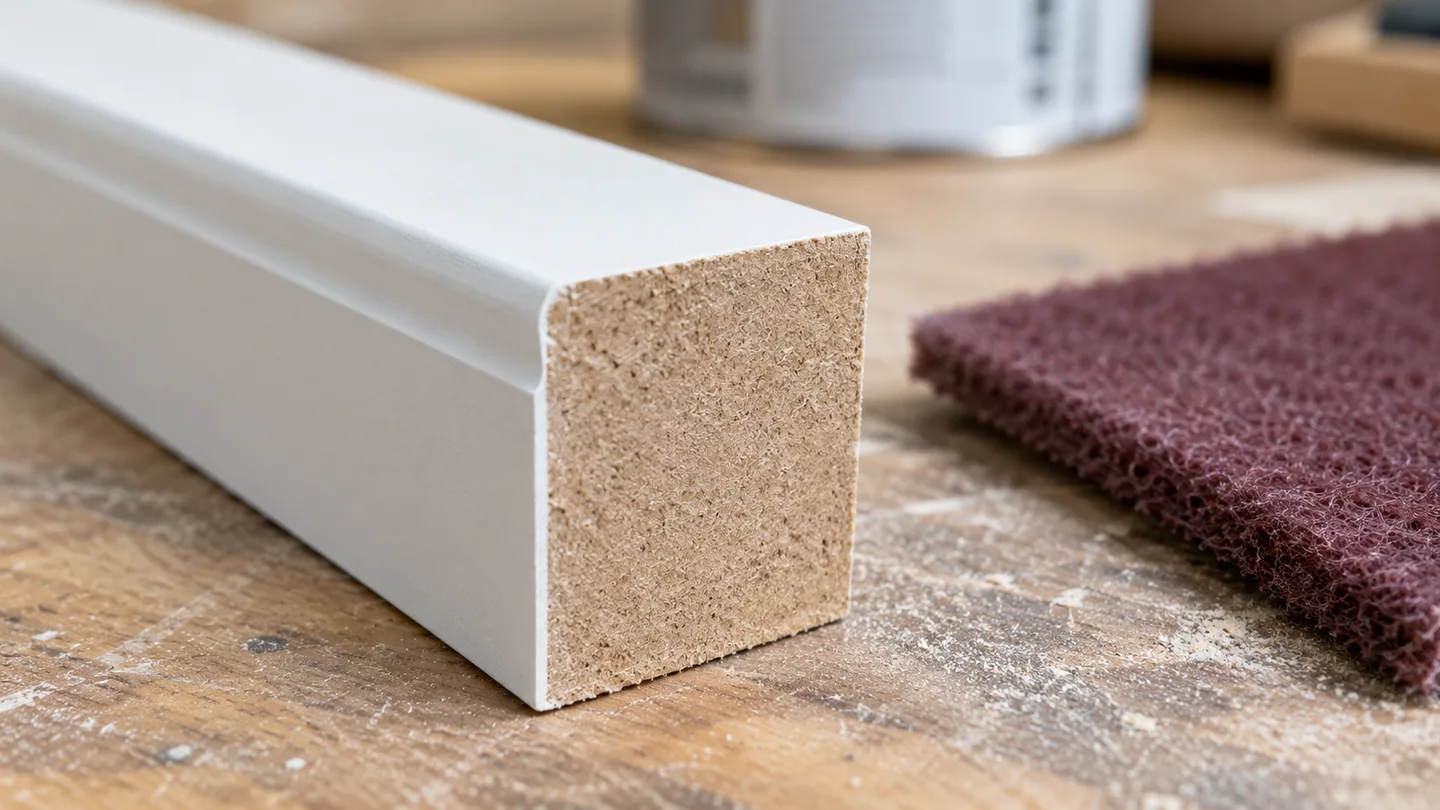
A factory-primed MDF molding can look nearly ready for finish paint until a field cut exposes the core. That cut end may absorb coating differently and feel rougher than the face. First determine whether the visible problem is an unsealed end, saw marks, chipped material or a gap at the wall. Those conditions need different treatment.
A Reddit question about priming exposed MDF trim ends contains competing suggestions for filler, caulk and primer. The useful distinction is between shaping the material, sealing its porosity and filling an actual joint. A flat visible end should retain its intended shape and receive a compatible coating system. Smearing flexible caulk over the whole end can create a different surface and obscure crisp details. Inspect every cut before painting, including lower ends and small returns that are easy to miss once the trim is installed.
Confirm the MDF grade fits the location
MDF is a family of engineered boards with different intended exposures. Check the trim or board manufacturer's information when available. An interior grade should not be assumed suitable for repeated wetting merely because a durable enamel will cover it. The coating is part of the protection system, not a conversion of the board into another grade.
MEDITE's moisture-resistant MDF guidance explicitly distinguishes moisture resistance from waterproofing and says its MR board should be fully sealed and coated in interior humid conditions. It also excludes exterior use for that grade. Those statements apply to the named board, but they illustrate the question to ask about any MDF trim. If an end is swollen, soft or repeatedly wet, resolve the exposure and material condition before seeking a better primer. Sealing a damaged edge does not restore its original dimensions or make ongoing wetting acceptable.
Remove cutting defects while preserving the profile
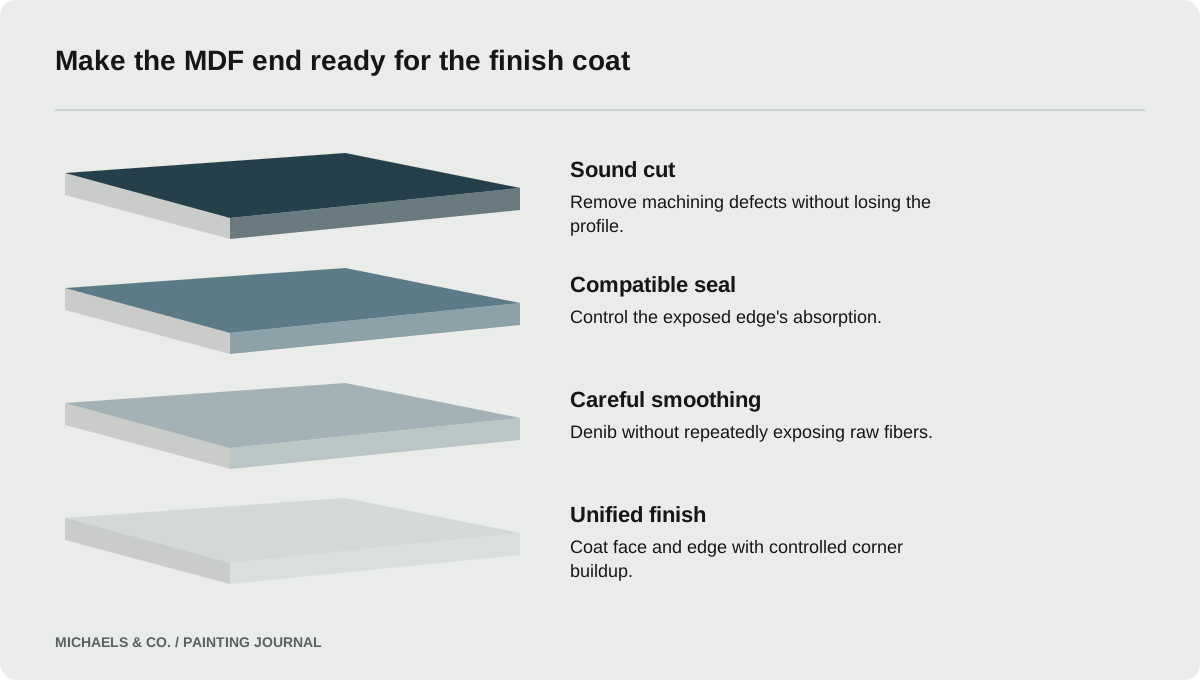
Inspect the cut under good light and feel for saw ridges or torn fibers. Correct the shape before adding coating. Use controlled sanding that follows the intended flat or molded profile rather than rounding the end indiscriminately. A small supported abrasive can offer better control on installed trim than a power sander brought close to the wall and floor.
The European Panel Federation's MDF edge-finishing guidance starts with clean cuts and removal of machining marks before sealing. Its industrial sanding examples are not a universal grit prescription for every installed molding or coating. Choose the abrasive sequence that removes the actual defect without leaving deeper scratches than the finish system can accommodate. Stop when the edge is properly shaped. More sanding is not automatically better, especially at a crisp corner that defines the trim profile. Collect dust with appropriate controls and remove remaining particles before applying any sealer.
Choose a compatible edge-sealing system
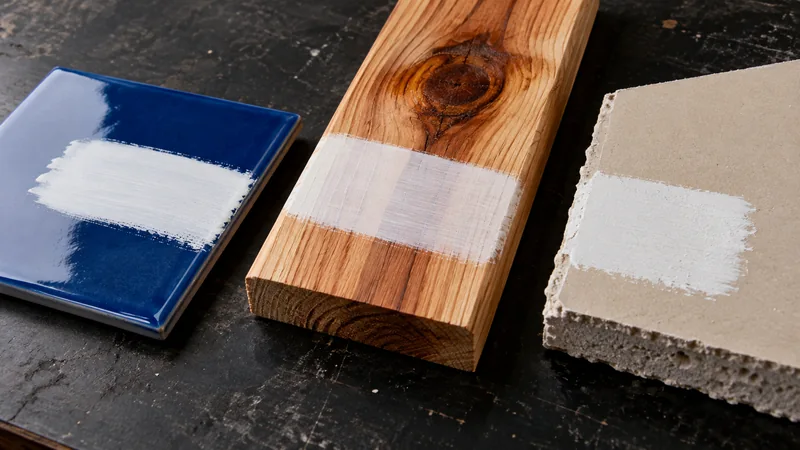
The purpose of an edge sealer or suitable primer is to control absorption and provide a base that can be finished consistently. Confirm compatibility with the MDF, any factory primer and the final enamel. Shellac-based, alkyd and waterborne systems may each be appropriate in particular specifications; none should be chosen solely from a blanket rule that all MDF needs one chemistry.
For example, Sherwin-Williams' Sher-Wood Door Edge Primer is an acrylic latex industrial product intended to fill open grain in MDF and wood door edges. It is an example of a purpose-designed waterborne system, not a recommendation to substitute any wall primer. Industrial products can also have application requirements unsuitable for a homeowner setup. Ask for a complete practical system for your trim and application method. Test it on an offcut with both raw end and factory face before using it throughout the room.
Keep filler, caulk and primer in their separate roles
Use a compatible filler when an actual chip, nail hole or damaged area needs rebuilding, following its curing and coating instructions. Use paintable caulk only at joints for which that material is appropriate. Use primer or sealer to prepare the surface for coating. A single exposed end may need more than one of these operations, but they are not interchangeable.
If the end is sound but porous, adding a thick filler layer solely to avoid sealing can create unnecessary shaping work. If a chunk is missing, primer alone will not reconstruct the edge. At a trim-to-wall joint, follow the chosen coating and sealant sequence so both can perform their intended jobs. Avoid covering a large gap with a thin cosmetic skin that cannot hold its shape. Define the defect first, then choose the material that addresses it. This keeps the finished end crisp instead of turning it into a rounded patch of mixed products.
Sand the sealed edge without reopening the problem
After the selected sealer or primer reaches its permitted sanding stage, inspect for raised fibers and small surface defects. Smooth them lightly with an appropriate abrasive while preserving the profile. Do not sand through repeatedly and expose the raw core again, then wonder why each subsequent coat behaves like the first.
- Confirm the raw end is sound and correctly shaped.
- Remove dust before sealing.
- Apply the specified sealer or primer at its intended build.
- Wait for its sanding stage, not just touch dryness.
- Remove raised fibers without cutting away the whole sealed layer.
- Reprime exposed spots if the system requires it.
- Compare the dried edge with the face before final enamel.
A small offcut helps establish how much preparation is necessary without risking installed trim. If the edge remains rough after a controlled sequence, reassess the board condition or product compatibility rather than piling on increasingly heavy finish coats.
Finish the face and edge as one visible component
Once the edge is smooth and suitably sealed, apply the approved finish system so its appearance relates to the factory face. Use controlled loading around the corner to avoid a heavy bead at the transition. A small brush may be needed for the end even when the long face is rolled or sprayed. Match the final texture as closely as the geometry allows.
Inspect the dried result from the normal viewing direction, not only directly in front of the cut. A side view can reveal a rounded corner, ridge of primer or absorption difference. Keep the board offcut and system record if many rooms will receive the same trim. For future cleaning, avoid repeatedly wetting exposed joints or damaged coating. A well-finished MDF end depends on sound material, preserved shape and compatible layers. Paint can make the end visually consistent with the face, but it cannot compensate for an unsuitable board in a persistently wet location.
Questions & answers
Can I use caulk to seal the whole cut end of MDF?
Do not treat caulk as a universal end sealer. It is intended for suitable joints and may not produce the crisp, sandable surface needed on a visible flat end. Identify whether the end needs shaping, filling or a compatible primer-and-sealer system.
Must MDF always be primed with oil or shellac?
No universal chemistry rule fits every board and coating system. Purpose-designed waterborne MDF edge products also exist. Confirm the exact system's suitability and test an offcut, especially where the raw end meets an existing factory primer and the chosen finish enamel.
Will sealing swollen MDF make it look new again?
Sealing does not restore the original dimensions or strength of a swollen or damaged edge. Resolve the moisture exposure and assess whether repair or replacement is needed. Begin the coating sequence only after the material is sound and suitable for its location.
Sources & further reading
- MEDITE PREMIER: Manufacturer FAQsMDF grade and machining quality matter; interior-grade panels are for dry interiors and require compatible coating guidance.
- MEDITE MR: Manufacturer FAQsMoisture-resistant MDF is not waterproof or exterior grade; wet-area use requires full sealing and coating.
- European Panel Federation: Finishing MDF EdgesMDF edges have distinct sanding and sealing requirements before the finish system.
- Sherwin-Williams: Sher-Wood Door Edge PrimerAn acrylic latex industrial edge primer is specifically designed to fill open grain in MDF, so waterborne chemistry is not universally excluded.
Reader discussions
These conversations describe problems people encountered. They do not establish the cause of a defect or replace product instructions and applicable requirements.