Waterborne Alkyd or Acrylic Enamel for Trim and Built-Ins?
Choose between waterborne alkyd and acrylic enamel by the exact product's application behavior, recoat schedule and service requirements. Water cleanup does not mean the products share the same resin or cure profile. A waterborne alkyd may offer a working window suited to brushing, while a particular acrylic enamel may permit faster recoating. Compare named systems on your trim or built-in sample rather than assuming one chemistry is always harder, smoother or more durable.
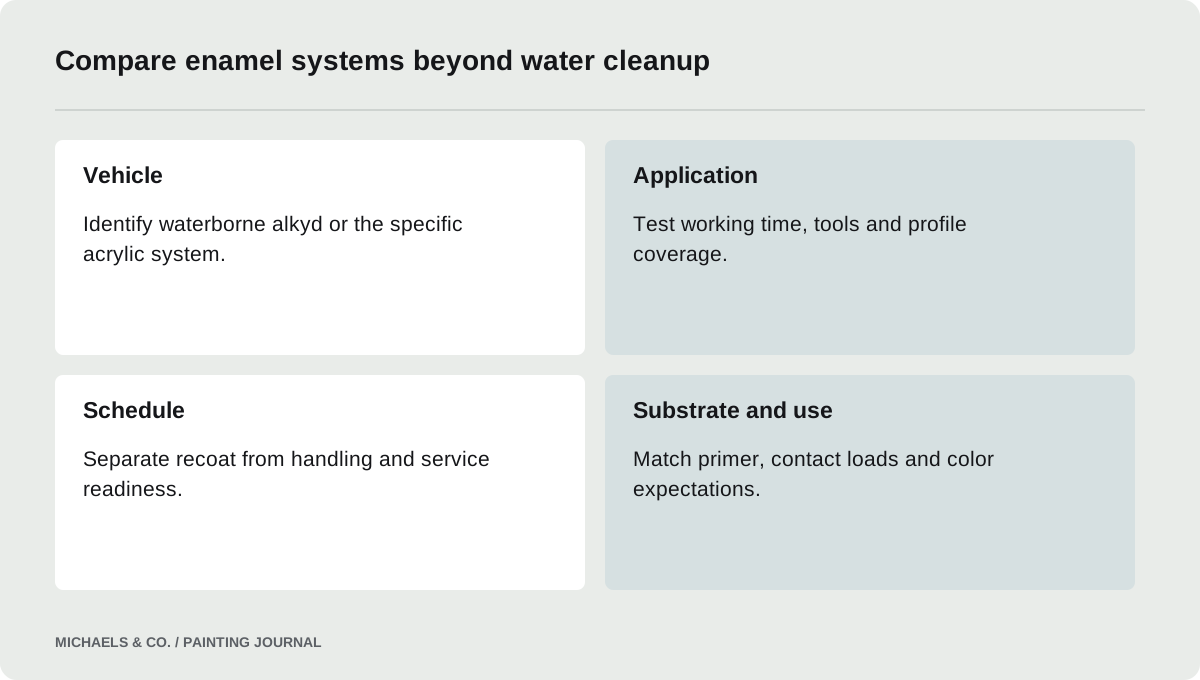
Decode the labels before comparing performance
Waterborne describes how the coating is carried and handled; alkyd and acrylic describe different resin families. A waterborne alkyd can clean up with water while having different drying behavior from a conventional acrylic wall paint. Enamel is a product description that does not, by itself, tell you the precise resin or service limits.
A Reddit question about oil-based versus water-based paint for cabinet-grade birch shows how terms such as oil-enriched, waterborne alkyd and acrylic urethane can blur the decision. Start with the technical sheet's vehicle description and intended uses. Benjamin Moore's explanation of waterborne alkyd paint helps distinguish the terminology, but broad chemistry summaries are not a substitute for the product sheet. You are selecting a complete coating for trim, doors or built-ins, with its own preparation and timing, rather than choosing a winner between two words on the front of a can.
Compare named products with a small technical table
Two examples make the scheduling difference concrete. ADVANCE Satin 792 is a waterborne alkyd; Cabinet Coat CC-65XX identifies a urethane-reinforced acrylic vehicle. Their sheets give different recoat intervals under the same reference conditions.
| Example product | Vehicle | Recoat at 77°F/50% RH |
|---|---|---|
| ADVANCE Satin 792 | Waterborne alkyd | 16 hours |
| Cabinet Coat CC-65XX | Urethane-reinforced acrylic | 6 hours |
This comparison does not rank every alkyd against every acrylic. It shows why a project schedule should use exact product data. Cooler or more humid conditions can extend the listed intervals, and recoating is not the same as readiness for shelf loads or closed-door contact. Keep the sheet revision and product code in the job record so a later purchase is checked against the same intended system.
Match working time to the application method
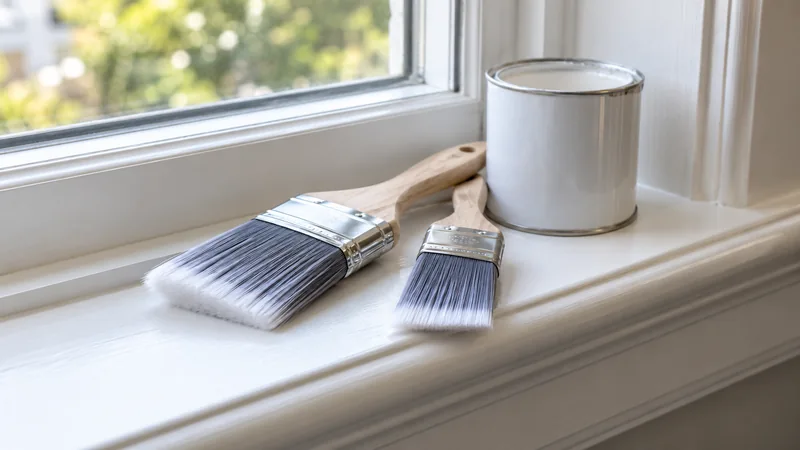
A longer workable period can help when brushing profiles that take time to reach and finish. A faster-setting product can suit a production schedule but demand more disciplined section size and fewer return strokes. Neither behavior is automatically better. The useful question is whether you can place the required film consistently with your chosen tools and access.
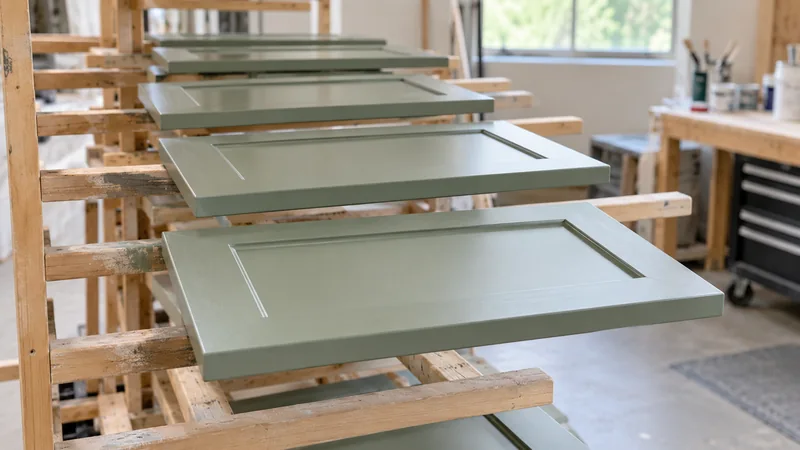
Test the enamel on the actual type of trim or a representative sample. Include a flat area, an inside corner and a profile where paint can collect. Observe brush release, roller texture and whether you are tempted to keep correcting a film that has begun setting. For spraying, compare the exact approved tip and equipment requirements separately; a product that brushes conveniently may need a different spray setup from another enamel. Do not add conditioner to make two products feel alike unless the manufacturer explicitly permits that adjustment.
Select the primer system for the substrate
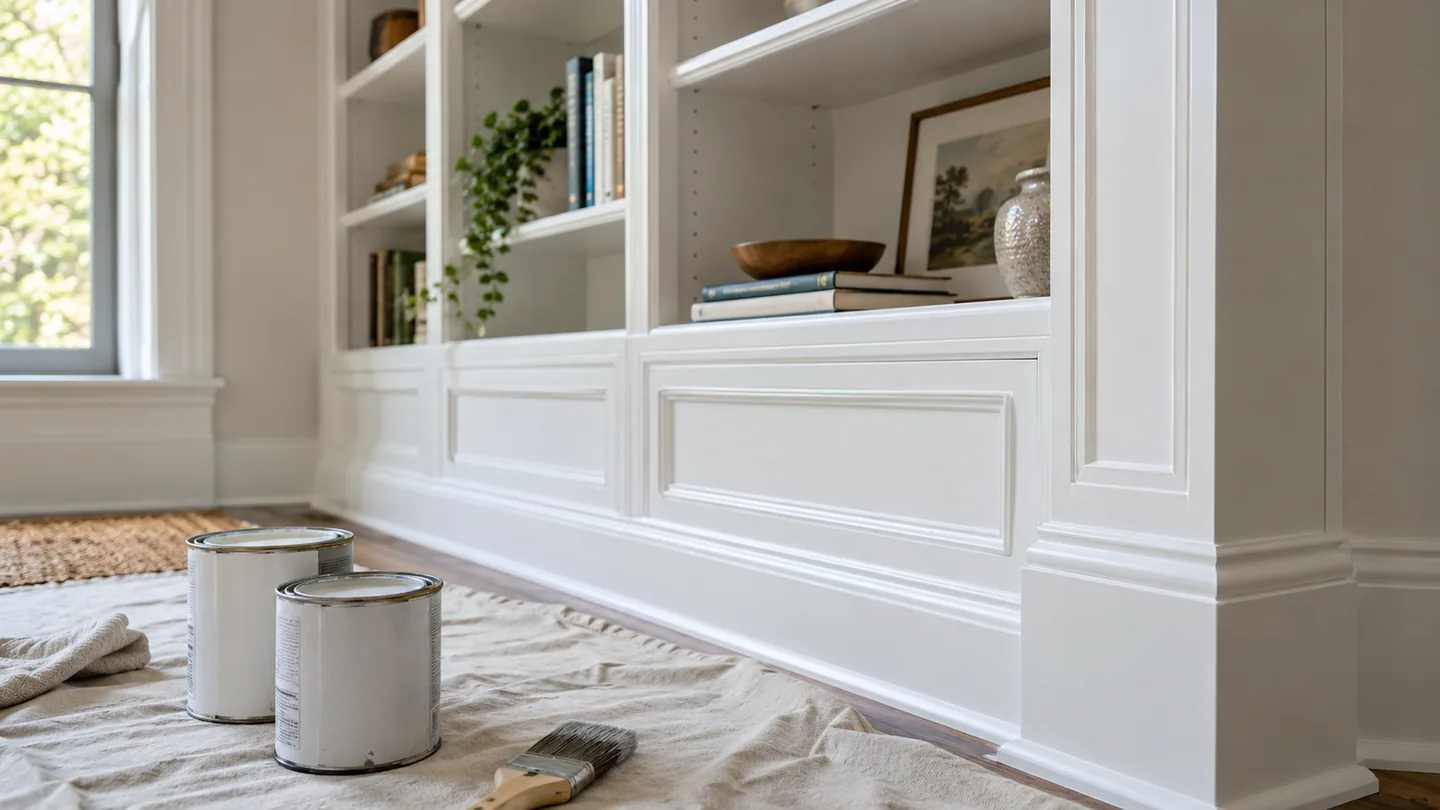
A built-in may contain bare wood, MDF, old enamel, filler and laminate within one assembly. Resin preference alone does not establish adhesion to all of them. Identify each material and select the preparation and primer system specified for the chosen topcoat. A coating advertised for cabinets still needs the substrate conditions described in its technical sheet.
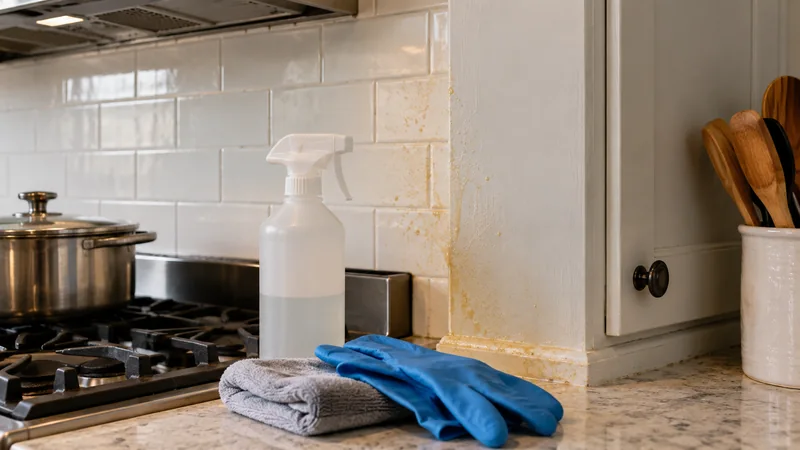
Clean contamination before sanding. Assess old or unknown coatings for relevant hazards before disturbing them. Remove or repair unstable material rather than expecting a strong enamel to hold it together. Some products permit direct application to particular prepared existing finishes, while others specify a primer. Those permissions are product- and substrate-specific. Do not transfer a no-primer statement from one acrylic enamel to every waterborne enamel, or assume an alkyd automatically bonds over grease. The complete system is the preparation, any required primer and finish together, with a representative adhesion and appearance test where uncertainty remains.
Consider color stability and contact demands
For pale trim in dark cabinets or poorly ventilated spaces, ask about the selected product's color-stability limitations. Some alkyd systems can yellow under particular conditions; a low-yellowing description is not a promise of no change. The ADVANCE technical sheet includes a caution about light colors in dark, poorly ventilated conditions. Use that specific limitation when evaluating a white built-in rather than assuming every waterborne product behaves like an acrylic wall paint.
Also consider blocking, the tendency of contacting painted surfaces to stick, and the load on horizontal shelves. A tough finish on a vertical casing may face much more demanding contact on a storage shelf. Ask when doors can close, bumpers can touch and objects can remain in place. Choose the product and schedule together. A finish with attractive leveling is not automatically the right answer when the furniture must return to heavy service immediately.
Make the sample reproduce the real use
Prepare the sample with the proposed cleaner, abrasive method, primer and enamel. Apply the intended number of coats at the specified build. A sample on bare scrap without the project's primer or old finish cannot answer the compatibility question. Label the products and application dates so the comparison does not rely on memory.
After the proper development period, evaluate the appearance under the room's light and assess cleaning or contact using the manufacturer's permitted method. Do not scratch a fresh sample aggressively and call that a durability ranking; the products may be at different stages of property development. Record practical observations instead: ease of maintaining a wet edge, coverage of profiles, dried texture and whether the service schedule is workable. If a professional is applying the finish, include their intended equipment in the sample. A brush sample does not fully represent a production spray system.
Choose by the project's constraint that matters most
If the main constraint is a careful brushed finish on installed trim, prioritize a product whose working behavior you can control. If the main constraint is repeated coats within a limited work window, compare approved recoat intervals and actual conditions. If shelves and doors must return to use quickly, investigate service readiness rather than selecting by recoat speed alone.
Keep other requirements in the decision: substrate compatibility, acceptable sheen, cleaning, color and equipment. Write the selected system into the work scope with its timing assumptions. Avoid vague substitutions such as another water-based enamel, because the replacement may change the application and schedule substantially. Waterborne alkyd and acrylic enamels both have useful places. The stronger choice is the named product that meets the project's finish and service requirements through a process the painter can repeat, not the chemistry category with the most enthusiastic forum recommendations.
Questions & answers
Is waterborne alkyd the same as ordinary oil paint?
No. It uses an alkyd resin in a waterborne system and can have water cleanup, but its behavior still differs from a conventional acrylic coating. Check the exact product's vehicle, application and drying instructions rather than using cleanup method alone to identify it.
Does faster recoat mean faster full service?
Not necessarily. Recoat timing governs the next coating step, while handling, blocking resistance and loaded shelf service may have different requirements. Compare those milestones separately. A six-hour recoat interval does not automatically mean a cabinet can be loaded six hours after its final coat.
Should I always choose acrylic for white trim?
Color stability is one factor, but suitability also depends on the exact product, substrate, application and service needs. Review any yellowing limitations and test the desired finish. Avoid treating all acrylics or all alkyds as identical products with identical performance.
Sources & further reading
- Benjamin Moore: The Waterborne Alkyd Paint DifferenceWaterborne alkyd combines alkyd-type flow with water cleanup; detailed schedule must come from the product-specific technical sheet.
- Benjamin Moore ADVANCE Satin 792 Technical Data SheetThe sheet separates touch-dry, recoat, early service and eventual hardness; cool or humid conditions extend these stages.
- INSL-X Cabinet Coat CC-65XX Technical Data SheetThe specific urethane-reinforced acrylic enamel lists six-hour recoat at 77°F/50% RH and substrate-specific preparation requirements.
Reader discussions
These conversations describe problems people encountered. They do not establish the cause of a defect or replace product instructions and applicable requirements.